Osvaldo Fuentes
Fictional. Generated by AI — not a real person, and no likeness of one is intended.
59, warehouse picker in New York · rolled by @everett.dabney · card — no film
History
who has worn him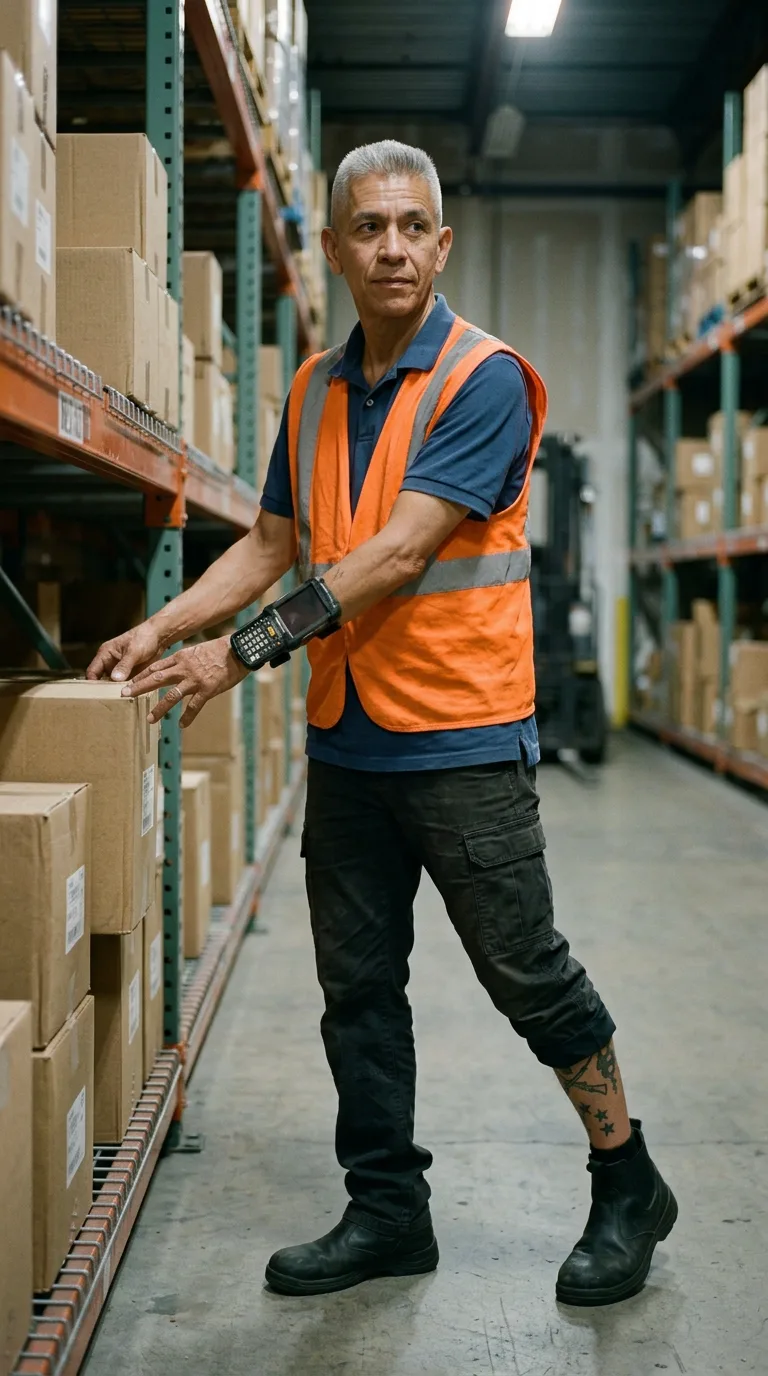
Rarest thing about him: Leg — epic, 1 in 71
Season 0seed 549491055 · engine v10
Character card
lineage 79CGDV
His body-swap story
@everett.dabney, wearing an unnamed body, rolled the wheel on and woke up as Osvaldo Fuentes, spent 3 minutes in him, then spun the wheel and woke up as Gary Drennan
The kitchen clock in Pittsburgh says something like eleven in the morning, but the blinds are shut and the house is dark, because the man whose body you're borrowing sleeps days and drives nights, and you have three minutes left of being him. He is twenty-five, Black, built like the gym is a hobby and not a job, and he is sitting on the edge of somebody else's bed with his phone brightness turned all the way down so the glow doesn't wake the wife who isn't yours. You like this one. You liked the weight of him, the ease he has in his own shoulders, the way strangers move for him on the sidewalk without knowing why. That's exactly the problem. Three minutes in, and already you're doing math about how many years a body like this could be worn before it got boring, and the math scares you more than any bad body ever has. Bored is a door. You open the site instead of thinking about that. You spin because stopping to ask why feels worse than not asking.
The wheel turns and there is no page anymore, there is a hand, and it is not the hand you had a second ago.
You are bent at the waist. A box under your left palm, cardboard gone soft-fuzzy at the corner from a hundred other hands. Fluorescent light too high up to warm anything. Somewhere behind you and to the left a forklift beeps, backing up, and your body — his body, now the only body — flinches half an inch at a sound it has heard ten thousand times and should not still flinch at. The scanner on your wrist is heavier than you expected, or lighter, you can't tell, because you don't have a "expected" yet, you have nothing, you have a fifty-nine-year-old spine bent over a shelf and a barcode swimming underneath a thumb that is already, on its own, correcting the angle.
The motion goes wrong once — you catch the box's edge instead of its face, and the scanner beeps its error tone into the empty aisle — and then it goes right, slow and deliberate, the way a man walks when he suddenly remembers he is walking. The next ten are checked. Every one. On a job that stopped needing checking before you were born into whatever body you started in.
Then the shirt.
Navy polo, damp already at the collar though the shift's not old — and it comes up out of the fabric the way heat comes off asphalt, not a memory so much as a temperature: an apartment in Sunset Park, water stains on the ceiling shaped like Florida, a woman named Marisol standing in the kitchen doorway thirty years ago telling him she's late, and his own face in a mirror not believing her, and then twenty-six years married to her and still not fully believing it, in the good way. The ring is on the hand already resting on the box — you feel it separate from the rest of the memory, cooler than skin, plain, and it opens on its own: a courthouse, her mother crying more than his did, a reception in somebody's backyard with a hose running through a cooler of beer because the good cooler broke.
The vest. Orange, reflective strip gone gray at the fold from washing. It gives you nothing on its own — vests don't have a life in them — but the collar of the polo under it remembers a morning, this morning, his morning, pulling it over his head in the dark so as not to wake her, left arm first because the right shoulder's been catching lately, a small tearing ache when he reaches overhead that he has stopped mentioning to anyone including himself. Cargo pants next, memory of shrugging them up over hips that have less on them than they used to, cinching the same worn notch on the belt out of habit, not need. Boots, steel-toed, broken in on the outside and still stiff on the inside, a memory of buying them online because his knees can't do the store anymore, standing in the aisles trying pairs on.
The calf, where the pant leg's ridden up an inch against the racking — a flash off his own skin, sharp as a struck match: a different country, decades gone, three stars and crossed rifles going into his leg in a shop that smelled like antiseptic and cigarettes, a friend's name he doesn't say out loud anymore because saying it costs something. That one comes with weight nothing else has carried yet, and you don't chase it further. Some rooms you're given, you don't walk all the way into.
There's a daughter somewhere in the wallet in his back pocket though you haven't touched it — you feel her anyway, secondhand, the way you feel that he has one, that there was a girlfriend before Marisol whose name still surfaces sometimes at four in the morning for no reason he'd admit to his wife, that this hand drums against tables and steering wheels and box edges without him noticing it doing it, that his cholesterol numbers annoy a doctor twice a year and he nods and does nothing about it. High blood sugar is not this. This is smaller and stranger: a man built entirely out of routine, kept upright for fifty-nine years by doing the same motions until they became load-bearing.
You straighten up. The aisle is empty both directions, fluorescents humming, the forklift's beep receding toward the dock. You bring your hand — his hand, gray hair on the knuckles, wedding band loose enough to spin if you wanted — up in front of your face and turn it over once, like checking it for something.
"Bien," you say, to nobody, in a voice that isn't surprised at itself, because some habits survive even this. You look up into the empty aisle as if there were a camera in it, and you don't know yet how long you're staying, or when the wanting starts again, or whose hands these will be tomorrow.