Gary Drennan
Fictional. Generated by AI — not a real person, and no likeness of one is intended.
51, oil rig worker in Los Angeles · rolled by @everett.dabney · card — no film
History
who has worn him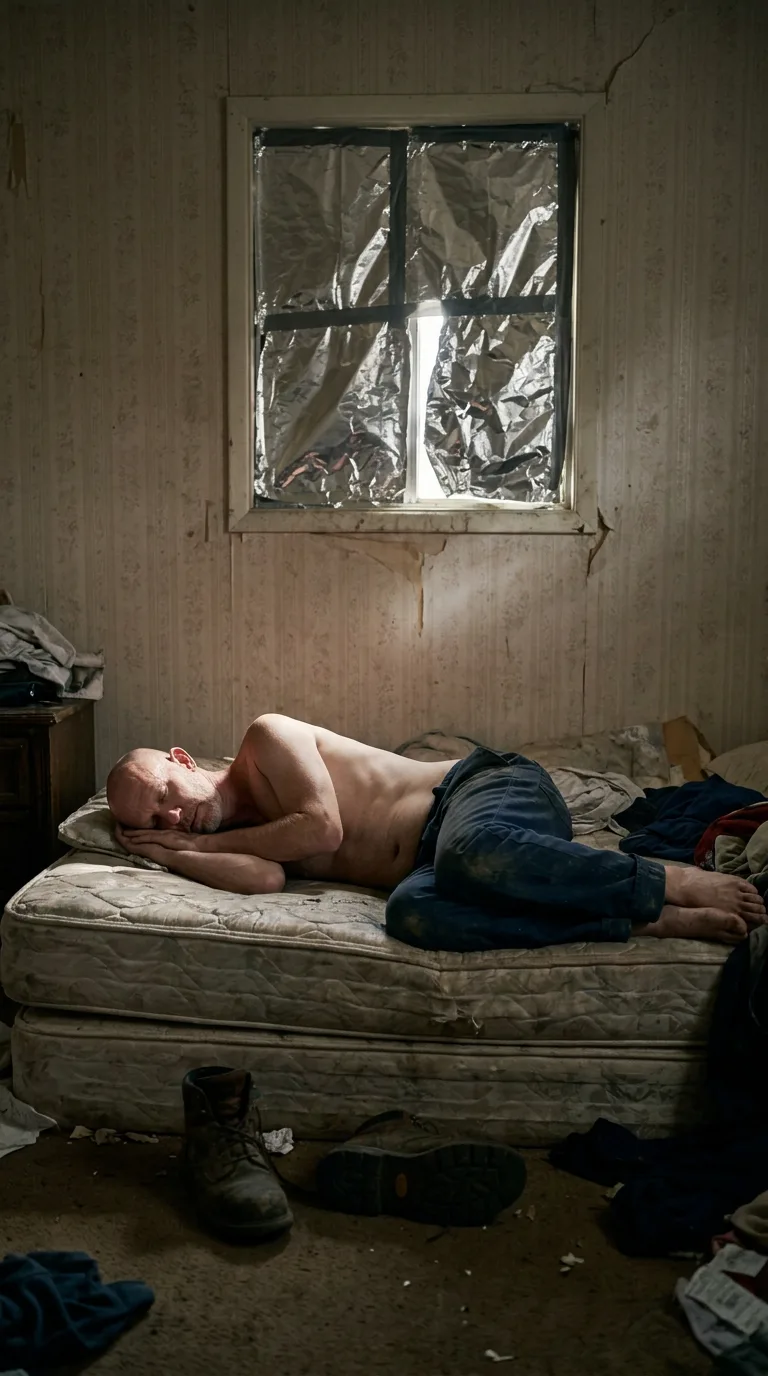
Rarest thing about him: Oil rig worker — uncommon, 1 in 161
Season 0seed 1581397935 · engine v10
Character card
lineage 79CGDV
His body-swap story
@everett.dabney, wearing Osvaldo Fuentes, rolled the wheel on and woke up as Gary Drennan, spent 5 minutes in him, then spun the wheel and woke up as Desmond Achebe
---
Osvaldo's fingers are what you notice first, because they are not yours and never were, and because they are wrapped around a box cutter that does not belong to either of you. Two minutes in this warehouse and already your lower back has an opinion about it. Fifty-nine years in these knees. Somewhere behind them a memory tries to surface — a kitchen, a woman's voice, a daughter maybe — and you let it drown, because it isn't why you're here. You are here because two minutes was long enough to know the ache doesn't go away between scans, that the gray in this hair is going to stay gray, that greed is a simple thing and does not require an explanation, only an app already open on a phone you found in his own back pocket. You pull it out with his hand. You spin with his thumb.
The bar of light finds him first.
It comes in sideways through a gap where the foil has pulled loose from the tape, and it lays itself across a bald head and a slack jaw, and the man under it turns away from it in his sleep the way anyone would, and then — this is the part that is you now, arriving — turns back into it. Opens the eyes. Blue, unblinking, aimed straight into the glare like it owes him something.
You are on your back on a mattress with no sheet on it, half your weight sunk into a dip worn there over years of the same shoulder. Boots are off. Trousers are still on, the belt cutting a line into a stomach that has gone soft in a way the rest of him hasn't — forearms hard, everything else tired. You register the room in pieces: wallpaper peeling in a pattern like flood damage, boots kicked off by the bed frame in the exact place they'd land if a man was too gone to bend all the way down, a strip of foil someone taped over the window with real care, corners folded like a present, so the day couldn't get in. Except it got in anyway. It always finds the seam.
The mattress under your palms says he's slept here for years — the give of it, the smell, cigarette smoke that isn't his, a tenant before him maybe, and under that, sweat and rig grease that never fully washes out. You press a hand flat against it and it comes: a hallway, fluorescent-lit, a company logo on a laminated badge, a supervisor's voice saying your name — Gary, you're on nights again — and the particular flavor of tired that isn't sleepy, that's just used up.
The trousers give you more. Denim gone soft and pale at the knees, salt-stiff at the cuffs. You feel the morning he put them on — not this morning, some morning, all of them folded into one — standing in a trailer on the platform with the derrick already turning outside, the Gulf gray as dishwater, pulling one leg in at a time because his balance isn't what it was at thirty, hearing somebody laugh two bunks over. The coveralls came after, navy with the reflective tape, and his arms remember the specific motion of shrugging into them, snapping the front closed over a gut he is quietly ashamed of and does nothing about. Gloves, stiff with old sweat, going onto hands that already knew, without being told, how to grip a wrench so it wouldn't slip, how to read a pressure gauge out of the corner of an eye while doing three other things.
More comes, unbidden, layered: a woman's voice on a phone, not unkind, just done — I can't keep doing this long-distance thing, Gary, not with the kids — and the particular hollow of hanging up in a rig cabin with forty other men close enough to hear if he let his voice do anything. Two kids, a boy and a girl, their faces arriving sideways, a birthday call made from a satellite phone with bad delay, the strange formal tenderness of a father who is gone eleven days out of every fourteen. A church basement somewhere in a flat brown town, folding chairs, a pastor's hand on his shoulder, someone saying it's alright to need something for it, son, plenty of good men do. A pill bottle in a shaving kit. The relief of it working, most days.
Your jaw finds a toothpick wedged in the corner of it without you asking it to — his mouth already knows this, already had it there before you arrived, worn down to a splinter from being turned over and over on some night shift with nothing else to do with his hands. You bite down on it and something in the memory settles, the particular calm of a habit older than any woman who left, older than the kids, older than oil.
The room smells like drywall dust and an ashtray nobody uses anymore and, underneath, him — a body that works outside in heat and gets hosed with saltwater and comes home to no one. Fifty-one years old. Not old, not young, caught in the middle stretch where the body starts sending bills for things it did twenty years ago and no one told you they'd come due. Skinny in the arms, soft through the middle, the specific tiredness of manual work paired with the specific loneliness of an apartment courtyard with dry palms in it, a landlord who doesn't fix the AC, a foil-covered window because day shift never really let go of the schedule this rotation gave him.
You lift your hands off the mattress. They are wider than Osvaldo's were, paler in the calluses, a fine white scar-less roughness across both palms that says rope and pipe and steel, never a blade held wrong. You turn them over once, like checking someone else's work.
"Where the hell," you say, to the foil, to the light, to no one, "am I now."
The toothpick shifts to the other side of your mouth on its own, an old motion, already yours by inheritance. Somewhere down the hall a neighbor's radio is playing too loud for the hour. You don't know how long this one lasts. You never do until you're already gone.