Óscar Beltrán
Fictional. Generated by AI — not a real person, and no likeness of one is intended.
50, software engineer in Small-town Ohio · rolled by @colin.hasbrook · card — no film
History
who has worn him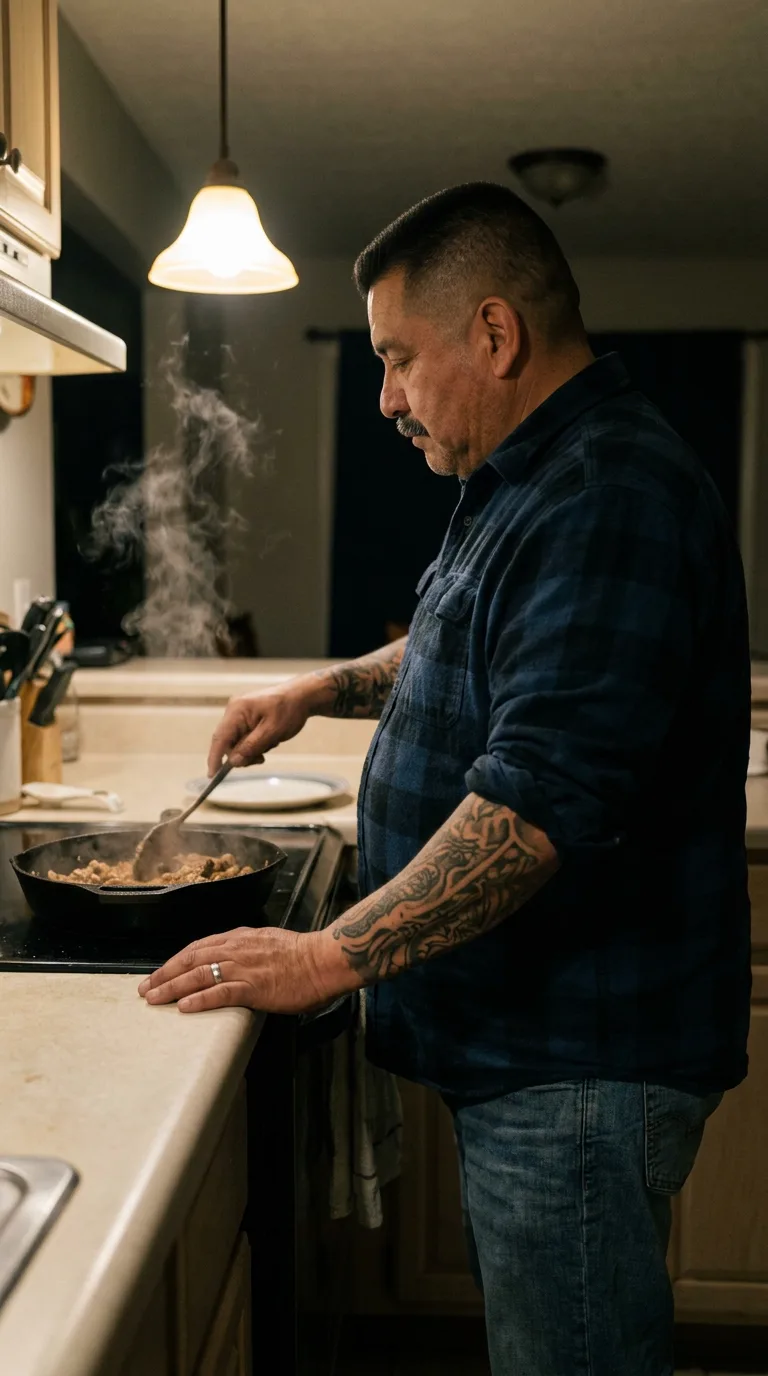
Rarest thing about him: 5'3" or under — common, 1 in 31
Season 1seed 1884622192 · engine v11
Character card
lineage 2NZHHJ
His body-swap story
@colin.hasbrook, wearing Russell Vandermeer, rolled the wheel on and woke up as Óscar Beltrán, spent under a minute in him, then spun the wheel and woke up as an unnamed body
The Houston apartment is quiet except for the hum of the window unit, and you stand in Russell Vandermeer's long body doing the math on how little you actually wanted this one. Sixty-two, skinny in a way that never fills a doorway right, bald under the bathroom light, a scar cutting through one eyebrow like a bad edit. A nurse. You picked him for the hands — you remember thinking that, less than a minute ago, when the wheel gave him to you — quick hands, useful hands, hands that had held other people's lives together at three in the morning. But you have been him for forty-some seconds and already the apartment feels like someone else's coat. His hands are shaking a little, a tremor that isn't yours and isn't fully his either, some old tea-colored exhaustion sitting behind the eyes. You did not spin again because Russell disappointed you. You spun again because the wanting is not about the men at all. It never has been. It is about the half-second before the arrival, the held breath of not knowing yet, and Russell's scarred, tired face was never going to give you that twice.
So you go back to the site with his thumb, still standing in his kitchenette, and you spin.
The stirring stops mid-circle.
You feel it before you see anything — the wooden spoon caught at the top of an arc, meat and onion glistening under a low pendant light, steam going up past your face into a dark kitchen. Then it starts again, the other way, slow, deliberate, someone else's hand moving through the same grease. You are shorter now. Radically shorter — the countertop is higher against your hip than it has any right to be, and your gut presses warm and solid against the edge of it. Your knees complain faintly. Your feet, in socks, are planted wide on a linoleum floor that remembers other feet in other years. You salt the pan without tasting it, an old habit that isn't yours yet, and your free hand — thick-fingered, a plain gold band tight on the ring finger — reaches into the cabinet above the stove and takes down a second plate.
You set it beside the first one.
And then it starts coming in, the way it always does, sideways, through what you're holding rather than what you're told. The spoon handle is worn smooth in one particular groove and your palm slots into that groove like it's done it eleven thousand times, and there's a name in that groove — Marisol — not said aloud, just present, the way she used to stand at your elbow while you cooked, correcting your salt, laughing at your salt, gone two years now and the kitchen still built around the shape of her absence. The shirt against your back — flannel, blue-black check, a little snug at the belly — gives you this morning, or what would have been this morning if you were the one who'd lived it: pulling it off the hanger in a bedroom gone quiet since the divorce, working your left arm through first because the shoulder on that side aches when you lift it overhead too fast, an old warehouse injury from the years before the desk job, before the standing monitors and the cold coffee that's probably still cold on the counter in the office you don't use after six. Two kids grown and out — a daughter in Columbus who calls on Sundays, a son who doesn't call as much and that not-calling sits in your chest like a stone you've stopped trying to move. A second wife, sleeping now, thirty feet away down a dark hallway, who does not know that tonight, like some nights, you are cooking enough for someone who isn't in the house anymore, setting her plate — Marisol's plate, still — beside your own out of a fifty-year-old man's small private ruin nobody put a stop to because nobody knew to. The tattoo sleeve under the flannel is warm to you now, a young man's decision on an older man's arm, and it tingles faint in beat with a pulse that's slower and heavier than Russell's ever was. Your nose — you feel it before you place it, a low dull ache that isn't pain exactly, just structure, a bend put there thirty years ago in a parking lot fight you'd rather not remember and mostly don't. Your feet ache. Your lower back aches. Your hands, though — your hands know this pan, this heat, this spoon, better than they know almost anything else you've touched today, and there's a strange comfort sitting low in the gut, under the grief, that at least this much still works right.
The onions catch a little. You don't notice. You're not tasting.
You look at your hands — his hands, thick, brown, a wedding band still on the left one from a marriage that ended in a different kitchen than this one — turning the right one over slowly under the pendant light like you're checking it belongs to you.
Then you lift your eyes to the window over the sink, dark glass throwing your own reflection back at you, and you say, quiet, mostly to the plate you didn't mean to set out twice:
"Two again. Okay."