Nolan Reske
Fictional. Generated by AI — not a real person, and no likeness of one is intended.
32, lifeguard in New York · rolled by @colin.hasbrook · card — no film
History
who has worn him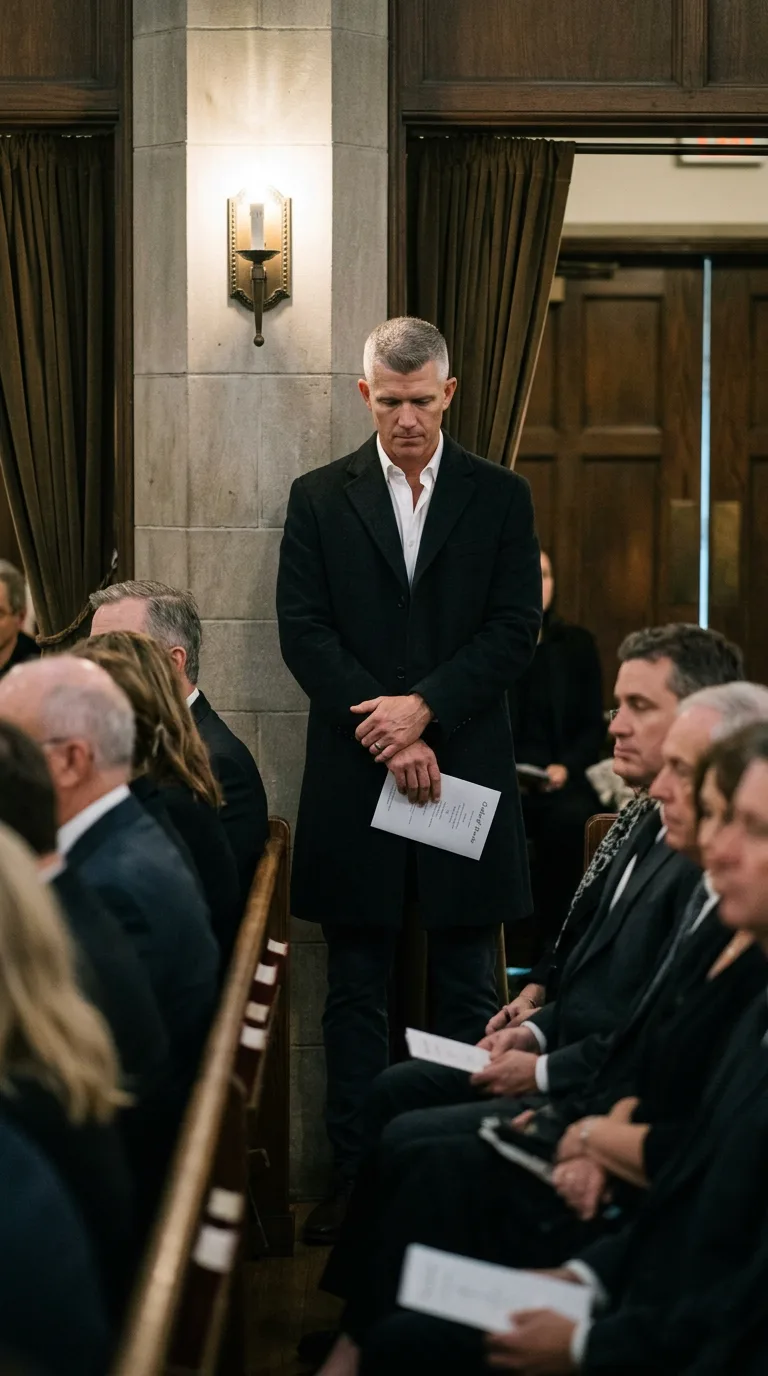
Rarest thing about him: At a funeral, at the back — rare, 1 in 97
Season 0seed 861858531 · engine v10
Character card
lineage 2NZHHJ
His body-swap story
@colin.hasbrook, wearing Efrain Molsky, rolled the wheel on and woke up as Nolan Reske, spent 5 minutes in him, then spun the wheel and woke up as Colby Traverse
Efrain Molsky's hands smell like antiseptic and dog, and they have been Efrain Molsky's hands for forty seconds. You stand in the exam room doorway, in his aching lower back, in the tail end of a Monday that has already run nine hours long, and you think: not this. Not this again. The vet tech is saying something about the Andersons' schnauzer, and Efrain's cleft chin is nodding along on muscle memory that isn't yours, and you feel the specific, total boredom of a life that fits like a rental. Forty seconds and you already know how the rest of tonight goes. You did not spin the wheel because anything happened. You spun it because nothing did, and because nothing ever really does, and because somewhere out there — always, endlessly out there — is a life you have not been bored inside of yet. You go to the little office off the hallway, sit in his chair, open the site on his phone with his blunt, competent fingers, and pay.
The organ stops.
You come up a half-beat behind three hundred people rising in a chapel that smells like candle wax and old stone, and the coat on your shoulders is wrong in a way you feel before you understand it — heavier, better cut, a stranger's weight settling onto a body that is not soft anywhere. Your knees don't ache the way Efrain's did. Something else in you does. A folded paper is in your left hand. A ring is on it, cool and plain, and you are standing very straight because everyone around you is standing very straight and some animal part of this body already knows how to grieve in public without being told.
The paper first. Order of service, cheap stock, already gone soft at the fold from being held too long. Order of Service for Warren — the name doesn't matter to you, but it matters enormously to him, some deep unhappiness moving under your borrowed sternum like weather, a man he coached little league with, a man he has known since he was young enough to be embarrassed by his own mother at the pool. That's the flash: the pool. Chlorine and floodlights and a whistle heavier than this one used to be, before the department upgraded them, and a boy — no, a teenager, him, Nolan, seventeen and sunburned across the shoulders — standing on a stand for the first time thinking he would rather die than screw this up in front of everyone.
The coat gives you more, because it isn't his — borrowed, his own suit at the cleaner's for a wedding next month, and there's a whole hour behind that: his wife holding it up against his shoulders in their bedroom on President Street, laughing, too big in the sleeve, "It's fine, nobody's looking at your arms today," and him laughing back even though his back had locked up getting out of bed and he'd had to breathe through it standing at the mirror. The pain is there now, low and familiar, a dull hot line across the base of his spine that has been there in some form since a rescue three years back that he doesn't like to think too hard about, a swimmer who panicked and grabbed him wrong. His hands know this ache. His hands, when nobody's watching them, drift up to his own jaw, his cheek, touching his face the way another man might tap a pen — and they do it now, unbidden, right there in the pew, and an old woman two rows up glances back and he — you — lower the hand fast, embarrassed on his behalf.
The shirt. White, plain, buttoned in the dark this morning so as not to wake her, sleeve by sleeve, standing at the closet in a room still holding her sleep-breath and the smell of her shampoo, the ring cold against the buttons the way it's cold now against the paper. He remembers — no, you're remembering it in his hands — the particular care of getting dressed for a funeral, slower than for work, checking the mirror an extra time, the crew cut he keeps short because the sun does what it does to gray hair at a beach post nine hours a day, the freckles across a chest that used to burn before he learned better. Under it all: an athletic thirty-two-year-old body that still remembers how to move fast in water, whistle-callus on two fingers, a joint in the left shoulder that clicks getting his arms overhead, evangelical hymns half-known from a childhood church he doesn't attend anymore but whose cadences still live somewhere behind his ribs — he mouths along without deciding to when the room starts singing.
He is, underneath the grief and the ache and the good plain marriage folded into that coat, an unremarkable man, and there is nothing sharp anywhere in him — no wound the story needs, no thing nobody knows. Just a life, comfortable and ordinary and entirely his, being handled by someone else's hands.
You look down at those hands. Blunt nails, no calluses like Efrain's, a wedding band that has never once been yours to wear. You turn them over slowly in the low chapel light, the way a man might check them for something he lost.
You lift your eyes off them, past the folded paper, into the middle distance where a coffin is, and you say, quiet enough that only the woman beside you hears it:
"I don't know how long I'm staying."
She thinks you mean the reception.