Colby Traverse
Fictional. Generated by AI — not a real person, and no likeness of one is intended.
21, casino dealer in Phoenix · rolled by @colin.hasbrook · card — no film
History
who has worn him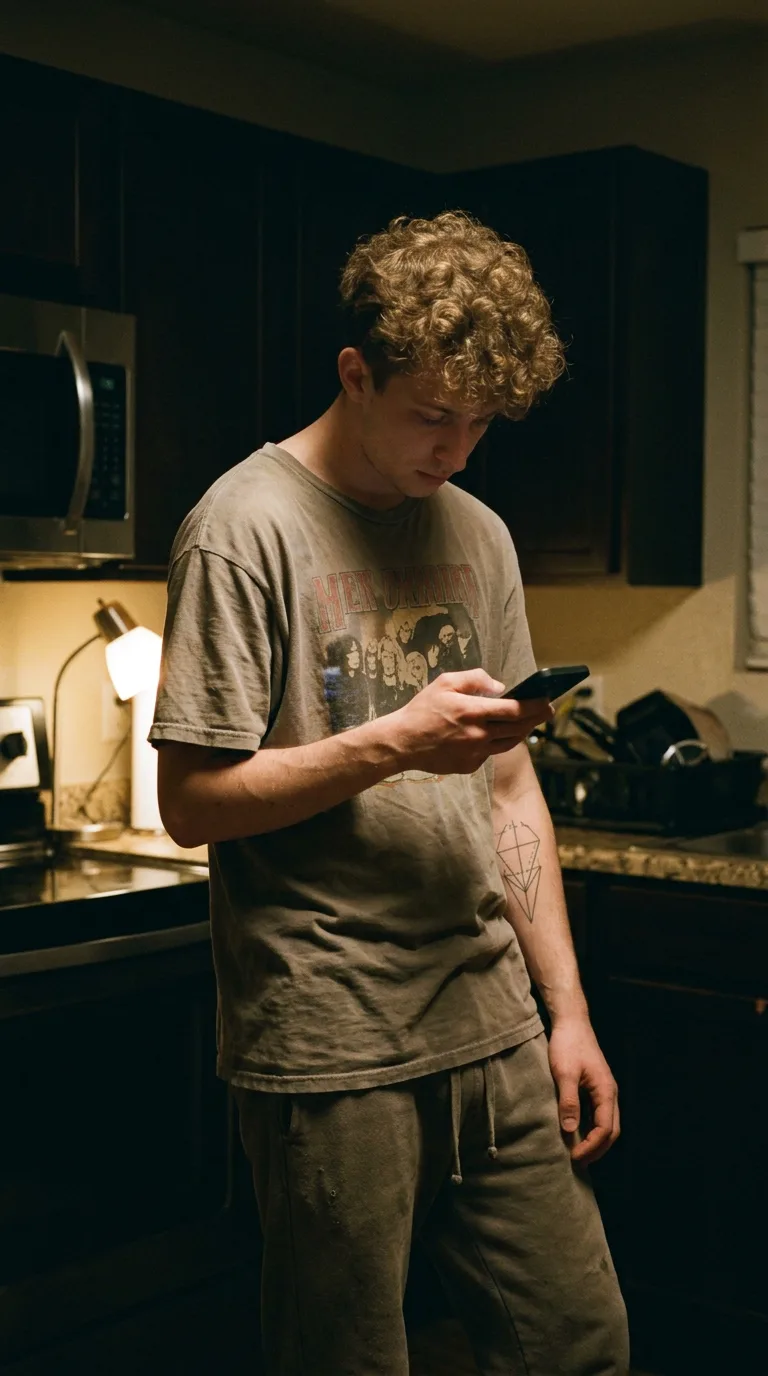
Rarest thing about him: Epilepsy — epic, 1 in 155
Season 0seed 2046347427 · engine v10
Character card
lineage 2NZHHJ
His body-swap story
@colin.hasbrook, wearing Nolan Reske, rolled the wheel on and woke up as Colby Traverse, spent 10 minutes in him, then spun the wheel and woke up as an unnamed body
You are four minutes into being Nolan Reske when the itch starts.
The apartment is his — a rented one-bedroom near Astoria Park, a lifeguard chair's whistle hung on a nail by the door like a trophy, chlorine still faint in the grout of the bathroom tile. You stood in his kitchen and felt his shoulders, wide and sun-cured, and thought: fine, this is fine, and then thought it again, and by the second time you knew the word for what it was. Not fine. Just a body. You have said that about three hundred and ninety-seven bodies now. Somewhere around body two-forty you stopped pretending the feeling had a bottom.
Nolan's phone is on the counter, cracked charging cable coiled beside it like it's used to being ignored. You don't even check what he was going to do tonight — some rerun, some beer, some ordinary Monday he earned by existing continuously as himself since Sunday. You open the site instead. vessel.cards. The wheel loads slow on his outdated phone, spins with that same dumb velvet-red flourish it always has, and you feed it money that isn't yours to spend because none of the money in any of these lives has ever really been yours.
It lands.
—
The kitchen light is the wrong color — warmer, dimmer, a lamp instead of overheads — and the counter under your forearm is granite, not laminate, and the phone in your hand is a stranger's phone, screen still lit on a watch you will never be able to afford, thumb still hovering a half-inch off the glass like it hasn't gotten the message yet that the decision's been made for it.
You are shorter now. Softer through the middle in that way that isn't fat so much as a kind of surrender, shoulders narrower than Nolan's ever were. The hand you're wearing turns the phone face-down on the counter, on its own, before you've told it to — an old reflex of his, not yours, finishing itself out — and then that hand just sits there, palm flat on the countertop, not picking anything back up.
Somewhere outside a window you can't see yet, the sky over Phoenix is doing the thing desert skies do at the end of a day: burning orange low over shapes that resolve, when you finally look, into the black cutout teeth of saguaros against a gravel yard.
The shirt is what opens him first — thin cotton, a band shirt gone soft with washing, some Vulture logo or other cracked and peeling under your — his — collarbone. Wearing it comes back like a smell: a bedroom this morning, sun already vicious at ten a.m. through blinds that don't quite close, and the particular ritual of getting dressed for a shift that starts at four. Colby doesn't wear these clothes anywhere but home. He put them on today already worn — hasn't left the apartment, hasn't needed to, off until tomorrow, day drifting sideways into evening with nothing in it but the phone.
The sweatpants know his legs — a runner's pair of shins gone quiet for a couple years now, a body that used to move more before the felt tables took the shape of his days and gave it back to him standing still eight hours at a stretch. Skinny-fat, his own mother's phrase for it once, laughing, not unkind. His hands remember something the arms don't: the fast, unconscious choreography of a shuffle, riffle, cut, the eyes-up count that happens under conscious thought entirely, muscle doing arithmetic. It comes with the smell of felt and hand sanitizer and the particular fluorescent hum of the Valley floor at 2 a.m., pit boss two tables down, a tourist from Minnesota tipping badly and apologizing for it.
There's a flash of the vest — black, a bow tie he's tied nine hundred times and still checks in the break room mirror, satin elbow patches worn shiny from leaning on the rail. Ordinary work. Not hated, not loved. A paycheck that doesn't stretch, rent that eats it whole the first week of the month, and a phone habit of scrolling watches he will never own the way some men scroll listings for houses — not really wanting the thing, wanting what having it would mean about the life underneath.
Under his own weight, standing here, is a fault line nobody watching him deal cards would guess at: something electric and unpredictable folded into the wiring, medication morning and night on the counter by the coffee maker, a driver's license with a code on it he never talks about, church on Sundays where somebody's always praying over him without being asked to. He has learned to read his own warnings — a taste like pennies, a light gone too bright at the edges — the way other men read weather. Tonight there's none of that. Tonight is just a kitchen, a phone, a price he can't stop looking at.
The forearm tells you last, quietest: fine lines of geometric ink laid into the skin years ago on a whim with a friend now gone from his life the ordinary way friends go, no fight, just distance. He remembers the buzz of the needle more than the friend's face.
None of it is a lot. It isn't supposed to be. It's a whole life sized exactly to itself, and you are standing in the middle of it holding a countertop that isn't going anywhere.
You lift the hand off the granite. Turn it over under the lamp, watching the tendons of somebody else's twenty-one years work at your command, watching light catch the little inked triangle nested in triangle on the inside of the arm.
Then you look up, past where a phone lies face-down and finished with, toward a window going the color of the inside of a furnace.
"Okay," you say, in his voice, testing what it does. "Okay. Not yet."
Not a promise. Not even to yourself.