Nico Sarnowski
Fictional. Generated by AI — not a real person, and no likeness of one is intended.
19, barber in Pittsburgh · rolled by @colin.hasbrook · card — no film
History
who has worn him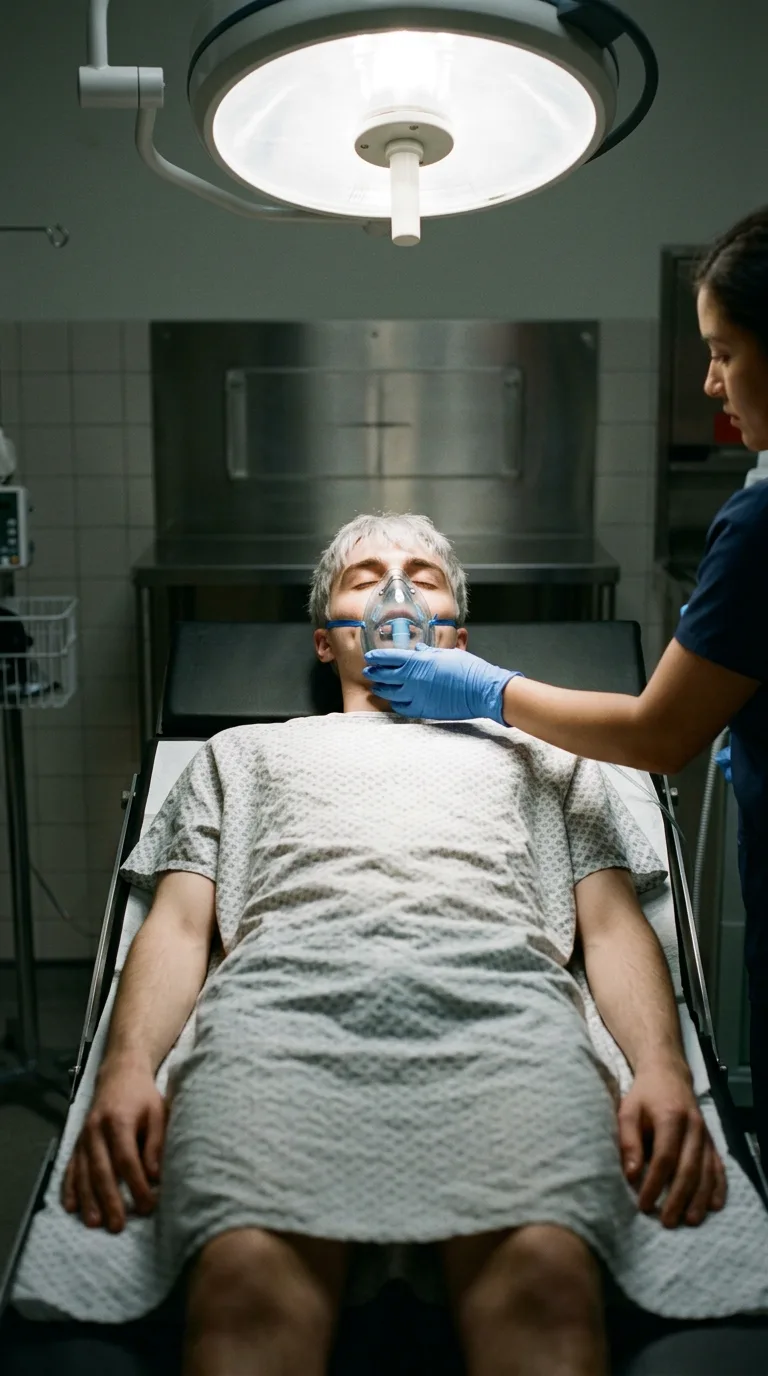
Rarest thing about him: Lip — epic, 1 in 104
Season 0seed 1652601535 · engine v10
Character card
lineage 2NZHHJ
His body-swap story
@colin.hasbrook, wearing David Kwon, rolled the wheel on and woke up as Nico Sarnowski, spent 3 minutes in him, then spun the wheel and woke up as Brian Costanza
The espresso machine hisses and David Kwon's wrist aches where it always aches, the tendon that never healed right from carrying trays for thirty years before the counter got him instead of a kitchen. Fifty-two years old, dad bod softening the apron ties, and you have been him for less than a minute and already the wanting is back, quieter than boredom, plainer than greed: you have simply never liked the ache. You wipe down the steam wand. Somewhere behind his sternum, David's actual heart is doing something small and unbothered, and you feel it like a room you're borrowing. You dry your hands on the rag, walk to the back, and on the cracked phone propped against the syrup rack you open vessel.cards with his thumb, because it is his thumb now and it does what you tell it. Monday evening. End of a shift you didn't work for. You spin.
The mask is warm plastic against a mouth that isn't yours yet and then is. Seven, someone says, counting down, and the seven never finishes — it just hangs there while the room reorganizes itself around a different tenant. Under the lids, before you even have the lids, eyes track once, left to right, checking the ceiling like it might have changed. It hasn't. Steel lamp, tiled wall, a nurse's blue glove still resting near the jaw. The hand on the table — his hand — opens and closes twice, testing the fingers like a new pair of gloves. They fit. Of course they fit. They were always his.
You are lying down, which is new; you spent the last stretch of existence standing at a counter. The gown is thin and papery under your — his — shoulder blades, and the paper crinkles when the shoulder blades shift, and that small dry sound is the first thing that arrives whole: a memory of another paper gown, another Monday, age eleven, a broken wrist from a skateboard, his mother in the waiting room rosary in hand though she never once said a word about it to him afterward, just held his good hand the whole ride home. That was the first time he learned his own body could fail him and be fixed. This is — the chart on the tray says something about a shoulder, an old rotator cuff torn from four years of holding clippers at the wrong angle, elbow cocked, day after day, until the joint gave out on a Tuesday mid-fade and he had to apologize to the client and finish the side with his left hand.
The gown against your back gives you the barbershop before it gives you anything else — the smell arrives first, talc and rubbing alcohol and the particular ammonia sweetness of bleach going into a bowl for someone's fade, and under it, always, the low hum of clippers left running in their charging dock. You feel his hands — your hands now, waiting there on the operating table, fingers that know a comb's weight without looking — twitch once with muscle memory, wanting to test an edge that isn't there. Nico's hands have never in nineteen years done anything as well as they do this: the flat glide of a #2 guard along a scalp, the two-finger check of length at the crown, the specific pressure of a straight razor at a hairline that makes grown men go quiet and still like something in church.
The lip ring is not there right now — they'd have made him take it out before they put him under, and the small bare hole in his lip throbs faintly, a soreness he barely registers most days, and getting a memory of that morning: standing in his apartment bathroom in Pittsburgh, wet hair pushed forward into the crop because that's how he likes the fringe to sit, working the ring back through with fingers gone clumsy from cold water, the mirror fogged at the edges. He'd put on the grey tee without thinking, the soft cotton one worn translucent at the shoulders from washing, tugged the dark jeans up over hips that have never quite been the shape he wanted them to be — skinny in the wrong places, soft in the others, a body he has made peace with mostly by never talking about it. Sneakers on. Thumb catching his cheek in the mirror before he left, dimples showing even though he wasn't smiling, because they never really go away, and some part of him used to hate that about his own face until enough people told him it was the whole reason they remembered him.
He'd caught the bus in, thinking about nothing, which is its own kind of memory — the ordinary Monday, the one before this one, before whatever brought him here, to a gurney, to a mask, to seven. Something in a shoulder that had to be looked at properly instead of iced and prayed over. Catholic in the unshowy way — a cross on a chain he doesn't wear to work because it swings when he leans in, a habit of crossing himself once, fast, before any car ride, before this too probably, before the mask went on and someone told him to count.
You feel nineteen in every joint that's supposed to feel it — the quickness underneath the softness, the tendons that snap back fast even carrying a little extra — and you feel the ache in the shoulder like a rumor of a life he was in the middle of living. Never drank. Never smoked. Just this: hands that touch his own face when he isn't thinking, checking the dimple like it might have moved, and a mouth that talks easy to strangers in a chair because that's the whole job, listening to men tell you what they don't tell anyone else while you stand behind them with something sharp.
You lift the hand off the table — his hand, small scar-free knuckles, a fresh IV taped at the crook of the elbow — and you turn it over slowly under the surgical light, the way you have now two hundred and twenty-six times and it has never once stopped being the first time.
"There we go," you say, out loud, to no one in the room who understands what just happened in it, and the dimples show even though nothing in his face has decided to smile yet.