Neil Petrosky
Fictional. Generated by AI — not a real person, and no likeness of one is intended.
65, barber in Philadelphia · rolled by @colin.hasbrook · card — no film
History
who has worn him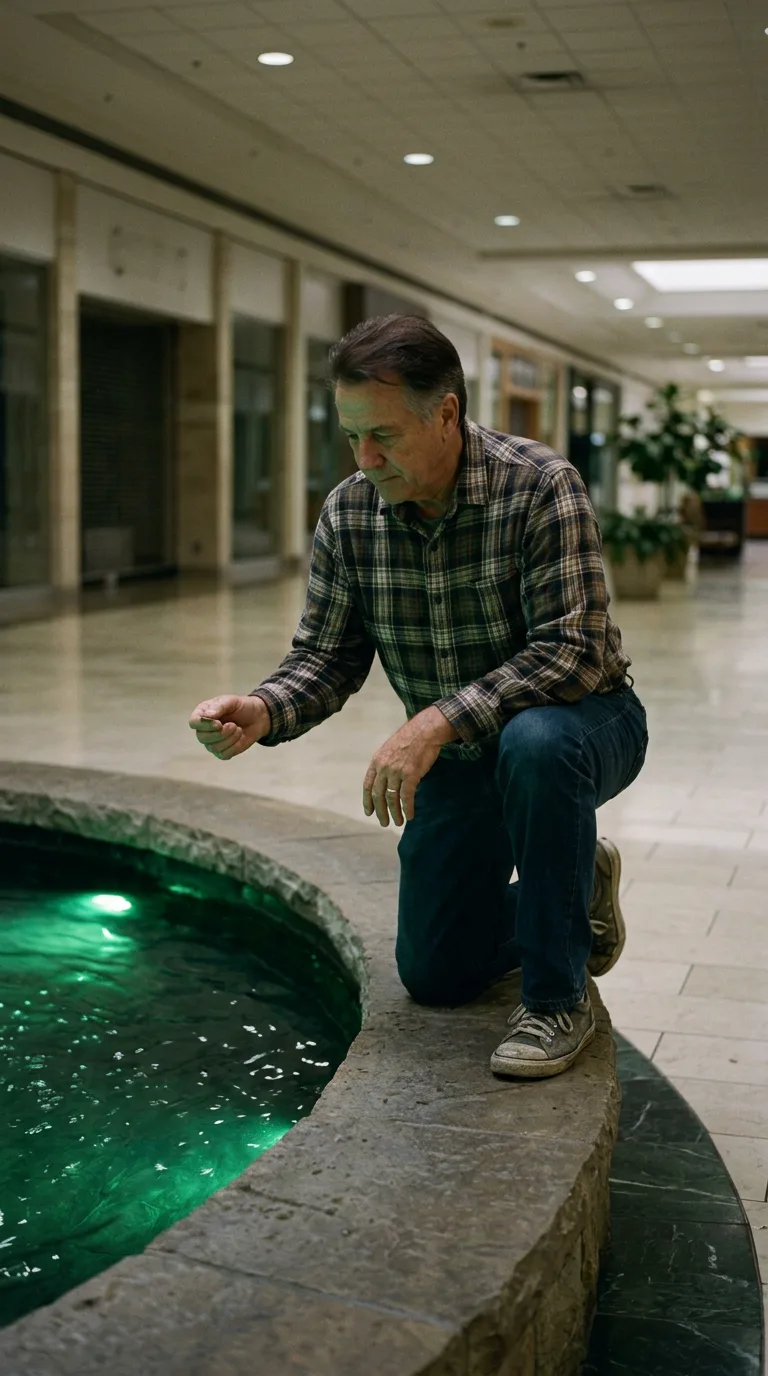
Rarest thing about him: Barber — rare, 1 in 76
Season 0seed 1571539388 · engine v10
Character card
lineage 2NZHHJ
His body-swap story
@colin.hasbrook, wearing Marcus Boileau, rolled the wheel on and woke up as Neil Petrosky, spent 2 minutes in him, then spun the wheel and woke up as Marcus Deveraux
You are sixty-one seconds into being a wrestling coach in a town small enough that the diner knows your order, and you already hate the shape of his hand on the light switch. Marcus Boileau's kitchen smells like liniment and old coffee. There's a gap in his front teeth you keep running your tongue over like it belongs to you, and it doesn't, and that's the whole problem — you were him for less than a minute and it already itches, this athletic body with its whistle on a hook by the door and a practice plan taped to the fridge. Somewhere under that is a life you have no patience for tonight. You didn't come back to the wheel because Marcus did something wrong. You came back because an hour and three minutes ago you were Gary Petrosky's brother-in-arms in a different body entirely — Gary, fifty-four, silver hair, a bouncer's forearms — and for the length of a held door and a nod between men who look nothing alike, you felt something in that bouncer's chest that you have not let go of since setting it down. A brother. You have never once, in two hundred and seventy-five spins, been someone's brother from the inside. You want to know what it looks like from the other end of that rope. So you find the site again on Marcus's phone, thumb shaking slightly with somebody else's tremor, and you spin.
The fountain water doesn't ripple where the coin goes in. It closes over itself wrong, a seam instead of a splash, and you are kneeling.
You are kneeling on stone with green light coming up through water that smells like chlorine and old pennies, one knee wet through denim, and the weight of you is different — heavier through the middle, softer, a man who sits more than he used to. Flannel sleeve against your forearm. A wedding band clicks the marble lip as your hand comes back empty from the toss. Somewhere behind you a mall that mostly isn't a mall anymore hums one working light at a time. You don't move for a second. Nobody told this body anything happened, because nothing did, to it.
Then the shirt gives it to you first — worn soft at the elbows, and you're standing in a bedroom at six-forty in the morning, working the second button before the first because that's the order Diane taught him thirty years ago and he never unlearned it, and the closet door sticks the same way it's stuck since Eisenhower Avenue, and there's a jar of pomade on the dresser that isn't pomade anymore, it's the dark-brown dye he does every third Sunday in the bathroom sink so the shop doesn't see gray on a man who still has to look like he knows what he's doing with somebody's hairline. Neil Petrosky, fifteen years behind the second chair at Corradi's on Ninth, the smell of Barbicide and the particular ache that lives in his lower back by two o'clock and never fully leaves after. His hands know a fade without being told — you feel that knowledge sitting in the fingers like a held breath, wanting a clipper that isn't there.
The wedding band gives you Diane, thirty-eight years, the wedding at St. Monica's, three kids grown and gone and one still calling every Sunday like clockwork and one who doesn't call at all and it costs him something every single week that it doesn't get talked about. The sneakers — new, still white at the toe, bought because his youngest laughed at the old ones — give you nothing but a small stubborn vanity, a man who still wants to be looked at kindly.
And under the collar, faint, worn at the hem from a hand that used to check if the coffee was hot enough by the back of it against the mug — Carol. Not Diane. A name that comes up through the shirt like smoke, thirty years old and still able to take the air out of a room: a woman he almost left for once, didn't, never told anyone, thinks about on nights he can't place why he's awake. He is standing at this fountain, at closing, alone, holding a coin he told himself was for nothing, for luck, for the Eagles, for his knees — and it wasn't. It was for her, one more time, the way it always secretly is, and he'll never say so and neither will you.
Gary comes last, thinnest of all — a phone call eight months back, a birthday missed, a silence between brothers who talk maybe four times a year and mean more by it than either says. That's what pulled you back tonight and you can feel now, standing in Gary's own brother without ever meaning to land here, that the wheel has a memory of its own you don't control.
You look down. Fifty-five-year-old fingers, a little swollen at the knuckle, the band worn thin on one side from turning it when he's nervous, which is always. You turn the hand over once, feel the ordinary ache in it, the smell of somebody else's aftershave still on the collar.
You look up into the dark glass of a closed storefront like it's a mirror, or a lens, and you say, "Gary, you should see this place now" — to no one, to the water, to a brother a hundred miles east who will never hear it — and you stay kneeling there a while longer, coin gone, wish already spent, not yet sure if you're done being him.