Marcus Deveraux
Fictional. Generated by AI — not a real person, and no likeness of one is intended.
26, model in Eastern Kentucky · rolled by @colin.hasbrook · card — no film
History
who has worn him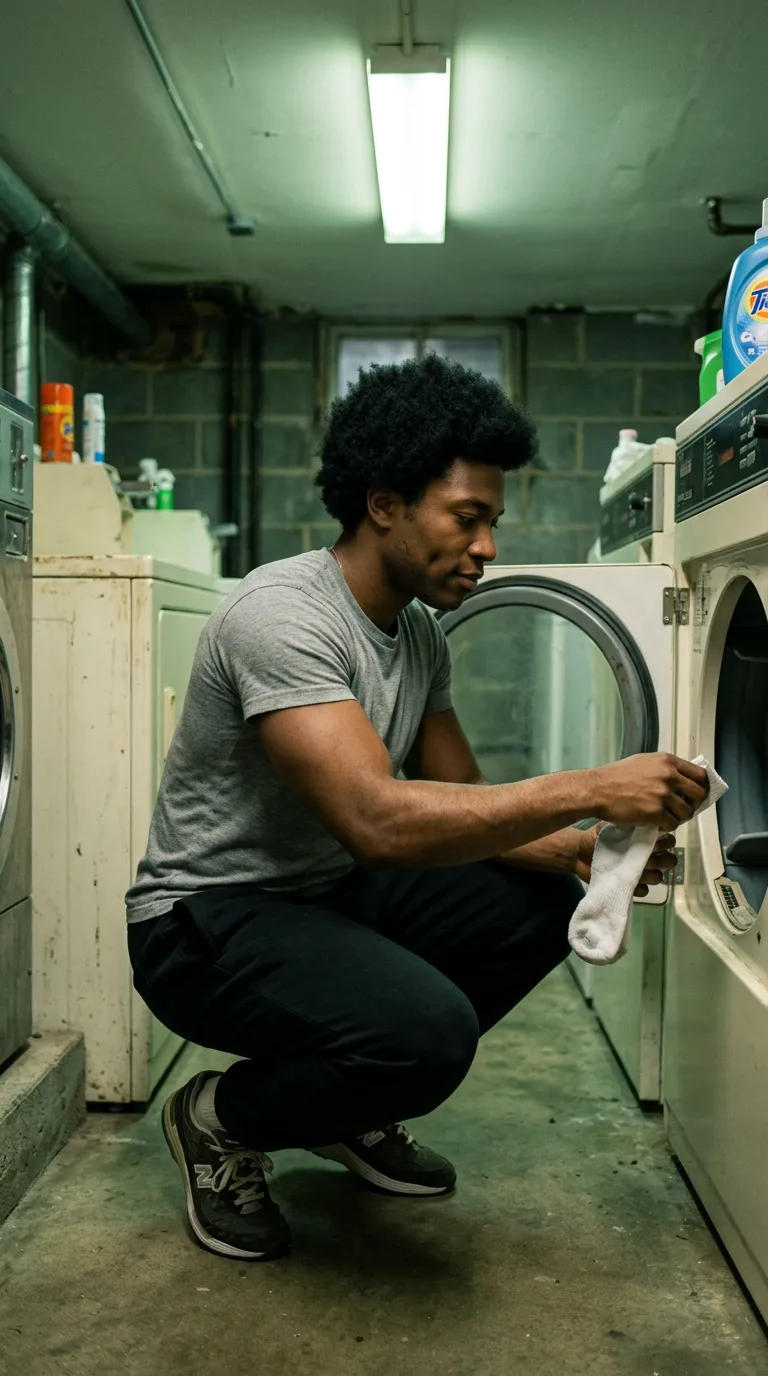
Rarest thing about him: Vapes socially — rare, 1 in 20
Season 0seed 1314473395 · engine v10
Character card
lineage 2NZHHJ
His body-swap story
@colin.hasbrook, wearing Neil Petrosky, rolled the wheel on and woke up as Marcus Deveraux, spent 1 minute in him, then spun the wheel and woke up as Cody Strasser
Neil Petrosky's hands ache in the small ways old hands ache — the left thumb, the knuckle he broke on a chair back in 1974, cold coming up through the joint even though the shop closed hours ago and the radiator's been going since five. Two minutes. That's all he's been this time, this gray, spotted, competent old barber with the silver hair combed the way barbers comb their own hair, out of habit, out of shame if they didn't. You feel the weight of him like a coat that doesn't fit — heavy in the gut, light in the legs, a body that has done its living and is coasting now on routine. You spun into a man already finished. There is no future in him worth wearing, only the ordinary rest of an ordinary night, and you did not come this far, spin after spin after spin, to sit still in somebody's twilight. You want your hands full of something again. You want to not know, for a while, what happens next in a life. Two minutes is enough of Neil Petrosky. You go to the site again — the wheel sitting there patient and bright on the screen he keeps propped against the register — and you pay, and you spin, not for any reason you'd say out loud except that stillness is the one thing two hundred and seventy-six men could not teach you to sit with.
The dryer door is open in front of you and warm air rolls out against your — his — face, and there is a white sock in your hand, damp-warm, and your knees are bent under you in a crouch that is not a strain, not yet, because this body is twenty-six and made of rope and muscle, nothing like the thumb you just left behind. Fluorescent light buzzes greenish overhead. Concrete underfoot, cool through the soles of the sneakers. You are here entire, mid-motion, one sock lifted out of a hot tangle of laundry, and the first thing that arrives is not a memory but a fact of the body: it is strong, and it does not hurt anywhere.
The sock is the first key. It turns and gives you a Sunday — sorting darks from whites on a bedroom floor that isn't this basement, a woman's voice down the hall asking if he wants eggs, and you feel the small easy love in it before you even have her name: Dana. Girlfriend. The word arrives with her laugh already inside it. You reach for the next armful of wet clothes and the shirt cuff brushes your wrist and there it is — sleeve by sleeve, this morning, or some morning enough like it to be every morning: pulling on this gray T-shirt in a bedroom with the window open to green, a footbridge somewhere down past the treeline swinging faintly under someone's boots, cable creaking. He'd stood in front of the mirror a half-second longer than a man should need to, checked the dimples were still there — they are always there, even now, even alone, some restfulness written into the face that outlasts whatever he's feeling — and thought about the studio call time, the drive, the coffee he didn't have time to make. Nashville and back some weeks, closer jobs most weeks, an agency that likes his face more than it's ever paid him for it. Under $5,000 to his name and he does not think about that the way you'd think it, no dread in it, just fact, church-taught patience sitting under everything like a floor: God provides, and if He hasn't yet, the week isn't over.
You are still crouched. The dryer heat is on your forearms. A flash off the New Balances on your feet — new, bought on sale, he'd been proud of that, the good kind for cheap — gives you a whole autumn of running the road out past the bridge before shoots, counting his breath, sweat cooling under the same afro that dimples matched by memory more than mirror. Your jaw finds a motion on its own — chewing, gum that isn't there anymore, ghost of a habit — and behind it a flicker of a lit vape passed at somebody's bonfire last summer, laughing at a joke he'd deny remembering, and behind that, further down, a glass he used to drink from set down for good years ago and never picked back up, not out of crisis, just a slow walking-away, the way a man drifts from a person he used to be closer to.
The socks keep coming. Fold, corner, square — his hands do this without him, always did, some order he needs in a life that otherwise doesn't have much to organize; a childhood memory surfaces of his mother making him refold towels until the edges met, and the satisfaction never left him, it just changed rooms. Upstairs, you already know without going there, is a drawer with eight shirts crumpled into it by somebody who didn't care the way this one does. That contradiction sits in the body plainly: precise here, careless there, a man who saves his order for what's in front of him and lets the rest go.
You pull the basket close. Warm fabric, damp cotton smell, laundry soap cutting through the basement's concrete cold. This is a body that has never once, in twenty-six years, had to think about whether it would be believed, whether a room would receive it kindly — the dimples do that work before he opens his mouth. You feel the ease of that like sun on skin you didn't know was cold.
You stop folding. You look down at your hands — his hands, broad, strong, a callus along one palm from gripping something that isn't in this room, a bar, a bag, work you haven't found the memory for yet — and you turn them over slowly in the fluorescent light, the way a man checks a thing he's been handed and told to keep.
Then you lift your eyes to find whatever's watching, and you say, quiet, almost to yourself:
"Whose towels am I folding."