Nazih Haddad
Fictional. Generated by AI — not a real person, and no likeness of one is intended.
63, trucker in Detroit · rolled by @colin.hasbrook · card — no film
History
who has worn him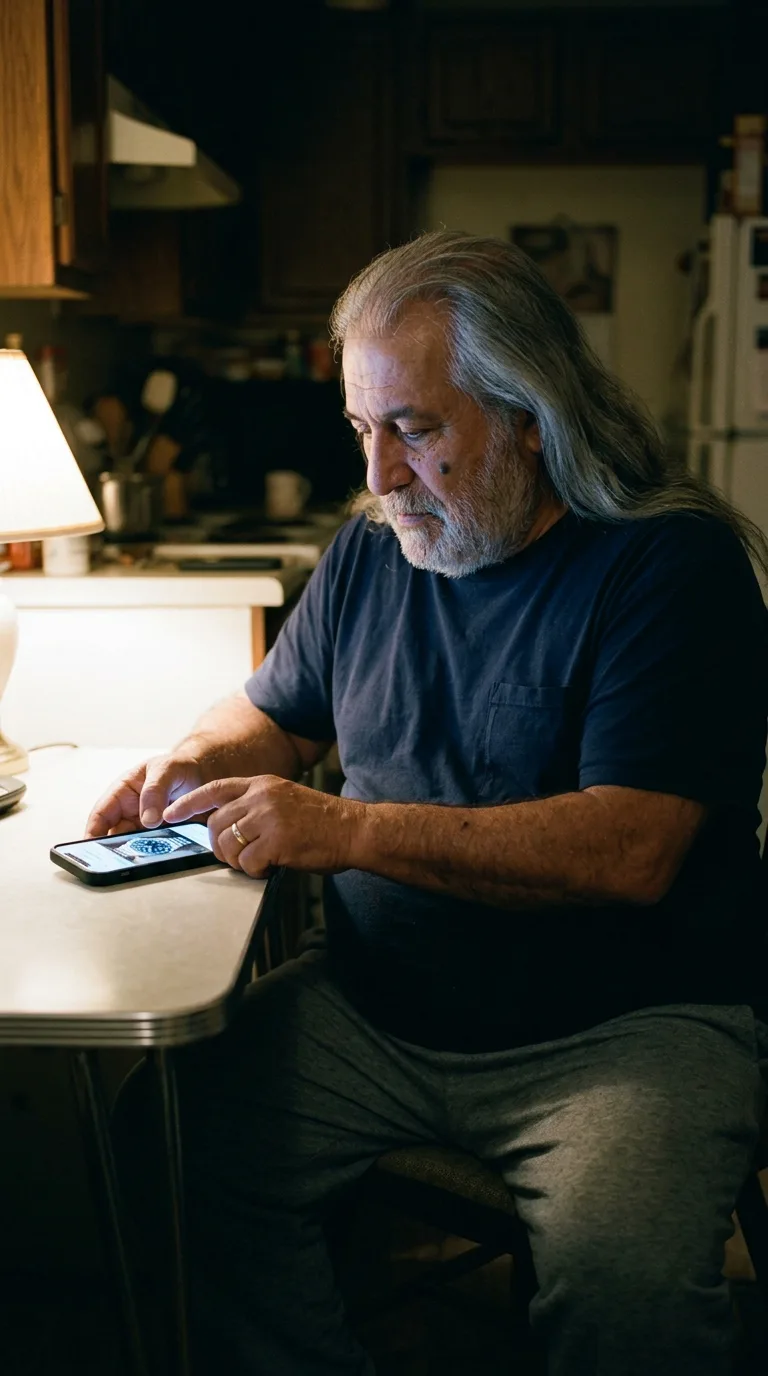
Rarest thing about him: Long, past the shoulder blades — epic, 1 in 445
Season 0seed 2003816226 · engine v10
Character card
lineage 2NZHHJ
His body-swap story
@colin.hasbrook rolled the wheel on and woke up as Nazih Haddad — their first, spent 2 minutes in him, then spun the wheel and woke up as Frank Osweiler
The evening does not announce itself as anything. It is just late, and there is nothing on, and the phone in your lap has led you, the way it always does, to that site. You have circled it for months, the way you circle everything you actually want — reading, not clicking, telling yourself it's a joke, a scam, a thing people build to take money from people like you who lie awake wanting to be someone else for reasons that have never once been simple. Tonight you click. A wheel, spinning on a white page, gaudy as a carnival, and underneath it a button that says SPIN, and a price that should feel like more than it does. You pay it. You spin it. You do not believe, even as your thumb taps down, that anything will happen at all.
It is a Monday afternoon where you are. Nothing else about you matters, and nothing else is given.
Then you are standing in a dark kitchen at eleven at night, and it is a Monday too, on the other side of the same instant, and the weight around you is not yours — heavy through the shoulders and gut, grounded low, a body that has spent decades learning how to stand in one place on a moving floor. A phone is warm and small under your — under his — thumb, mid-drag, and the last thing on the screen before the world reorganizes itself around you is a watch, steel and blue-faced, priced at more than this man makes in five weeks of driving. The thumb, still lifted a half-inch off the glass, does not move. Then it does — turning the phone face-down on the cracked laminate of the table, and the hand that does it does not reach back for it.
You are here. That's the whole of the arrival. No hallway, no falling, no light — just a kitchen with the smell of old coffee grounds and dish soap, a lamp with a yellowed shade throwing gold across a table edge, cabinets you didn't buy pressing in close on both sides. Your breath goes in and out slower than you're used to, if you're used to anything, and there's a catch at the back of it, a thickness, like the body is already halfway toward a snore it hasn't gotten to yet.
The shirt is what opens first. Flannel, red-and-black, unbuttoned over a gray undershirt gone soft from a hundred washes, and touching the collar of it gives you a hand — his hand, thick-knuckled, still faintly smelling of diesel no matter how many times it's scrubbed — buttoning it in a gray truck-stop dawn, sleeve first, the left arm always going in first out of habit older than memory, some superstition his mother had about dressing right-side blessed that he never believed and never once skipped. The mole on his cheek itches in the memory, the way it always itches when he's tired, and he'd rubbed it raw once as a kid until his mother slapped his hand down and told him God marks the ones He means to keep an eye on. He'd laughed about that for forty years. He believes it a little, still, some nights on the road when the white lines start doing that thing where they breathe.
The ring is next — plain gold, a little loose now that his hands have thinned in the last year even as the rest of him hasn't, and it brings back a whole wedding in one motion: a backyard in Dearborn, folding chairs, his mother crying into a napkin, Layla in a dress her sister made, both of them twenty-six and certain they knew exactly what they were promising. Forty years since. Two kids raised and gone — a son in Ohio who calls on Sundays, a daughter in Warren who doesn't call enough, and he doesn't say that to anyone, just holds it, the way he holds most things, in the muscle along his jaw that clenches itself these days without asking permission. There is an ex too, further back, a girl named Christine from before Layla, who he thinks of sometimes on long overnight hauls for no reason he'd ever admit to his wife — not longing exactly, just a door that opens onto a version of a life he didn't take, and he looks through it and closes it again, the way you'd check a mirror you don't need.
The chair under you is vinyl, cool through the sweatpants, and it brings the rig — forty years of it, the CB crackle, the specific ache that lives permanently now in his lower back and both knees, the mask he's supposed to wear at night for the apnea sitting in its case somewhere behind you on the counter, unused three nights out of five because it's easier some nights just to wake up gasping and go back under than to strap the thing to his face like an old man. He is an old man. Sixty-three and heavy and strong still in the forearms in a way that surprises people, a body that has loaded and unloaded and gripped a wheel for longer than some of his coworkers have been alive. His hands, when he's not watching them, know how to back a fifty-three-foot trailer into a gap you'd swear was too small, know how to check a hitch pin in the dark by feel alone. His faith sits in him quiet and load-bearing, a church on Sundays when he's home, a grace before dinner even when it's just him and a gas station sandwich in the cab. He does not smoke. He drinks a can of something most nights, sitting exactly where you're sitting now, and that's the last of it arriving — this table, this lamp, this precise late hour, and the watch still glowing face-down on the counter like a small rebuke.
You look at the hand on the table. His hand. Thick, ringed, faintly trembling now the way tired hands do, the nail beds a little worn from work you've never done a day of in whatever life you had before this chair. You turn it over, palm up, and the ceiling light catches the calluses, and something in you that has waited years for exactly this — not this man, not this kitchen, just the fact of a hand that used to be someone else's — sits still and amazed inside a chest that isn't doing anything dramatic at all, just breathing, a little rough, a little worn out from sixty-three years of use.
You lift your eyes to where the phone would be watching if a phone were watching, and you say, in his voice, thick with a day's driving still caught in the back of it:
"Well — I'll be damned."