Frank Osweiler
Fictional. Generated by AI — not a real person, and no likeness of one is intended.
50, mechanic in High-desert Nevada · rolled by @colin.hasbrook · card — no film
History
who has worn him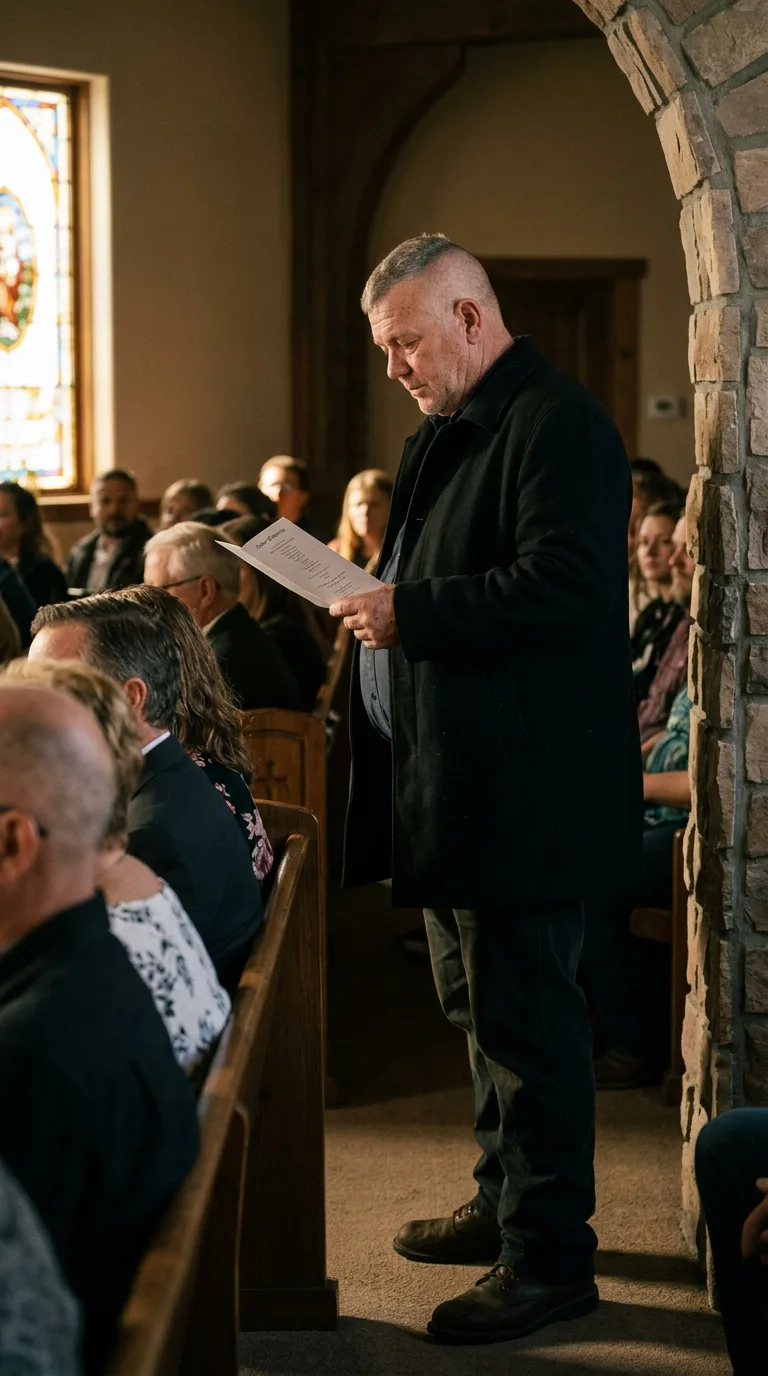
Rarest thing about him: At a funeral, at the back — rare, 1 in 106
Season 0seed 358779444 · engine v10
Character card
lineage 2NZHHJ
His body-swap story
@colin.hasbrook, wearing Nazih Haddad, rolled the wheel on and woke up as Frank Osweiler, spent under a minute in him, then spun the wheel and woke up as Tom Halvorsen
The cab is parked behind a Big Boy off I-94, and Nazih's body is folded into the driver's seat with the seat pushed back as far as it goes, and still his knees ache against the wheel. You have been him for one minute. The coffee in the console has gone the temperature of the afternoon. Your back — his back, sixty-three years of it — throbs in that low ring around the base of the spine that ibuprofen only argues with, doesn't beat. Outside, semis exhale. Inside, a phone with a cracked corner sits face-up on the dash, showing a text from a dispatcher he is already deciding to ignore, and you think: this is fine. This is a fine life. It is also, you understand within the sixtieth second of owning it, a life you did not choose so much as land in, the way a coin lands. You want to choose next time. You open the site again on the cracked phone, thumb still learning the print of it, and the wheel is already spinning before you've admitted to yourself that you're doing this again so soon.
The organ note cuts off mid-chord like a hand clapped over its mouth, and four hundred people rise as one animal, pews groaning, and you are lifted with them a half-beat late, a folded paper bending in your fingers, a coat collar tight and unfamiliar at your throat though it fits. Coming up out of a stoop you didn't make. Someone's shoulder inches from yours doesn't turn. The light through a stained window lands in a red bar across the carpet and nobody in the room has any idea that the man at the back, in the borrowed black coat, arrived one beat behind his own body.
The order of service is warm from being held. That's the first thing that comes through — not a memory yet, just heat, the paper soft at the fold where a thumb has worried it since the drive over. Then the drive over: two-lane blacktop unspooling grey-blue in a windshield, radio off, both hands on a wheel at ten and two out of some old habit, the seat belt riding the swell of a stomach that used to be flatter and that he stopped apologizing for around year forty-five. A man named Frank Osweiler drove himself here alone. Nobody in the passenger seat. Nobody has been in that passenger seat, not in the sense that counts, since Denise took the dog and the good cookware and left the a/c unit because it was too heavy to move alone.
The coat isn't his. That arrives next, itchy at the shoulders, a size big — borrowed off a peg at his cousin Loretta's, because his own funeral coat is at the cleaner's after Uncle Ray's service in March, and there have been enough of these lately that keeping a coat clean between them has become its own small chore, a middle-aged bookkeeping of loss. The friend in the casket up front is named Dave Kowalczyk, worked the next bay over at Diamond Auto for eleven years before his heart gave out changing his own oil pan on a Sunday, found by his boy. Frank had gone to that garage on a Saturday two weeks ago just to stand near the smell of it, brake fluid and shop rags, and hadn't cried, and is not crying now either, just standing very still with his eyes down the way he stands over an open hood when a problem hasn't announced itself yet and won't be rushed.
The shoes are the next thing — leather work boots polished as far as polish goes on boots that have absorbed forty years of a garage floor into their grain, and standing in them your knees remember decades of concrete, the particular ache that lives behind both kneecaps by ten in the morning and doesn't leave until a hot shower at night, if it leaves at all anymore. The back — his back, this back, fifty years young compared to the one you left an hour and a world away in Detroit — carries its own weather, a tightness low and to the left that started with a transmission he shouldn't have tried to lift alone in '09 and has been filing complaints ever since. Freckles map his nose and cheeks under fluorescent light and under this stained-glass light alike, the one part of him that never asked permission to be visible.
The morning comes back through the shirt against your spine — not this shirt, the coat is over it, but the undershirt he had on before he layered the good one, the last clean button-down in the closet, ironed badly by his own hand on the ironing board Denise left behind out of what he chooses to believe was decency and not indifference. Standing in the single-wide's narrow bedroom in his socks, sun already hard and white through the blinds though it wasn't seven yet, easing his left arm into the sleeve first because the shoulder complains less that way, doing up buttons that his fingers — thick, scarred at two knuckles, a mechanic's fingers that know a socket wrench's weight blind — manage slower than they used to. He'd looked at himself in the cracked bathroom mirror, gray-silver hair buzzed hard the week before by the same guy who's done it for a decade, freckles, blue eyes gone a little pouched at the bottom, and thought: Dave would've laughed at me fussing over a coat.
There is a whole marriage folded somewhere in the weight of the wallet in the coat's inside pocket — fourteen years, a woman who liked him best with grease still on him and liked him least by the end at all, no kids, which some nights he counts as luck and some nights doesn't. There is the garage, the two bays, the rag that lives in his back pocket like a second tail, the particular satisfaction of a stubborn bolt finally giving. There is the back pain that is his passport into every day and the drink he allows himself on a Friday and no other night, and the cigarettes he quit nine years ago and still sometimes reaches for a pocket that isn't there.
You look down. The paper order of service is still folded in his hand — your hand, now — Dave's name printed above a date, and the fingers holding it are blunt and sun-spotted and exactly the right size for a wrench you have never touched. You turn the hand over once, like checking it for a tremor, and nobody in the pew ahead so much as glances back.
"Sorry, Dave," you say, quiet, just under the settling rustle of a congregation sitting back down, and you don't know yet if that's him talking or you.