Nathan Sorrentino
Fictional. Generated by AI — not a real person, and no likeness of one is intended.
26, lawyer in Anchorage · rolled by @colin.hasbrook · card — no film
History
who has worn him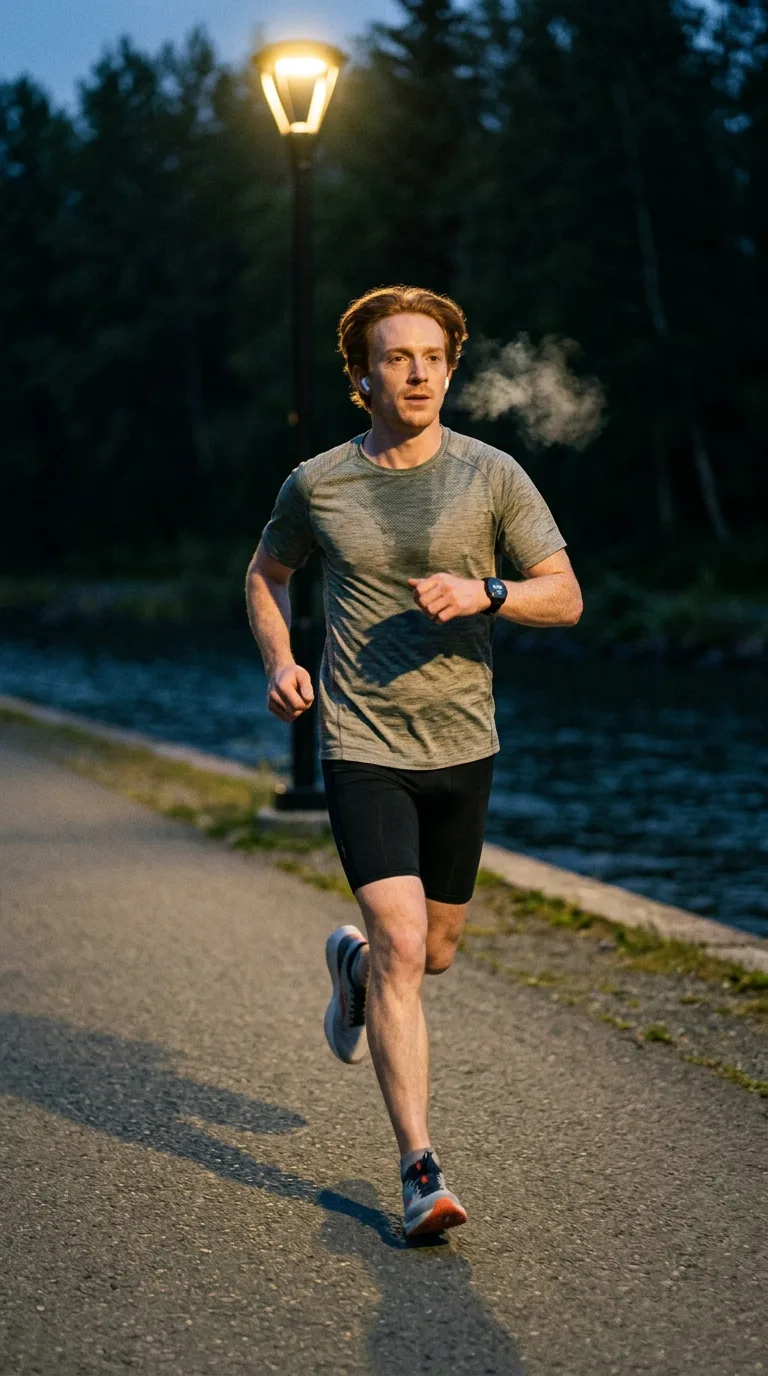
Rarest thing about him: Asexual — legendary, 1 in 125
Season 0seed 2016777175 · engine v10
Character card
lineage 2NZHHJ
His body-swap story
@colin.hasbrook, wearing Douglas Pemberton, rolled the wheel on and woke up as Nathan Sorrentino, spent 15 minutes in him, then spun the wheel and woke up as Colby Renshaw
The comb is between two fingers before you decide to put it down. Douglas Pemberton's kit sits on the shelf under the mirror the way it has for less than a minute of your ownership and forty years of his: talc, a leather strop, a photograph of a woman wedged into the corner of the frame, curling at the edges. You caught the tail end of a memory reaching for the comb — a boy on a barstool, Doug's father's hand on the back of his neck, the smell of Barbicide — and it was sweet in the way that makes you want to be somewhere else immediately. Forty-two years is a lot of file to inherit for a man you never asked to be. The dad bod, the blue eyes, the beauty mark he keeps almost covering with his collar out of a vanity he'd deny — none of it is bad. It's just already lived-in by somebody else's regrets, and you have been him for less than a minute and you can feel the whole shape of the next thirty years of him pressing up against you like a low ceiling. You want a body that hasn't decided anything yet. You want the version of a stranger where you get there before his own habits do.
You open the laptop on the counter, still smelling of bay rum you didn't choose, and you go to the page with the wheel on it, and Douglas Pemberton's hand — thick fingers, a scissors callus on the middle one — clicks to spin the six hundred and first time.
The stride breaks first. Not falls — breaks, the way a held note breaks, and then it is your weight coming down instead of his, the same shoe, the same wet gray light, the same canal sliding by on the left with a texture like hammered tin. Cold is already in your chest, drawn in through a mouth that isn't asking permission yet, breath fogging out ahead of a face you don't own. The watch on your wrist buzzes a split. Mile four. It has never seen this pace out of him and it does not care; it logs it anyway. Your arms drop lower on their own, the earbuds still feeding a podcast voice mid-sentence about a case citation, and your feet — his feet — keep finding the path without you.
The shirt is not on you; there's no shirt, there's a heat-mapped gray T already soaked through in a V at the sternum, and that's the first thing that opens: not clothes going on but clothes already worked, an hour deep, a story of tonight's run that started before you got here. Cold water is on this skin in the wrong places, ahead of the muscles, and warmth is coming up under it in the right ones, an engine that has been doing this since five and doesn't know a stranger just took the wheel. You feel it in the calves first — old miles, thousands of them, a body that knows exactly how to do this one thing without a single order from you, knees taking impact in a rhythm that predates you by a lifetime.
Then the shirt itself gives you the morning it went on — not this morning, an ordinary one from some other week, folded off a chair in a room with a humidifier running and a nightlight left on out of habit for kids down the hall who don't need it anymore. His hands — small scar-free hands, one knuckle permanently a little swollen from a filing cabinet — pull the shirt over his head one-armed while the other holds a mug of black coffee steady on the dresser, a habit so practiced it barely counts as multitasking. A toothpick rolls at the corner of his mouth, worn soft, chewed down to nothing; there hasn't been a cigarette in nineteen days and the toothpick is what's standing guard in its place, splintering slightly against a back molar. You feel the ghost ache behind it, low-grade, the specific hunger of quitting that isn't hunger for food.
The watch gives you more — a whole year folded into its buzz. Vows he didn't say in a church because there wasn't one that would have him and his boyfriend both in front of it, so they said them in a backyard in June with citronella candles going and his mother crying for reasons she wouldn't name aloud, and a good one, a really good one — Elias, laughing too loud at his own toast, ruining it, everyone loving him more for ruining it. And behind Elias, further back, another man's voice, quieter, the one who came before and still texts sometimes about the kids' dentist appointments, a decency between exes so ordinary it barely announces itself: Marcus, and mornings that ended with the door closing softer than it needed to. Two kids somewhere behind a shared custody calendar, a booster seat, a courtroom voice he uses on juries and never, ever on them.
The path gives you courthouse steps — a different morning, gray suit, briefcase handle worn shiny along the top where his palm always lands the same way, a closing argument he was proud of and told no one he was proud of because Evangelical humility doesn't love pride, even the earned kind, even when the church potluck afterward felt like the only place all year his whole chest unclenched. Somewhere in the same file: a doctor's flat voice, a cuff tightening on his arm, a scrip he takes most mornings without making it a thing.
None of it is enough time. There is a snowmobile under a blue tarp behind him right now, plywood siding catching the very beginning of full light, a smell of spruce and cold water and rubber. He runs like a man outrunning nothing in particular, which is the whole appeal of it.
Your stride — his stride — comes back level. The watch settles. You lift a hand that has a scissors-callus in none of the places the last one did, and you turn it in the growing light, palm up, like you're checking it arrived whole.
"Huh," you say, out loud, to no one on the empty path, and keep running.