Colby Renshaw
Fictional. Generated by AI — not a real person, and no likeness of one is intended.
22, student in El Paso · rolled by @colin.hasbrook · card — no film
History
who has worn him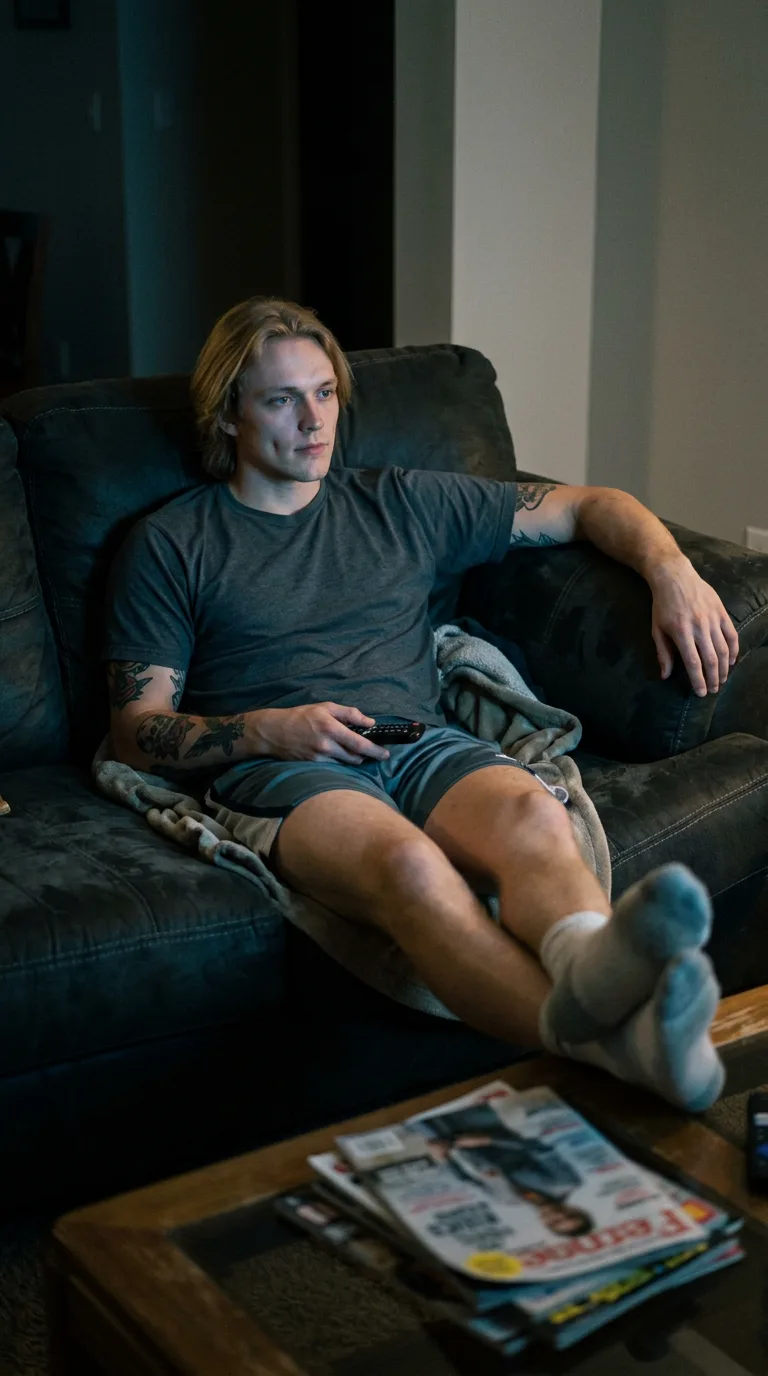
Rarest thing about him: A few, scattered — rare, 1 in 16
Season 0seed 478339200 · engine v10
Character card
lineage 2NZHHJ
His body-swap story
@colin.hasbrook, wearing Nathan Sorrentino, rolled the wheel on and woke up as Colby Renshaw, spent 33 minutes in him, then spun the wheel and woke up as Marco Lira
Fourteen minutes is nothing. You know this because you counted them, standing in Nathan Sorrentino's kitchen in the grey Anchorage dark, waiting for the coffee maker to finish a pot he wasn't going to drink, feeling the man's soft hands, his gym-toned arms that had never done a real day's labor, his mortgage anxiety sitting in his chest like a swallowed stone. Six-oh-two spins and you still do this small cruel experiment every time: try the new one on, see how the seams feel. Nathan's seams felt fine. Nathan's seams felt like a nice apartment and a firm handshake and absolutely nothing else, a man built entirely out of billable hours, and after fourteen minutes of being him you already knew every hour of every day that stretched out ahead, and none of them interested you. That's the whole confession, if you're being honest with yourself, which you try not to be too often: you don't spin because you're unhappy. You spin because you get bored the way rich men get bored, the way people who have already had everything get bored, and Nathan Sorrentino, 26, red-haired, lawyer, was already had. So you open the laptop at his kitchen counter in your socks, the reheated coffee going cold, and you find vessel.cards still logged in from last night, the wheel sitting there patient and lit up like a slot machine that never asks you to stop, and you spin it again before the coffee maker even finishes its cycle.
The television cuts to a bright frame — a commercial, something with a jingle — and in the space of that half-second where light floods the dark room you are sitting up straight on a couch that is not Nathan's couch, in a body that is enormous compared to the one you just left, long legs, a remote loose in a hand you did not open your eyes to see coming. Bare feet in white socks are up on a coffee table stacked with old magazines. Your back is deep in cushions that smell like somebody else's laundry detergent. Blond hair hangs against your neck, too long, the kind of long that happens by accident and not decision. You do not laugh at the joke on the screen the way he would have. You just sit, newly arrived, upright, still.
The couch under you is old leather-look fabric worn soft at the arm, and the second your forearm presses into it something comes back that isn't yours — an afternoon, months ago, sprawled here after a final, the relief of it, a girl's laugh from the kitchen, the smell of her cooking something with too much cumin. Selena. You get her name before you get anything else, the way names arrive first in this business, riding in on touch. The remote in your palm gives you Sunday nights, gives you the specific shame of watching a show you were embarrassed to admit you liked and watching it anyway because she teased you less about it than you expected her to. She isn't in the kitchen now. She hasn't been in any kitchen of his for six weeks, and the ache of that sits low and specific, a thing his body knows how to carry without being told, a thing his hands manage by picking at the cuticles of his thumb, which they are doing right now without him — without you — deciding to.
The shirt against your back — no, it's a plain tee, soft, worn thin at the collar — gives you the morning it went on: him standing in front of a mirror in the turquoise house, sun already hard and white through the blinds even though it wasn't nine yet, pulling it over his head one-armed the way he always did, tattoos catching the light, the eagle on the left forearm still tender-looking though the ink's been in three years. Traditional stuff, bold lines, an artist in Juárez who did the skull for cheap and did it right. He remembers getting the rose finished the same month Selena said she loved him, and being embarrassed that the two things got tangled together in his memory now, love and healing ink, itch and infatuation arriving on the same nerve.
The gym shorts under your palms bring back a whole year of them: intramural soccer he was decent at, the long body made for reaching things off high shelves, knees that ached a little already at twenty-two from something that happened running track in high school, a body that still, mostly, does what's asked of it without complaint. Six-three of him stretches now against the cushions, all long bone, and you feel how used to being tall he is, how he ducks under doorframes without thinking, how his shoulders have learned to take up space in a lecture hall seat built for someone smaller.
The coffee table's edge under a sock-foot gives you a Tuesday — an ordinary one, laptop open on a campus lawn, sun murderous, a professor's email about an extension he didn't really need but asked for anyway because Selena used to make him nervous about deadlines and now nobody makes him nervous about anything, which feels less like freedom than it should. He is scraping by, has always scraped by, financial aid and a part-time job at a taquería that doesn't come with tips worth mentioning, and none of that has ever once kept him up at night the way she did.
It is the middle of the morning here, hard desert light leaking gold around blackout curtains someone — him, hungover from a Saturday two nights back, one of maybe two big nights a month — pulled shut and never reopened, and so he's here at eleven with the TV going instead of in a lecture, and that fact sits without judgment, his own private truancy, small and unremarkable and his.
You look down. The hand is broad-knuckled, tan, a thumbnail bitten short at the cuticle, an eagle's wingtip just visible where the sleeve rides up. You turn it over slowly, the way you always do, checking the weight of a new life against your palm, and dimples show in his face even though nothing in it is smiling.
"Didn't even get to the good part," you say to the empty, sunlit-behind-curtains room, and you don't know yet if that's true, or for how long you'll be the one who gets to find out.