Nathan Farooqi
Fictional. Generated by AI — not a real person, and no likeness of one is intended.
38, janitor in El Paso · rolled by @bryce.kellerman · card — no film
History
who has worn him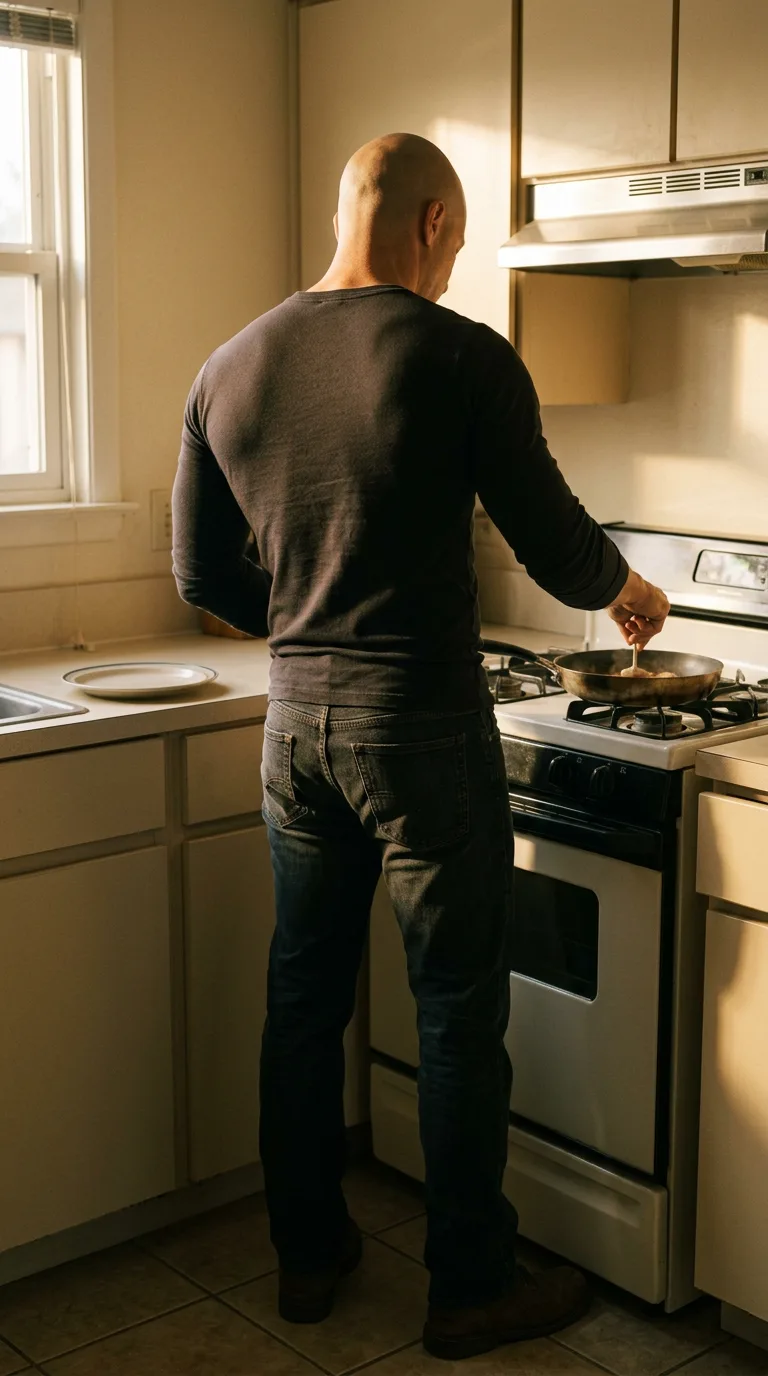
Rarest thing about him: Buddhist — common, 1 in 49
Season 1seed 1296374201 · engine v11
Character card
lineage 9IC4OB
His body-swap story
@bryce.kellerman, wearing Ronnie Bacigalupi, rolled the wheel on and woke up as Nathan Farooqi
Ronnie's apartment smells like cardboard and the diesel that never washes out of his jacket. You have been him for four minutes, sitting on the edge of his mattress with his phone still logged into everything, and already the thing that sent you back is sitting in your chest like a swallowed stone: this body is short and strong and none of the doors open on their own the way they did the last time. There's a food delivery app open on the screen, three stars, a complaint from a customer about a cold bag, and something in you — not him, never him, you were only ever visiting — decides this life is too small to spend a Sunday in. You open the browser. The wheel is still the last tab, patient, spinning slowly on its own axis like it's been waiting for you to get bored. You pay. You spin. Boston goes out like a light.
The stirring stops mid-circle.
You are here now — wherever here is — and the spoon reverses direction in a hand that is not the hand you had a second ago, thicker through the knuckle, a shine of gold hair-fine and freckled to the wrist. Steam off the pan. A window to your left going amber-orange with a light that has no business calling itself evening in Boston, because it isn't evening in Boston, not here — this is a different sun, low and huge and already the color of the inside of a peach. You salt the pan without tasting it, some rhythm underneath you doing it before you can, and your hand — his hand — reaches up into a cabinet and comes down with a second plate, and sets it beside the first one, and you don't know why yet, and neither, anymore, does he.
Cotton, worn soft, drags against your back when you shift your weight, and that's the first door: the shirt gives you the closet it came from, dark and narrow, hangers on wire, and the particular ten seconds this morning when he pulled it over his head without looking, because he's dressed himself in this rotation of four shirts for six years and his body knows the sleeves before his mind arrives. There's a second shirt in there still smelling of her perfume, unworn, that he hasn't been able to throw out and hasn't put on either. You feel that the way you'd feel a bruise you didn't know you'd have until you leaned on it — a name rises without a face attached, something like *Mara*, and a whole spring of her sitting cross-legged on his kitchen counter while he cooked, laughing at him for salting everything twice.
The spoon in your fingers is his and knows the pan better than you ever will; twenty years of institutional kitchens and one year of cooking for somebody who mattered taught this hand to move without asking permission. Your feet — his feet, size ten, in boots he takes off at the door out of some rule about the desert getting into a house and staying there — are planted on tile that's been mopped so many times by other people's mops that it has a memory of its own, and through it comes a hallway, fluorescent-lit, after the buses have gone, the particular hush of a school building emptied of children, keys on his belt swinging as he pushes a cart past a mural some fourth grader painted, checking the water fountain, the trophy case, whether the west doors locked. He likes it best when it's quiet and his alone. He likes the click the master key makes. Something in his chest when he found the sixth grader's retainer in a lost-and-found box and drove it home himself rather than let it get thrown out — a small kindness nobody ever thanked him for, because nobody knew.
The tribal ink on his upper arm, half under the rolled sleeve, comes with a room that smelled like antiseptic and rock music, twenty-two years old, a version of himself that believed permanence meant something. His shaved head is a discipline now, not a style — thirty seconds every third morning with a razor and no mirror needed, an old ritual, something almost like the sitting he does some nights on a cushion in the front room, incense going out the window because the smoke detector is aggressive and cheap. Buddhist, quietly, without needing anyone to know that either. A body that lifts things for a living and lifts more on purpose after — the ache in his shoulders is honest ache, not injury, strength held on a short leash.
And the second plate. Now it comes, now that your hand has already set it down: Mara's plate, chipped at the rim, that he never got around to putting in the donate box, and six months of Sunday dinners cooked automatically for two out of a hand that has not caught up to the fact that it's one. He knows, somewhere under the knowing, that he's alone in the house. He does it anyway some nights, without deciding to, the way his fingers used to look for a lighter to flip when he still smoked and haven't fully unlearned the wanting of something to turn over.
You look down at your hands. Freckled, blunt-nailed, a life of grip strength in them, a thin pale line at one knuckle from a box cutter years ago. They are not yours and they are, now, for as long as this lasts.
You lift your eyes to the window, to the sun that's wrong for the hour you left, and you say, out loud, to the empty kitchen: "Two plates. Still doing that."
Somewhere behind your eyes, a wheel keeps spinning that he will never get to see.