Nathan Bhatt
Fictional. Generated by AI — not a real person, and no likeness of one is intended.
33, sanitation worker in Los Angeles · rolled by @colin.tarwater · card — no film
History
who has worn him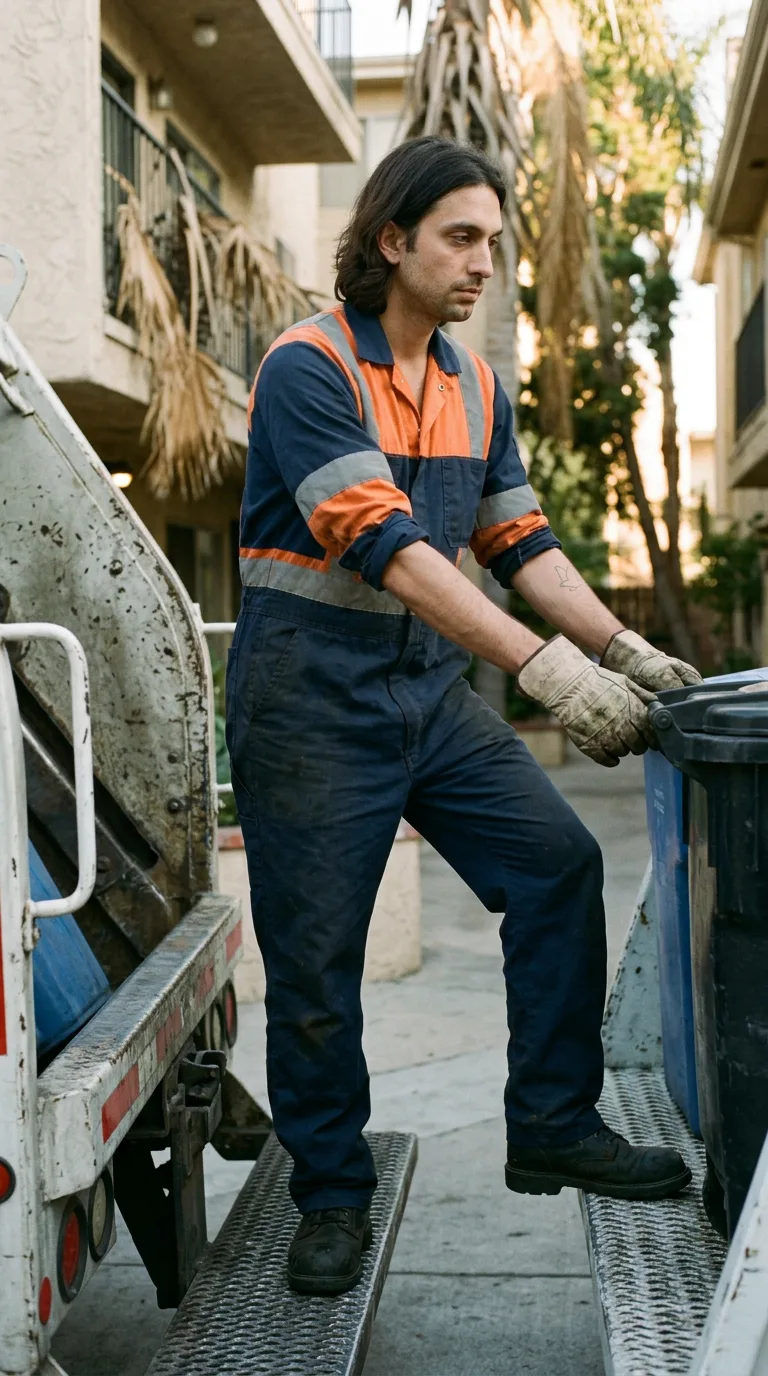
Rarest thing about him: Jehovah's Witness — epic, 1 in 116
Season 0seed 1588297475 · engine v10
Character card
lineage COEU7T
His body-swap story
@colin.tarwater, wearing Rolando Cazares, rolled the wheel on and woke up as Nathan Bhatt, spent 1 minute in him, then spun the wheel and woke up as Ernesto Villagómez
Rolando's kitchen is quiet the way a barracks kitchen gets quiet after ten p.m., which is to say not quiet at all — a ceiling fan ticking, a neighbor's dog, the low hum of a Tuesday nobody is going to remember. You are standing in his body at his counter, forty-eight years old, dimples, hazel eyes, a soldier's shoulders gone a little soft at the edges of a life you've had less than a minute, and you already know you are done with him. Not because of anything he did. Because there was nothing left to open. You spun him, and he arrived, and by the second flash of memory you had already seen the whole shape of the man — deployment, divorce, a son who calls on Sundays out of duty — and the shape was fine, it was a life, but it did not surprise you once. Sixty spins in you stopped wanting a good life. You want the next thirty seconds of not knowing. You set his coffee mug down on his own counter like it belongs to someone else, because by the terms you live under now, it does, and you open the laptop that is not laptop but altar, and the wheel is already spinning before you've finished deciding.
It lands on evening in Los Angeles, on a man stepping backward off a truck with a gloved hand on a bin lid.
The rhythm breaks on the down-stroke — the tilt-and-roll he's done ten thousand times comes out wrong, the bin catching the lip of the curb instead of clearing it, and then he does it again, slow, deliberate, correct, like a man re-learning his own name with his hands. You are behind his eyes now, hazel going a shade you have to blink to trust, and the light is doing that late-day amber thing through dry palm fronds, low enough to throw his shadow long across the sidewalk. His body is thirty-three and it announces itself immediately in ways Rolando's never did — softer through the middle, less certain in the knees, a low ache riding the lumbar that has nothing to do with age and everything to do with six a.m. starts stacked on six a.m. starts. Your hand — his hand — is still on the bin, glove stiff with old grime, and the next nine lifts come out checked, each one, like a man proofreading a sentence he's read a thousand times.
The glove is the first key. Leather gone hard at the fingers, a smell of rubber and rot inside it, and it opens a whole morning: him pulling these gloves on in a break room that smells like burnt coffee, some guy named Ito ribbing him about the Dodgers, the particular ache of a body not fully awake at 5:47 doing work that does not wait for you to be ready. Then the coverall against his back — navy and orange, a collar gone soft with washing — and that's the closet, that's this morning, sleeve into sleeve, the snaps up the front done one-handed because he's done it a thousand mornings and his fingers know the order without his eyes. Maya's voice from the bedroom, still half-asleep, telling him there's yesterday's rice if he wants it for lunch. The apartment courtyard outside their window, palms gone the color of old rope, stucco holding the day's heat like a held breath. He loves her plainly, uncomplicatedly, the way you love a person you have decided not to leave — and underneath that, quieter, not touched today, is a name that isn't Maya's, a woman from before who left for reasons that were mostly his and some of them weren't, and he does not think about her every day anymore, which he considers a kind of grace.
The truck step under his boots gives him the job itself — not the smell, he stopped noticing the smell in year two, but the rhythm, the route, the particular satisfaction of a block cleared before the sun is properly up, before the meeting on Thursday nights where he sits in folding chairs and means the things he says there more than he means most things. He believes, actually believes, that this — the truck, the block, the folding chairs — is not the whole of what he's for. He believes there's an accounting somewhere he's not in charge of.
The forearm is the last thing, and it comes with a wince that isn't yours — a dove, drawn badly, done at nineteen by a friend's cousin with a machine that shouldn't have been used on skin, a decision made in one stupid confident hour that he has been quietly ashamed of for fourteen years and never once had removed, because removing it would mean explaining why he got it, and the why is dumber than the tattoo.
You look down. His hands — thin wrists, a workingman's callus starting at the base of each finger, a bird he regrets riding the inside of one forearm — turn over in front of his face like he's checking they're real, like he's checking they're his, which they are and now also aren't.
"Okay," you say, out loud, to no one, to the darkening courtyard, to a life you have just walked into the middle of. "Okay. Let's see what you've got."