Mike Donahue
Fictional. Generated by AI — not a real person, and no likeness of one is intended.
43, mechanic in Boston · rolled by @marco.villagrana · card — no film
History
who has worn him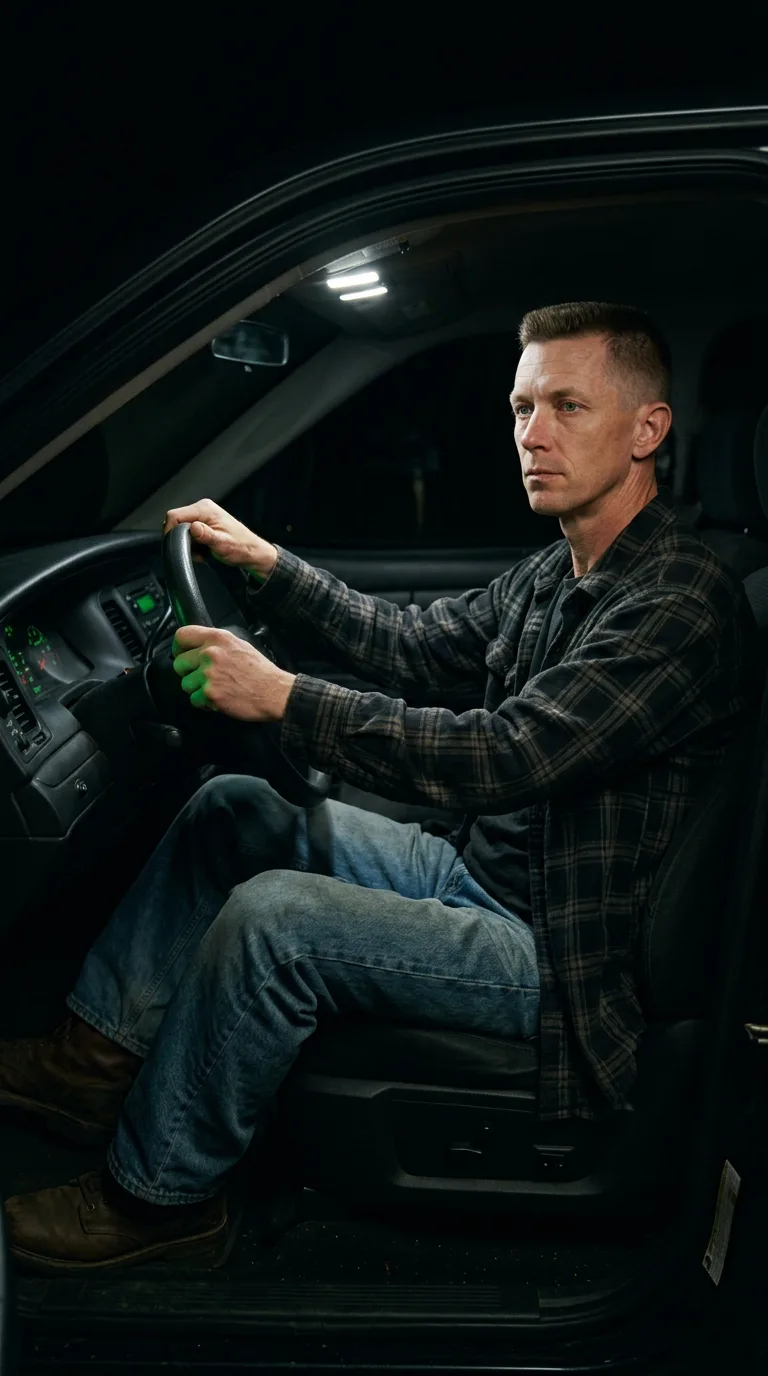
Rarest thing about him: Driving home — uncommon, 1 in 34
Season 0seed 305652926 · engine v10
Character card
lineage LJL8SV
His body-swap story
@marco.villagrana, wearing Ethan Wachowski, rolled the wheel on and woke up as Mike Donahue, spent 3 minutes in him, then spun the wheel and woke up as Julián Reyes
You are Ethan Wachowski for three minutes, and in those three minutes you have already learned everything you need to know about being him, which is that there is nothing to learn. He is standing in his kitchen in Small-town Ohio on a Sunday afternoon, and the refrigerator hums, and somewhere a dog that is not his dog is barking two yards over, and his phone is on the counter with a text from someone named Denise still unanswered from Thursday. Bald by choice, dimpled when he isn't trying to be, an accountant's soft palms that have never done a day of work that left a mark on them. You spun him up out of a hardware store cashier who bored you in about the same span, and already this kitchen, this hum, this unanswered Denise, is a country you have visited and are ready to leave. It isn't disgust. It's just that a body that has nothing wrong with it and nothing right with it either is the fastest kind to get tired of. You go to the counter, you open the laptop that is already open, you go to vessel.cards, because that's what you do now, that's the whole shape of your Sundays, and you pay, and you spin.
The wheel is still turning somewhere behind your eyes when it isn't anymore, and you are behind different eyes, and the light is all wrong — headlight-colored, dashboard-green, no kitchen fluorescents anywhere — and your hands, which a half-second ago were long-fingered and hairless and reaching for a trackpad, are wide and callused and coming off a steering wheel, resettling low on it like they've done this ten thousand times without asking permission from anybody upstairs. There's a turn signal ticking that shouldn't be ticking. There's a road, dark, wet-black with old rain, unspooling under headlights that aren't yours to have aimed. You're aware, first, of how his shoulders sit — narrower than Ethan's, a wiry kind of narrow, and a smell in the cab of motor oil gone into the seams of a flannel shirt so deep it isn't a smell anymore, it's just what air is.
The clothes tell you first, because that's the order these things come in. The flannel against your back gives you a whole morning before you've asked for it — Mike Donahue standing in front of a dresser in a three-decker bedroom with the storm windows still not swapped for the season, pulling the flannel on over a gray T-shirt, buttoning it one-handed the way he's done since he was nineteen because the other hand's always got a coffee mug in it. The coveralls that aren't on him right now but that his hands remember anyway — the weight of them, the name patch stitched crooked because he did it himself with a sewing kit that used to be his mother's, MIKE in red thread on white oval, a little askew, and he's never had it fixed because fixing it would mean admitting he noticed. Boots that took four months to break in right and now fit like a second set of feet, oil ground so far into the leather it doesn't wipe off anymore, it's just the color they are.
The wheel under your palms gives you the last nine hours: a Sunday double at the shop because Ray called in and somebody had to be there for the tow-in on the Sable with the blown head gasket, and the good ache of that — not the money, though the money's fine, but the specific tiredness of having actually fixed something, of a car that came in making a sound and going out not making it. Forty-three years old and his lower back tells him about it every time he stands up from under a lift, and his knees have opinions about kneeling on concrete that they didn't used to have, and none of it is bad exactly, it's just the bill that comes due for doing work with your body instead of talking about doing work with your body. He is skinny in the way men get skinny who never stopped moving long enough to be anything else. His hands know a torque wrench, a filter, the particular stubborn give of a bolt that's been in too long, better than they know most people.
The dash glow gives you Sarah — not a wife, a girlfriend, eight months in, a woman who texted him a laughing thing about the Patriots forty minutes ago that he hasn't answered because he was still under the Sable. Nobody before her that still costs him anything to think about; that part of him is clean the way a garage floor gets clean at the end of a good day, swept, nothing left to trip on. No kids. A little money in an account he doesn't check often enough, put there by not spending on much besides gas and the occasional big night out that turns into two beers too many and a headache he earns honestly. He believes there's something bigger than the shop and the porch and the highway, some shape to it he couldn't diagram if you asked him to, and he's never once needed to say that out loud to anybody, not even Sarah.
And under all of it, running the whole time like the engine never actually stops: the porch waiting three miles up the road, storm door with the bad hinge, autumn coming down gray over Boston in that flat overcast way it does, and him just driving home, hands at ten and two, thinking about nothing in particular, which is its own kind of good.
The turn signal is still ticking for an exit that was never his. You reach over — his hand, thin-fingered, a burn scar's worth of small nicks across the knuckles that aren't marks, just wear, just the map of thousands of hours — and you shut it off, and you look down at that hand on the wheel like it just walked in from somewhere else.
"Okay," you say, out loud, to the empty cab, in a voice that's rougher and lower than the one you had ten seconds and one body ago. "Okay. Let's see what you're about."