Mateo Brandt
Fictional. Generated by AI — not a real person, and no likeness of one is intended.
27, refrigeration technician in Western Kansas · rolled by @owen.prescott · card — no film
History
who has worn him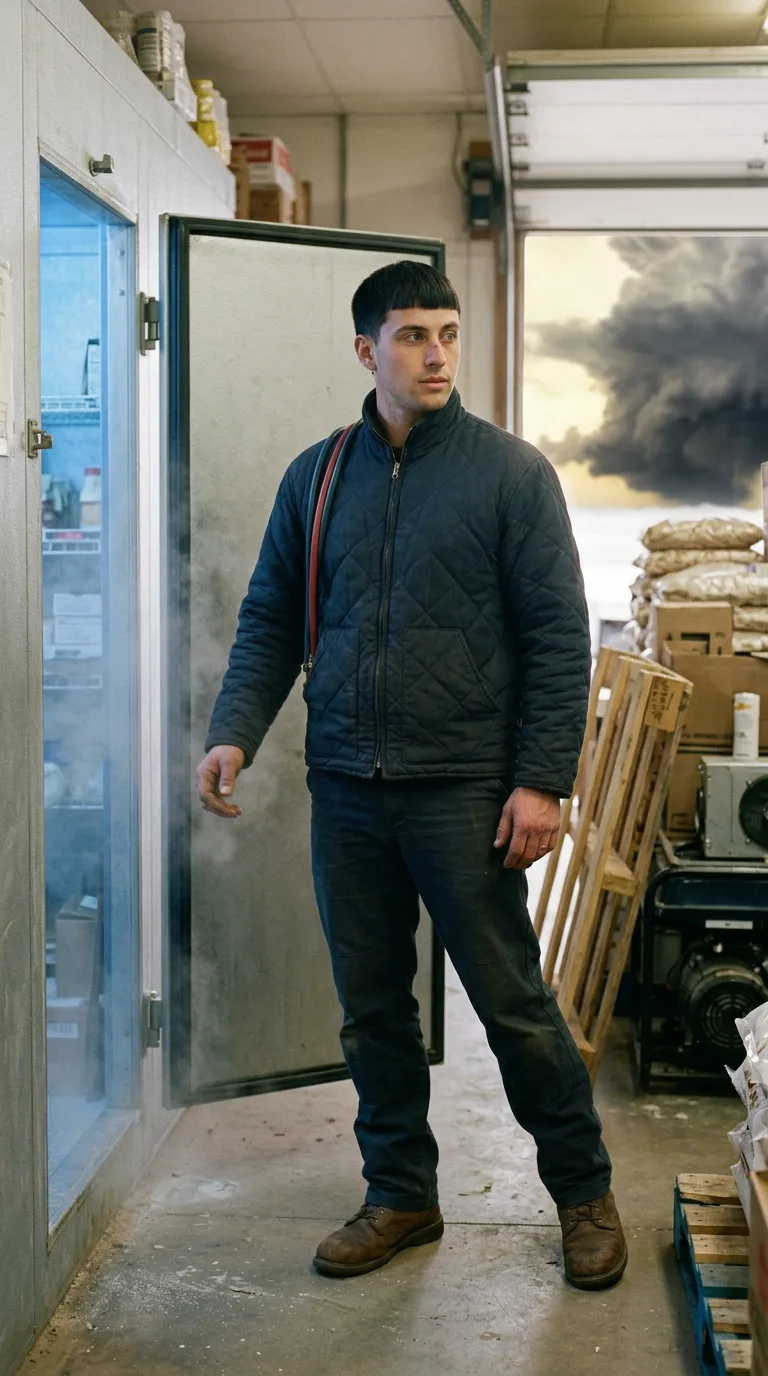
Rarest thing about him: Buried — $100k+ underwater — uncommon, 1 in 161
Season 1seed 1651140825 · engine v11
Character card
lineage 5OR92V
His body-swap story
@owen.prescott, wearing Marcus Whitlow, rolled the wheel on and woke up as Mateo Brandt, spent under a minute in him, then spun the wheel and woke up as Reginald Thorne
You are standing in Marcus Whitlow's kitchen in Anchorage, in the dark before the day, and his coffee has gone cold in the mug. You have been him for less than a minute. The unibrow itches. His belly sits against the counter edge like a thing he apologizes for. You were handed a man who talks people through their worst hours for a living, and you stood here and found you did not want a single one of those hours. Somebody's grief is waiting in his phone. You open the page with the wheel on it. Your thumb knows the way already. You pay, and you spin.
Then the cold. Fog rolls across your knuckles and you are standing in a back room with the walk-in door open at your shoulder, one boot planted, the other mid-step. The motion was going somewhere and now it is yours. Something hangs heavy across your shoulder, a pair of hoses, red and blue, brass fittings knocking at your hip. Your breath shows. Through the loading door the sky has turned the yellow of an old bruise, and a black thunderhead is stacking over the cut stubble. You reach for the door's edge, wrong, and do it again slowly, correctly. Then the latch, the gasket, the hinge, each one checked, though they have not needed checking in years.
The quilted jacket is stiff at the collar, and the cloth against your neck gives you a morning. His hands zip it in a dark kitchen, one sleeve and then the other, while a woman asleep down the hall turns over and the baby monitor hisses. He stands a long time at the counter before leaving. There is a bottle behind the cereal. He did not touch it this morning, and he is proud of that and ashamed of being proud. His jaw is clenched now. You feel the hinge of it ache, and you unclench it, and it tightens again.
The ring is a small cold weight on your left hand. You turn it with your thumb and a flash arrives: a courthouse hallway, a girl laughing at the way he held the pen, a baby's weight on his chest on a couch at four in the morning, the bank letter folded in the glovebox, a number so large he reads it like weather. A Catholic's guilt sits under all of it, a rosary in the truck's visor, the lie of "we're fine" said kindly. The earring pinches. The crooked nose remembers a fist behind a gas station when he was nineteen, and a laugh afterward with blood in it.
The floor is concrete, and the dust of it comes up through his boot soles. His knees are twenty-seven and fine. His shoulders are sore from the hoses. Under all of it is a tiredness that is not sleep, the tiredness of arithmetic done nightly.
You look at your hands. They are scarred at the knuckles, steady, a stranger's, and they are yours. You lift your eyes.
"Still here," you say, quietly, to nobody. And you wonder how long, and when the wanting will come back.