Mateo Bolarguez
Fictional. Generated by AI — not a real person, and no likeness of one is intended.
29, bus driver in High-desert Nevada · rolled by @colin.hasbrook · card — no film
History
who has worn him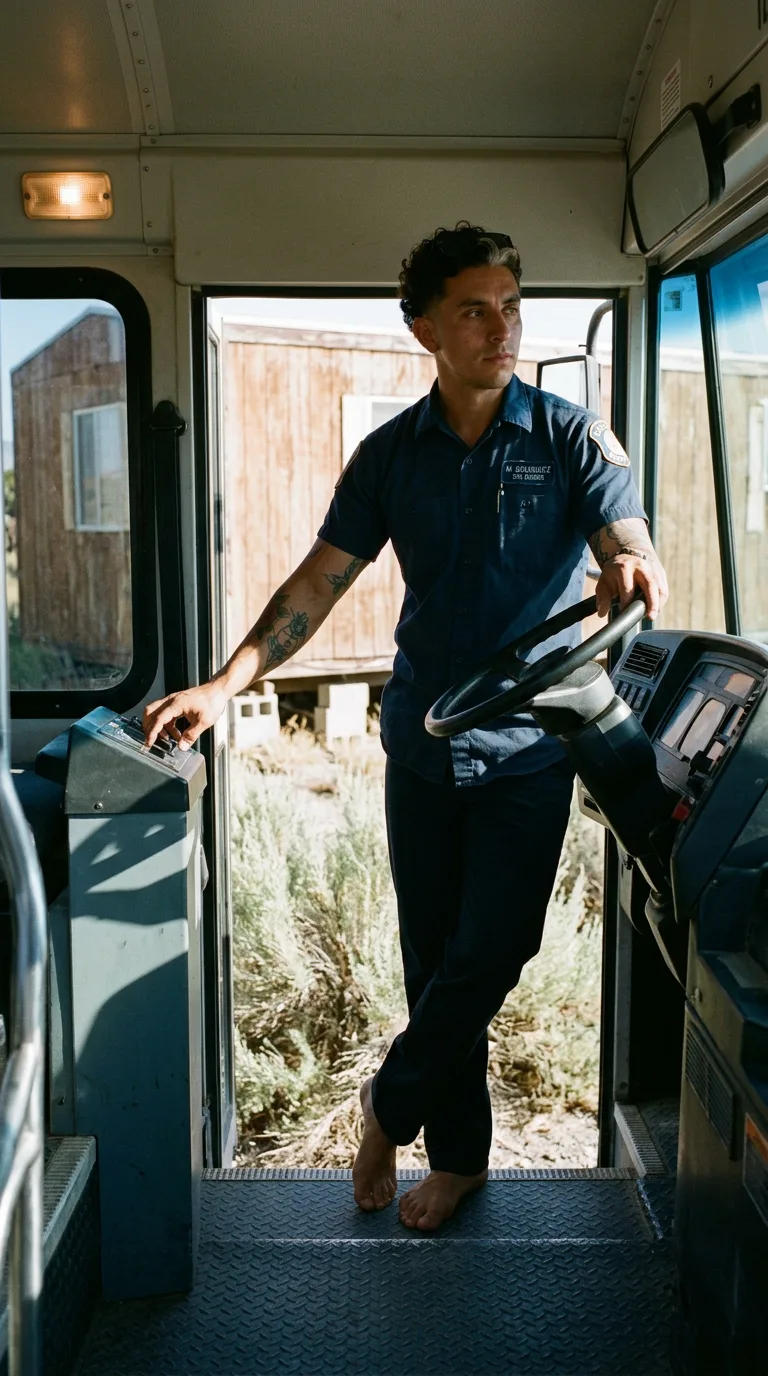
Rarest thing about him: A white streak in the hair — epic, 1 in 102
Season 0seed 328264002 · engine v10
Character card
lineage 2NZHHJ
His body-swap story
@colin.hasbrook, wearing Douglas Nakashima, rolled the wheel on and woke up as Mateo Bolarguez, spent under a minute in him, then spun the wheel and woke up as Deshawn Rutley
The line ticket says three plates, and Douglas Nakashima's hands know exactly how far along they are without looking, the way they've known for eleven years in this kitchen — except today the knowing has gone thin, worn through like a rag used one time too many. Fifty-one years old, feet aching in shoes bought for a younger arch, dimples gone slack because there's nothing here worth smiling for. Somewhere under the ticket rail, phone facedown, vessel.cards still open from a break he took forty minutes into a double, thumb already moving before he'd decided anything. He is not unhappy exactly. He is just a man who has been every kind of man now and none of them stay interesting past the second week, and this one — silver-haired, competent, unbothered — has been competent and unbothered for what feels like a very long stretch of an ordinary Monday, and the itch under that is old and simple: there is always a better one on the wheel, and he has a hundred and fifty-one reasons already spent to believe it.
He wipes his hand on his apron. That's the last thing Douglas Nakashima's hand ever does.
—
The step is warm steel under bare feet, morning light coming in low and orange through sagebrush, and your hand — his hand — is already closing on the fare-box lever when the motion goes wrong. You pull it a half-inch short. Then again, slow, correct, deliberate, like a man relearning a door he's opened ten thousand times. The bus is empty behind you, ticking as it cools or warms, you can't tell yet which direction the day is going. Bare feet. No shoes on. That registers before anything else does — the diamond-plate tread pressing little grids into the sole of a foot that isn't used to going without boots this late into a shift.
Your hands go to the wheel and check it. Check the mirror. Check the door lever again, unnecessarily, the way a man taps a wallet in his pocket he already knows is there.
—
The shirt is what gives it up first — navy twill gone soft at the collar, a name patch stitched crooked at one corner because he did it himself with a sewing kit that belonged to nobody's mother, just something he bought at a Walmart in Pahrump two years back. M. BOLARGUEZ. The stitching comes with the smell of it: fabric softener bought in bulk, a hint of diesel that never fully washes out, and under that, him — sweat and sun and something like cedar, though there's no cedar for eighty miles.
The morning comes back in pieces, sleeve by sleeve. He'd stood in the trailer's one mirror, the one with the corner gone silver-black, and pulled this shirt on over a chest that still surprises him some mornings, the muscle put on hauling irrigation pipe on his uncle's lot two summers running, kept up now with a bench in the yard and nothing better to do most nights. The tattoos went on in his twenties — the anchor for a grandfather who was Navy and dead before Mateo could ask him anything worth asking, the rose for nobody, just a rose, just because the shop was open and he had eighty dollars and wanted color on his arm that meant he'd survived being twenty-three. The skull he doesn't love anymore. He'd think that most mornings, buttoning this shirt: I don't love that one anymore, and go to work anyway.
The white streak comes back as its own small history — sixteen years old and it grew in overnight, a stripe of frost at the front of all that curl, and his mother crossed herself and said it was nothing, mijo, it's nothing, and took him to Mass anyway that Sunday like it might need forgiving. Kids called him things. He grew the hair longer on top to give it somewhere to sit instead of standing up alone, and it worked, mostly, and now it's just his, the first thing anyone says when they describe him to somebody else.
The wheel under your hands is worn smooth in two spots exactly where his palms have always gone, and that worn place brings the route with it — the loop out past the Sinclair station, the trailer park, the two widows who ride to the Ridley's every Tuesday and Thursday and tip him with hard candy, the high school kids who don't ride anymore because school let out for summer three weeks back, which is why this bus is empty at an hour it usually isn't, why he's parked here at the far turnaround with nothing on the clock but himself and the desert cooling down from the day's heat into whatever this new light is. Feet bare because he takes his boots off on the last empty leg, always has, some old habit from a stepfather who hated shoes on furniture and it stuck long after the furniture and the stepfather were both gone.
No wife's photograph anywhere to reach for. No kid's height marked on a doorframe. Church on the Sundays he isn't too tired, a rosary in the glovebox he touches out of habit more than belief, twenty-nine years old and nothing on him that he'd call a debt except the actual debt, the number he doesn't look at, printed on paper in a drawer in the trailer, more than he'll clear this decade at this wage and he knows it and drives anyway, because the alternative to driving is nothing, and Mateo Bolarguez has never once in his life chosen nothing.
—
You look down. Your hands — his hands, brown-knuckled, ink faded to the color of old bruises on the forearms, a callus along the first finger from a wheel gridded to fit it — turn over in the light coming through the windshield, palms up, like you're checking them for something you already know isn't there.
You look up, out through the open door where the sagebrush is going gold, and you say, to no one, in his voice, "Whose is this."
Not a question. Not really. You're already reaching for the door lever again, and this time it moves right the first try.