Mateo Alejandro Reyes
Fictional. Generated by AI — not a real person, and no likeness of one is intended.
33, chief executive in Houston · rolled by @marco.villagrana · card — no film
History
who has worn him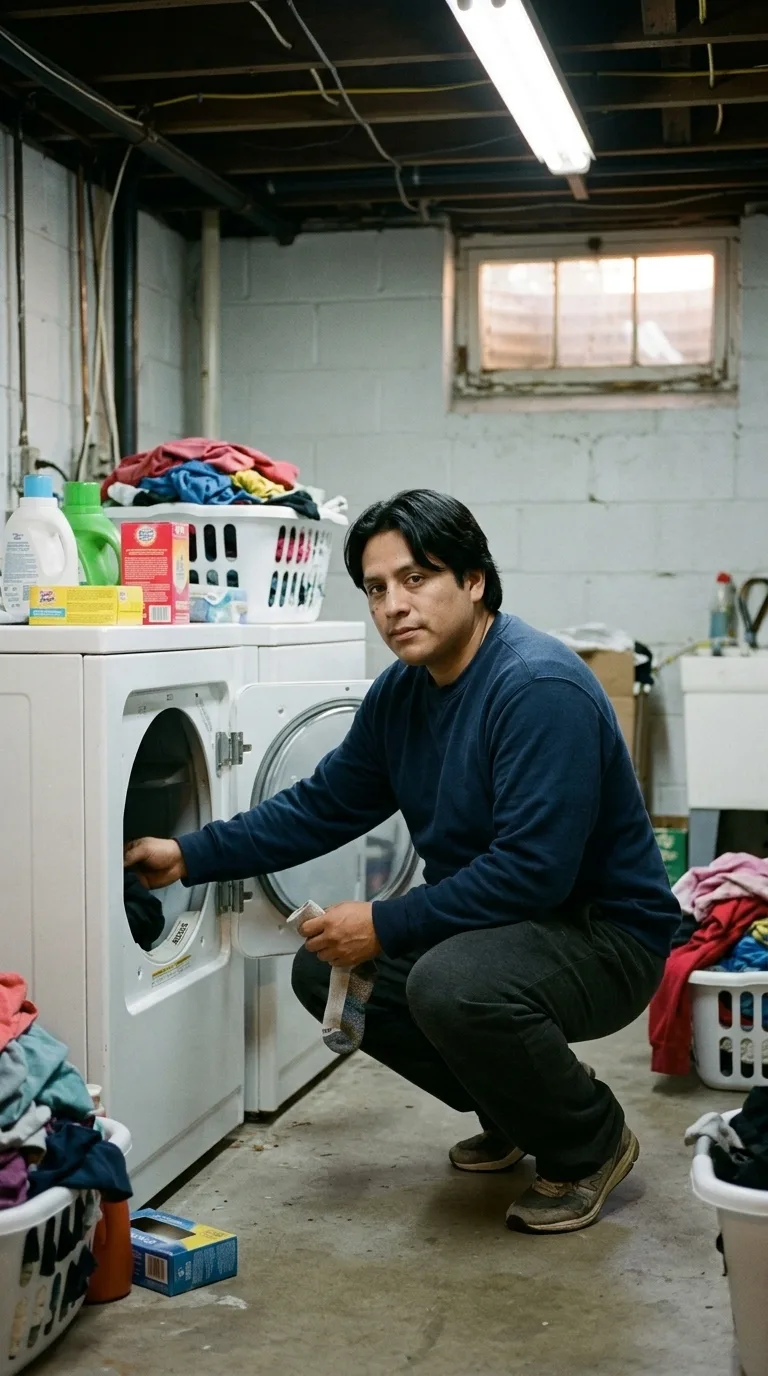
Rarest thing about him: An ancestral tradition — rare, 1 in 169
Season 1seed 603379615 · engine v11
Character card
lineage LJL8SV
His body-swap story
@marco.villagrana, wearing Terrell Augustin Boyce, rolled the wheel on and woke up as Mateo Alejandro Reyes, spent 3 minutes in him, then spun the wheel and woke up as Cody Ray Hollister
You are standing at the front of a train, in Terrell Boyce's body, three minutes into him. Your feet are planted in the cab. The brake handle is cold under a hand that is not yours, though it is yours now. His shoulders are small and strong, and his knees ache in a way he has stopped noticing. The tunnel rushes at the glass. Everyone on the platform behind you is going home, and you are doing the thing he does, calling stations in his low rolling voice.
It is enough. It is a fine body, and that is the trouble. Nothing is wrong with him, and you feel the fact of it like a held breath. In three minutes you have worked out the whole of him: the green eyes in the dark glass, the mark on his face, and the route that runs the same each night. You have been a hundred and sixty-nine men and you know how this ends, in a settling. You want the lurch of someone unfamiliar, so you open the page with the wheel and pay.
It turns. It lands.
Warmth first. Heat on your forearm, inside a dryer drum, a soft pile of cotton pushed against your wrist. You are crouched. Your thighs burn from it and your weight sits low and thick over your heels. One sock is in your left hand, gray-heeled and still warm. A fluorescent tube hums over you, a single flat note, and under it the dryer ticks as it cools. The air smells of detergent and damp cinderblock.
You pull the load out. Dark fabric slides over your knuckles and drops into the basket. Your right leg is already bouncing, the heel lifting and falling against the concrete. It has done this all along without being asked.
The sock in your hand gives him up first. The wool is rough and knobbed. Suddenly it is a Sunday and a woman's voice calls from upstairs, asking where the other one went. He has been matching socks to keep from thinking about a number. It is the number from the meeting at work, the one he has to say aloud on Monday to forty people. He is the chief executive and he hates how the title sounds in his mother's mouth, how proud and how afraid. She pronounces it in Spanish, *jefe*, like something that can be taken back.
The sweater against your chest is navy and soft with washing. You feel his morning in it, sleeve by sleeve. His right arm went in first, as always. He pulled the neck over his head in the dark while she slept and the city was a gray square in the window. He stood there a moment with his hand flat on the blanket over her hip and did not wake her. The cuff is frayed where his thumb worries it, and your thumb finds the spot.
Cold concrete comes up through the worn soles of his shoes. Under that is a deeper memory of a different floor, his grandmother's kitchen, red tile. She burned copal on the windowsill every first of the month and told him the old ones listen if you feed them smoke. He does not believe it entirely. He lights it anyway, twice a year, in a saucer, and tells no one. The smell of it rises now out of nothing, resin and sweetness, and your eyes sting.
You fold a shirt, fast and square, the corners exact. His hands know it. They learned it from her, and nothing in this basement is as orderly as what they do. Upstairs, he knows, a drawer holds eight crumpled shirts. He leaves them as a small rebellion against his own precision. There is a glass of water he drinks instead of what he used to drink. There are three years of mornings without it, counted in his chest like stones. His belly sits warm and soft over his belt. He has a bad left knee, a good back, and a good life he is afraid of.
You stand. The tube hums. You hold your hand up in the light, turn it over, and look at the palm, the creases, the mole you can feel on your cheek like a small bead of heat.
"Okay," you say, in his voice, quietly, to no one. "Let's see you."
Somewhere the page is still open, and the wheel is quiet. You do not know how long the quiet lasts.