Marlon Whitfield
Fictional. Generated by AI — not a real person, and no likeness of one is intended.
55, barber in Small-town Ohio · rolled by @colin.hasbrook · card — no film
History
who has worn him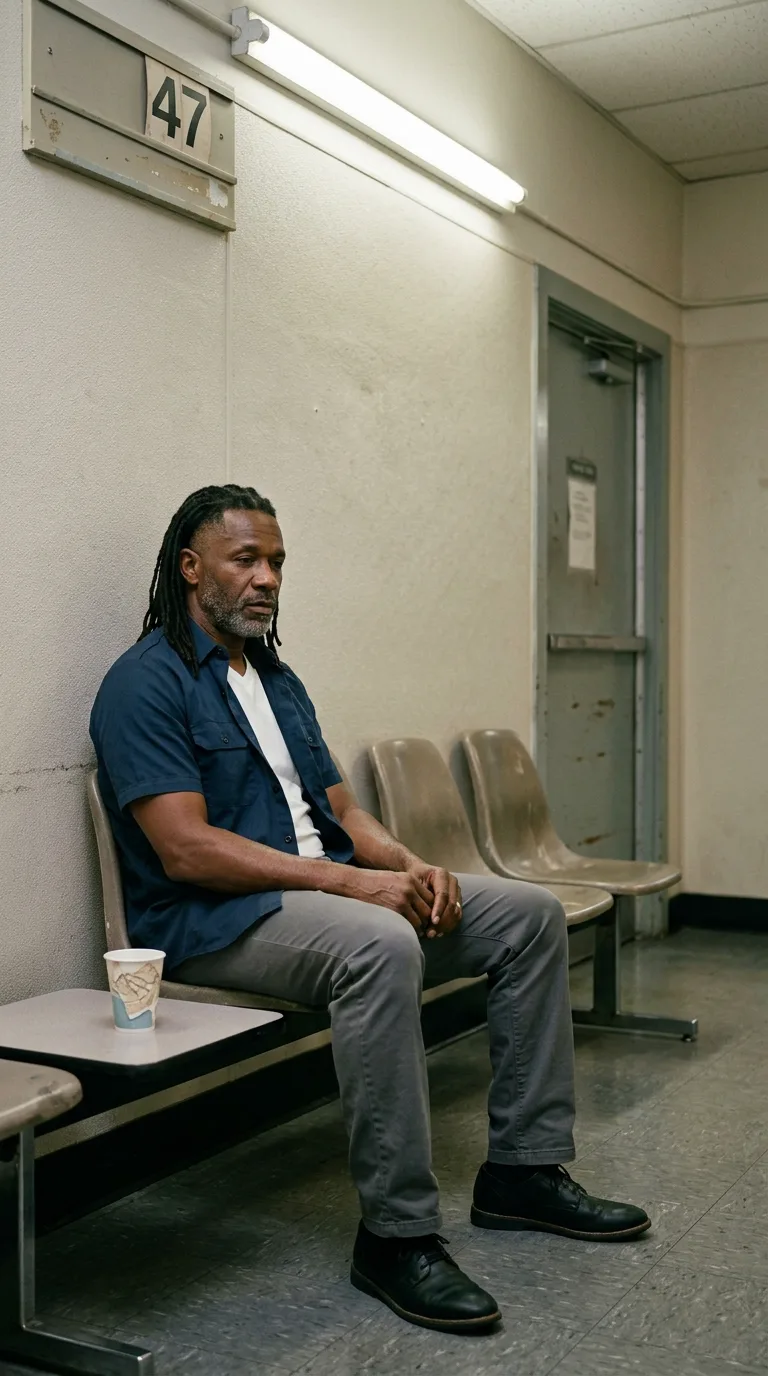
Rarest thing about him: Vapes socially — epic, 1 in 214
Season 0seed 725290183 · engine v10
Character card
lineage 2NZHHJ
His body-swap story
@colin.hasbrook, wearing Aidan Bhatt, rolled the wheel on and woke up as Marlon Whitfield, spent under a minute in him, then spun the wheel and woke up as an unnamed body
Aidan Bhatt's dorm room is dark at eleven in the morning, blackout curtains doing their job, some guy two doors down blasting something with too much bass. You've been him for three minutes. Three minutes of lying in a nineteen-year-old's unmade bed, feeling the ceiling fan wobble in your new borrowed eyes, and already the itch is back. It isn't the body's fault. The body is fine, better than fine, young in a way you stopped noticing was rare the first hundred times you wore it. But you know this room. You know the feeling of waking up as a college kid with no money and a physics exam you haven't studied for, because you've had that exact Tuesday before, different face, same walls closing in. Newness is the only thing you spend, and this one is already spent. Your thumb finds the laptop, still warm from Aidan's last login, and the wheel is right there where you left it, patient, colorless, waiting to not care who it gives you.
The number board clicks from 47 to 48 and something underneath your knee stops bouncing on the exact same click, like a puppet's string cut clean. You are sitting. You are heavier than you were a half-second ago, low and solid through the hips, and there is a paper cup of water in front of you that you did not pour and do not want. Your hands are folded. You did that — someone did that — and you did not look up when a voice from the doorway called a name that apparently belongs to you now. The strip light overhead is too white. Your knees ache faintly in a way nineteen-year-old knees never have.
The shirt is the first thing. Cotton, soft with age, a dark blue that isn't quite navy, and touching your own chest through it — no, his chest, but there's no his and yours yet, there's only the shirt — brings back a hand smoothing it down over a belly that's kept its shape better than most men his age, a small private pride in that. Marlon Whitfield. The name arrives with the shirt's collar, the way a collar sometimes gives you a whole man before the rest catches up. Buttoning it this morning, sunlight already hard through a bedroom window in a house with too many empty rooms since the divorce, a transistor radio on the dresser playing gospel because Sunday mornings still feel like they're supposed to, even for a man who doesn't go anymore, hasn't gone in years, calls himself spiritual to anybody who asks and means it more than he lets on. The rasp of his own thumbnail catching a button. A lighter that isn't in his pocket right now, and the absence of its weight there is its own small ache — his hand keeps almost reaching for a shirt pocket that's empty, an old habit with nowhere to land.
The ring finger gives you the rest, because your hands are folded over it, and there's a pale stripe of skin where fourteen years used to sit. Renee. Her name arrives with the tan line, not gently — a kitchen, a U-Haul, a daughter's voice on the phone saying Daddy in the tone she uses when she's picking a side and it isn't his. Three kids, maybe four now depending how you count the youngest's fiancé, who Marlon has decided he likes fine, better than he expected to. Renee still calls him when the pipes freeze at her new place because some habits outlive a marriage, and he goes, every time, tools in the trunk, and neither of them ever calls it anything.
The chair under you is not his chair. His chair is a barber's chair, has been for thirty years, vinyl worn to the shape of a thousand backs that weren't his, clippers that live in his hand the way a pen lives in a writer's — his hand actually twitches now, phantom-empty, wanting the buzz of them, wanting hair falling in dark commas around his boots. That's the thing this room doesn't have. No mirror, no floor sweeper, no Kevin from two chairs down arguing about a football score that's four years stale by now. Just tile the color of nothing and a door with a sign he can't read from here and a number board that only goes up.
His knees remember standing twelve hours some days. His lower back remembers it worse. There's a tightness behind his sternum that isn't panic, is just what fifty-five feels like some afternoons, what the doctor calls his pressure and what Marlon calls getting older, same thing filed under different names. He flips a lighter he isn't carrying, so instead his fingers just flex once around nothing, unsatisfied, an old tell with no object.
The cup of water is going warm in front of him. He hasn't wanted it in twenty minutes. He wanted it when they called him back here, wherever here is — a clinic, a county building, some appointment he made for himself and then dreaded, the specifics thin and slipping the way names of days do — but wanting it and drinking it turned out to be two different things, the way a lot of things have turned out to be two different things this year.
You look at your — his — hands. Dark-knuckled, ring-lined, a small burn scar low on one thumb from a clipper cord years back that the shirt didn't tell you about but the skin remembers anyway. You turn them over once, like checking they're real, like checking whose they are.
"Forty-eight," you say, out loud, to no one, reading the board instead of the number they called for him, and it comes out in his voice, low and a little rough, a voice that's spent thirty years talking over the buzz of clippers and asking men what they want off the top.
The board says forty-eight. The door stays shut behind its little wired-glass window, and somewhere back there is a life with no wheel in it, no name for what happened, no way anyone will ever go looking for the man who was sitting in seat three when his number came.