Mark Delvecchio
Fictional. Generated by AI — not a real person, and no likeness of one is intended.
32, veterinarian in New York · rolled by @colin.tarwater · card — no film
History
who has worn him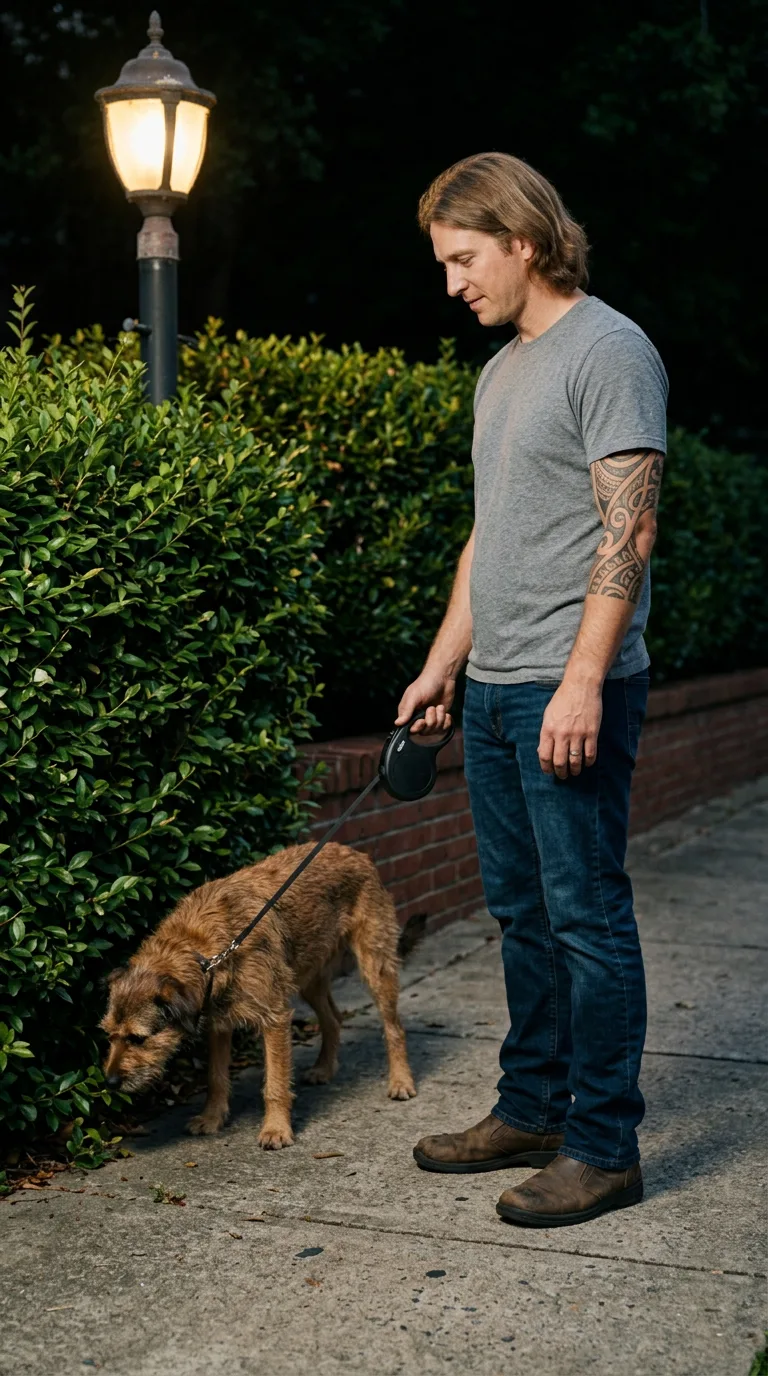
Rarest thing about him: Half sleeve — rare, 1 in 26
Season 0seed 764564649 · engine v10
Character card
lineage COEU7T
His body-swap story
@colin.tarwater, wearing Héctor Villaseñor, rolled the wheel on and woke up as Mark Delvecchio, spent under a minute in him, then spun the wheel and woke up as Cody Restrepo
Your hands are dusted white to the wrist, and they are not the size you want them to be.
You have been Héctor Villaseñor for less than a minute, and already you know the whole shape of the problem: fifty-seven years old, five foot three in shoes you're not wearing, standing in a bakery kitchen in Seattle at something like eleven in the morning with a proofing basket in one arm and a bad hip announcing itself the second you shift your weight. Flour on the counter. Someone yelling a number back in the walk-in. Your — his — lower back has opinions about the last four hours already, and the ovens are going, and off in the part of you that is not him at all, you are thinking: not this again.
Not the body. The body was fine, is the strange part — small and quick enough, hands that knew fifty-four years' worth of nothing you'd asked them to know, dough coming together the way it's supposed to when somebody's spent forty years doing it without thinking. You liked him fine for the first ten minutes. It's the rest of it. The particular ten-hour ache that comes from being on your feet in a body pushing sixty. The smell of the walk-in, which never really leaves the sinuses. Someone calling him "Héctor" in a voice that expects an answer he doesn't have anymore because there's nothing behind the eyes to give it — and you standing there wearing the silence, hoping nobody looks too close.
You set the basket down. You go to the back, where the ancient laptop lives on top of a filing cabinet that hasn't been organized since the Clinton administration, and you pull up vessel.cards with flour still under two of these borrowed nails.
The wheel loads slow on the shop wifi. You don't think about it as a decision so much as a hand reaching for a doorknob it has reached for fifty-three times already. You spin.
—
The leash is what you feel first — the give of it, then the sudden tension where a hand you now own has stopped its slow unspooling. A dog's head comes up past the hedge, ears folding back, a soft huffing breath through its nose like it smelled something change. Evening light, orange and low, a lamppost throwing its cone onto wet pavement a few feet off.
You are standing. You are tall — taller than you were half a second ago by eight inches, easy, and it is wrong in the pleasant way a stretch is wrong, everything a little further from the ground and better for it. Your knees don't hurt. Nothing hurts. You wind the leash twice around your — around this — hand, a motion the hand does before you tell it to, and you start walking, and the dog has to trot to catch the new pace.
Cool air on forearms. A shirt, thin, gray, worn soft. The weight of a small metal ring low on your left hand, unfamiliar and already known.
—
The leash handle is the first thing that gives you anything — molded plastic, warm from a palm, and it comes with a dog's name arriving whole and unasked: Baxter. Six years old. Found him at a shelter during his residency, the kind of ugly-sweet mutt nobody else wanted, and there's a flash of a much younger version of these arms carrying him up three flights of stairs to a studio apartment that doesn't exist anymore.
The shirt against your back gives you the morning — not this morning, some morning, folded into all the others the same shirt has seen: pulling it over his head one-armed while the other hand held a coffee mug, a habit from residency when there was never enough time to do one thing before the next. The jeans, worn at exactly the crease his hips make. The boots, scuffed at the same spot on the left toe from a step stool in the clinic that everybody kicks the same way.
The stethoscope isn't around his neck now — it's on a hook in an exam room he isn't in — but the ghost of its weight is still there, and with it comes the job in full: the smell of antiseptic and wet dog, a golden retriever puking on his shoes his first week, the particular tired satisfaction of telling a family their cat is going to be fine when he'd genuinely thought it might not be. He is good at this. His hands know how to be gentle with something that can bite them.
The wedding band is the one that goes deepest. It brings up a kitchen with bad cabinet hinges, a woman's laugh at something not that funny, the two of them repainting a nursery a color that didn't survive contact with actual paint swatches under actual light. A daughter — small, sock-footed, insisting on picking out his tie for a wedding they went to last spring, solemn about lions on silk. The half-sleeve on his right arm itches faintly with old memory — a shop in Bali, a trip before any of this, before the ring, ink going in for six hours while he gritted through it and grinned after.
None of it is dramatic. That's the thing that lands hardest, standing here in a stranger's ordinary Saturday, dog tugging gently at the end of a leash that still remembers being let out: nothing here was waiting to be found. No secret, no wound, just a life assembled the unremarkable way, brick by brick, and worth more standing than it has any idea.
Your knuckles ache to crack themselves. You let them.
—
You look down. Big hand, blunt nails, a tan line where a watch usually sits, ink curling up out of a sleeve toward an elbow. Not your hands. Not Héctor's either — Héctor is gone the way all of them are gone, and you don't let yourself think too hard anymore about what "gone" means when you're the one who did it.
The dog looks up at you, waiting, unbothered, tail going.
"Okay," you say, to no one, to the hedge, to the sodium light coming on down the block. "Okay. Let's go home."
You don't know yet how long home means.