Héctor Villaseñor
Fictional. Generated by AI — not a real person, and no likeness of one is intended.
57, baker in Seattle · rolled by @colin.tarwater · card — no film
History
who has worn him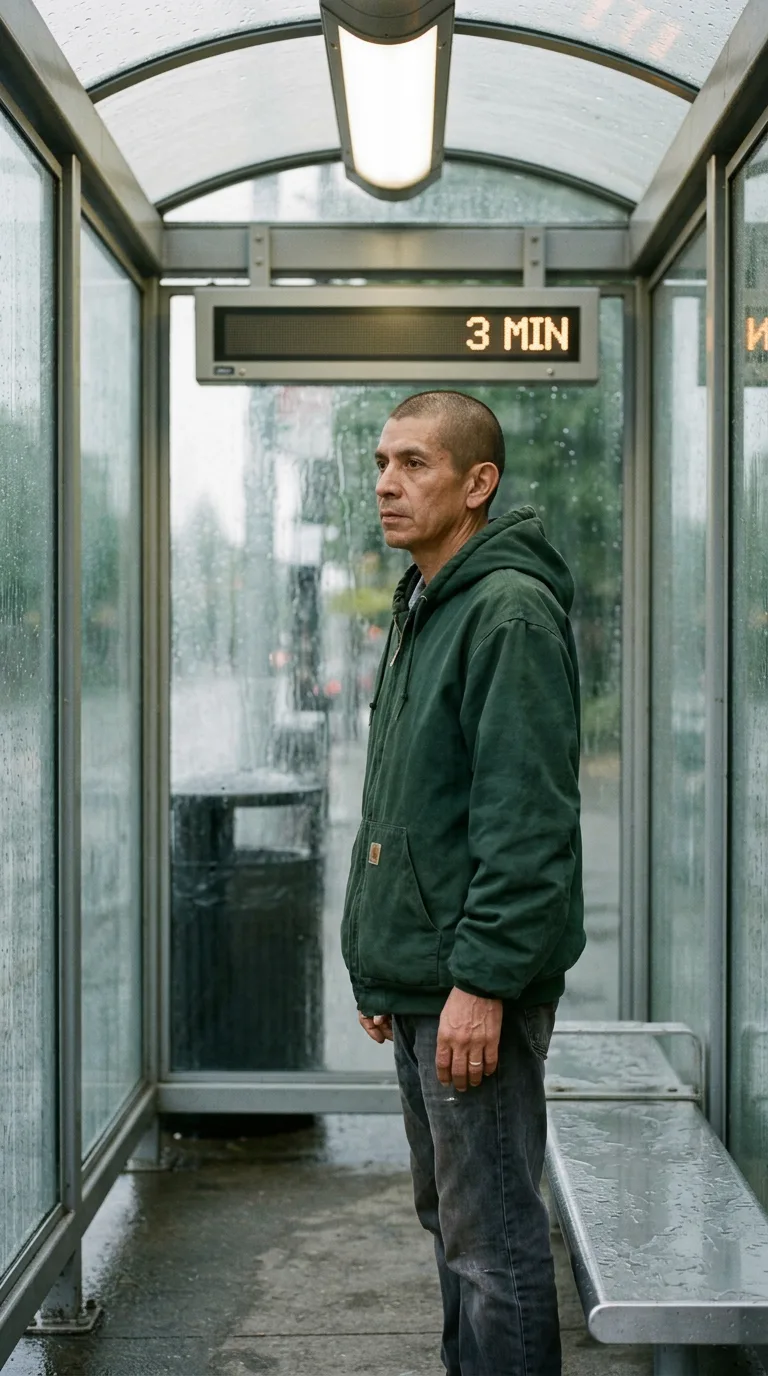
Rarest thing about him: Baker — uncommon, 1 in 83
Season 0seed 1749870242 · engine v10
Character card
lineage COEU7T
His body-swap story
@colin.tarwater, wearing Terrence Boykin, rolled the wheel on and woke up as Héctor Villaseñor, spent under a minute in him, then spun the wheel and woke up as Mark Delvecchio
You are sitting at the kitchen table in Terrence Boykin's condo, a mug of coffee gone cold in front of you, and his phone keeps lighting up with a name — Danielle — that you have decided not to answer. It is the middle of the day. Outside, Philadelphia is doing its ordinary Saturday, and none of it belongs to you, not really, not even after three minutes of being tall and broad-shouldered and good with numbers. You spent those three minutes learning that Terrence's knees ache going down stairs, that his jaw is tight from something that happened last night at dinner that you weren't there for and don't want to be there for, and that his hands, when you look at them, are not the hands you keep expecting. You have had fifty-two other hands. None of them stay yours in the way a face stays yours. You are already bored of this one, and boredom, for you, is a door.
You open the laptop. The site loads the way it always loads, patient, a little smug, the wheel already spinning in the preview like it's been waiting on you specifically. You pay. You do not think about Danielle again. You put your — Terrence's — thumb on the button and the wheel goes, and there is no countdown, no ceremony, just the small click of a decision, and then—
You are wet.
Not damp — wet, all the way through, rain coming down out of a colorless sky directly onto an upturned face, and the face is yours now, small and lined, water running off a jaw that is not Terrence's jaw, off a scalp with almost no hair to catch it. You are short. You feel it immediately, the way the world sits closer to the ground than it did a breath ago, the bus shelter's roofline suddenly high overhead instead of at eye level. Your hood is back. Your face is up. Somewhere behind you a board is counting down a bus that isn't the point anymore. You are standing in the runoff like it's a shower you've been waiting for all week, and you don't step out of it, not yet.
The apron is not on you — that was a different hour, a different photograph of this same man — but the ghost of it comes anyway, a phantom weight low across the chest and thighs, and with it, a memory, unbidden: flour dust turning to paste on wet forearms, that pale patch just above the wrist where a burn healed years ago, the apron gone the color of a storm cloud from decades of wiping hands on it. You feel that memory arrive through nothing you're touching, just the nearness of it, the way it's still soaked into muscle. Héctor. The name comes with the memory, the way his own name always sounded a little strange to him said out loud by his wife across a kitchen, fondly, tiredly, at five in the morning.
The jacket is real, though — heavy canvas, dark green, soaked through at the shoulders — and when your fingers (his fingers, small-knuckled, nicked along one thumb from a bench scraper) close inside the pocket, something comes up out of it like heat off a stone. Putting this jacket on, hours ago, in the dark of a mudroom, the zipper's pull-tab missing so you have to pinch fabric between two fingers to work it. Bettina asleep down the hall, or not asleep — up, actually, awake with the baby monitor even though the babies are twenty-six and thirty now and there's no monitor anymore, just old habit, just her sitting up when he leaves the house whether or not she means to. He'd kissed the top of her head. She'd said something about the rain, be careful, and he'd said what he always said, which was nothing, just a hand on her shoulder, because thirty-one years in you stop needing the whole sentence.
The wedding band is cold water around a wet finger and it opens wider than the jacket did — a whole chapel, a woman named Bettina Reyes at twenty-four with her hair coming loose from its pins, his mother crying not from happiness exactly but from something more complicated, pride tangled with the grief of a son who'd need his English more than his Spanish from then on. Two children after that, a boy who plays bass badly and beautifully in a garage band nobody's heard of, a girl in nursing school in Tacoma who calls on Sundays. A whole life assembled around 4 a.m. alarms and the particular ache that lives permanently in his lower back and the CPAP machine hissing on the nightstand every night like a small tide.
And under all of it, quieter, a woman who is not Bettina — Marisol, a name that surfaces like something dropped in deep water finally coming up, twenty-two years old and gone now to a life in San Diego he has never once looked up on purpose, though he has thought about her on slow Tuesday mornings proofing dough, wondering without malice or real longing what would have — no. He doesn't finish that thought. He never does. He is standing in a bus shelter's runoff at fifty-seven years old with rain going down the back of his collar and a boy in a garage and a daughter in scrubs and a wife who still, some mornings, reaches for him before either of them is fully awake, and it has been, on balance, a good life, a life he built with these exact hands — hands that know without asking how much give a wet dough wants, how to fold it, how to tell by weight alone when a loaf is done.
You feel all of it land in a body that is small and wiry and fifty-seven years old, a body where nothing hurts exactly but everything registers — the cold, the good ache low in the back from decades of standing, the strange lightness of being shorter than you're used to being, shorter than almost anyone. The rain keeps coming. The bus board behind you has stopped mattering to whoever is driving now.
You bring your hand up out of the water and look at it — small, brown, a thin white burn-scar ghost above the wrist, a plain ring gone bright with wet — and you turn it over slowly, like you're checking it's real, like it might not be.
Then you lift your eyes into the rain and say, to no one, in a voice that still has an accent from a childhood that isn't yours, "Okay. Okay, I'm here."
You don't know for how long. Nobody does.