Marion Tuttle
Fictional. Generated by AI — not a real person, and no likeness of one is intended.
50, construction foreman in Western Kansas · rolled by @bryce.holloway · card — no film
History
who has worn him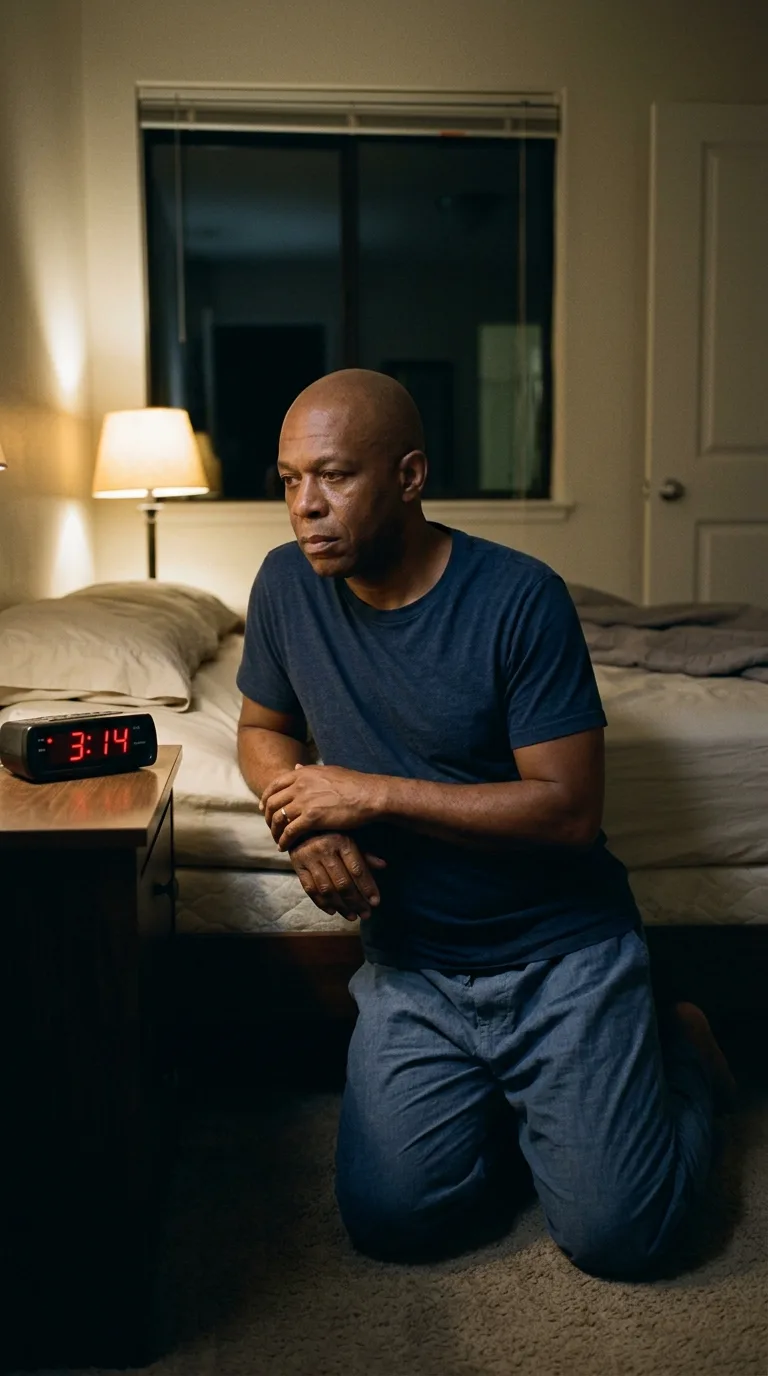
Rarest thing about him: Praying, not very seriously — common, 1 in 44
Season 1seed 444846108 · engine v11
Character card
lineage UBMQCL
His body-swap story
@bryce.holloway, wearing Gregory Palladino, rolled the wheel on and woke up as Marion Tuttle, spent 5 minutes in him, then spun the wheel and woke up as Sean Thrake
---
Boston, the middle of the night, and you are Gregory Palladino, a veterinarian, kneeling in your own bathroom because you couldn't sleep, running your thumb along that white streak in the mirror and thinking: one day and fourteen hours is not enough to know what this feels like. That's the whole reason, if you're honest, and you don't say it out loud even to yourself. It isn't unhappiness. Gregory has a good enough life — a dog snoring somewhere down the hall that isn't his dog, a wife's photo on the dresser that isn't his wife — and none of it is bad, it's just already known. You wanted the drop again. The half-second before the wheel answers. You go back to the laptop glowing on the kitchen counter, and your — his — hand, short-fingered, soft-palmed, the ring gone from it days ago in a drawer somewhere, hovers over the spin, and you tell yourself this is the last one for a while, the way you told yourself that the first time, and you press it.
You are on your knees.
Bedspread rough under two loosely folded hands, the tail end of an amen still moving in a throat that is not the throat you had half a second ago, and your body — his body, and already there is no clean way to say which word belongs to you — is already rising, already laughing a little at nothing, some private joke about how fast that got said tonight, and then the rising stops. Comes back down. Knees against carpet, then forehead against the bedspread's cheap nap, and Boston is a hundred miles under your skin and gone.
A red clock on the nightstand says something your eyes catch before they catch anything else, and you don't do the math on it right away because there's too much else arriving — the smell first, detergent and someone else's cologne going stale in the collar of the t-shirt, and through the cotton against your back comes a flash: him buttoning a work shirt onto arms that ache in the shoulder from thirty years of overhead work, some morning, any morning, sun barely up, the smell of coffee already going in another room. Not this room. A kitchen somewhere. Sherry's kitchen — the name arrives with the coffee smell, easy as that, Sherry humming something with the radio low so as not to wake somebody, and a boy's backpack by the door, and you don't know the boy's age yet but the love for him comes in anyway, plain and enormous and already yours to carry for as long as you're wearing the man who carries it.
The bedspread against your forehead gives you more: this exact spread, cheap floral, bought at a Walmart in Hays two summers back because the old one wore through at the corner, and under your knees the carpet remembers being knelt on most nights, not because he's especially good, he'd tell you, laughing that same half-laugh, but because his mother knelt every night of her life in a house outside Dodge City and it got into him the way accents get into people, without asking. You feel the callus map of his hands where they're still loosely laced — the pads of two fingers gone hard and shiny from a tape measure's tab, a half-moon scar you don't investigate because it isn't given to you, just the fact of a hand that knows, without being told, how to find a stud through drywall by knocking twice.
The clock keeps saying its red numbers at you and now the strangeness of it lands: this is the deep dark middle of a Kansas night and yet the crew, some other part of him remembers, will already be gathering at the yard in a few hours, steel going up on a job outside Garden City, a thunderhead that stacked up black over the site yesterday evening and turned the light the color of a bruise before it broke. He is on nights this cycle, pouring a foundation crew ahead of a weather window, sleeping these strange hours and praying at whatever hour he happens to be awake, because Sherry taught him a long time ago that God doesn't check a clock. That's this memory, hers, given secondhand through the mattress under your palms — her voice, patient, from some kitchen years back, some argument that wasn't really an argument. You are fifty years old in a body that carries fifty honestly: a low ache low in the back that construction puts into every man eventually, forearms still strong enough to matter, a body maintained rather than admired, and none of it complaining tonight, kneeling being about the easiest thing it does all week.
The ring is still on the hand — his hand, plain gold, worn thin on the underside where it rubs against a hammer's grip — and touching it with the opposite thumb gives you one more flash, quick and whole: a wedding twenty-some years back in a little church with box fans going, Sherry's dress too warm for the month, both of them laughing about the heat instead of minding it. Then it's gone, folded back into wherever it came from, the way all of this will keep folding back the longer you stand — kneel — here.
You lift your head off the bedspread.
Your hands come up in front of your face, broader than the ones you had a minute ago in Boston, darker, the nails cut blunt and practical, one thin gold band catching the lamp, and you turn them over slowly the way a man checks a tool he hasn't used before.
"Didn't feel a thing," you say, to the empty room, in his voice, and you don't know yet if that's a lie.