Gregory Palladino
Fictional. Generated by AI — not a real person, and no likeness of one is intended.
50, veterinarian in Boston · rolled by @gregory.palladino · card — no film
History
who has worn him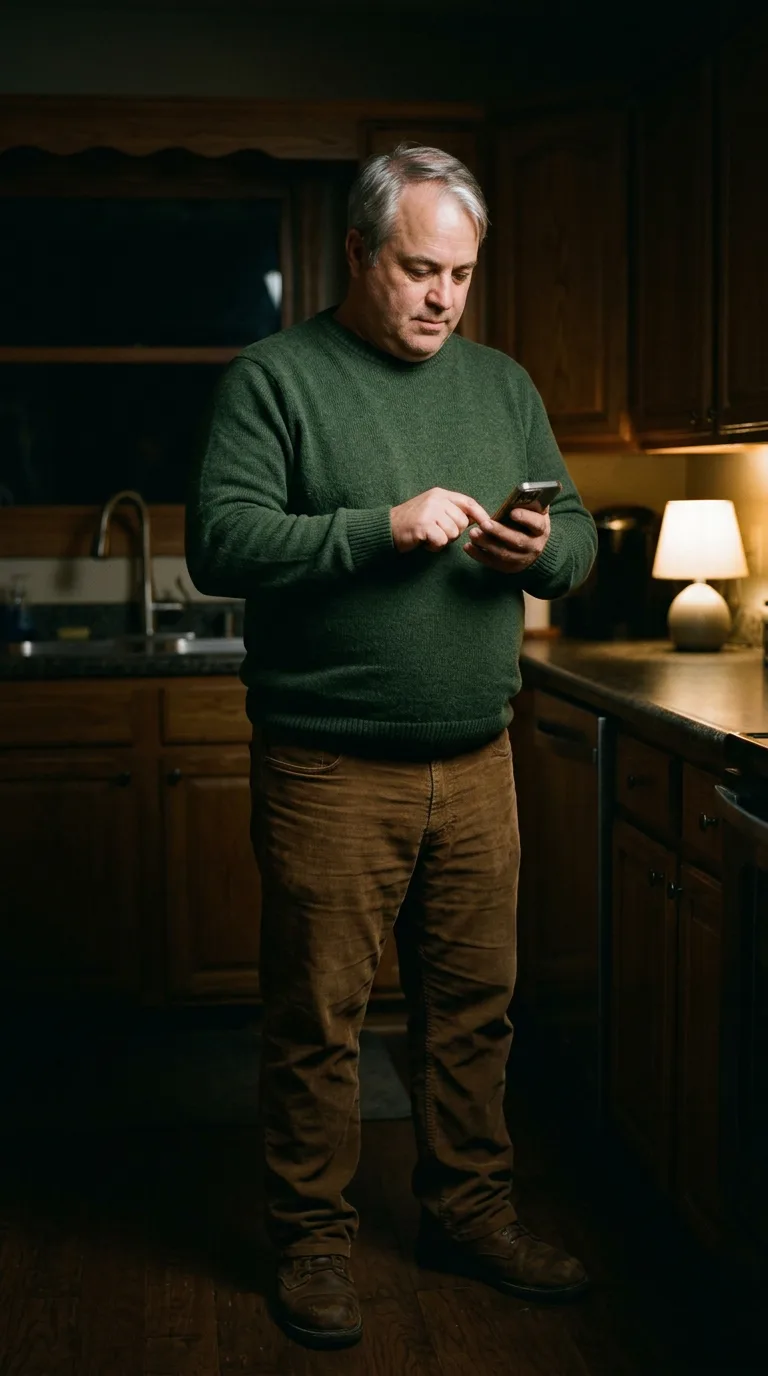
Rarest thing about him: A white streak in the hair — epic, 1 in 99
Season 0seed 1688837406 · engine v10
Character card
lineage UBMQCL
His body-swap story
@gregory.palladino rolled the wheel on and woke up as Gregory Palladino — their first
The site loads slow on your end, the way everything loads slow at that hour, morning light coming flat through blinds you never open. You have wanted this since before you had a word for it — every movie where someone wakes up wrong, every forum thread at 2 a.m. about waking up as someone else, every story you told yourself to fall asleep. Vessel.cards. A wheel, plain as a raffle. You didn't believe it. You paid anyway. Your thumb is over the spin before you've decided to let it fall.
The kitchen is dark around the edges, one lamp doing all the work, and the thumb — his thumb — is dragging a watch page he will never buy from. Then it isn't dragging anything. It lifts off the glass and hangs there, and you are the one holding it up, and the phone goes face-down on the counter under a hand that used to be his and sets it down like it's radioactive, like the watches on the screen already knew something the man never did.
The sweater comes first — wool, green, heavier than it should be for how warm the kitchen is, and when your arms move inside the sleeves you get him: a Tuesday, six months back, pulling it over his head in a cold bedroom while a woman's voice came up the stairs asking if he wanted eggs. Denise. Her name arrives with the smell of the wool, cedar and something like dryer sheet, and you know without being told that she is downstairs right now, in another room of this triple-decker, not knowing yet that the man cooking will answer her in a voice with nobody behind it.
The pants are corduroy, worn soft at the knee where he kneels — and that gets you the exam room, blue scrub bottoms usually, but under the corduroy your knee remembers kneeling anyway, decades of it, concrete floors and rubber mats, a golden retriever's hip under his palm, the particular give of an animal deciding to trust you. Gregory Palladino has been a vet for twenty-six years and his right knee has known it the whole time — an old tear from a barn call in his thirties, a cow that didn't want to be examined, and it never set right, and it aches now standing in the kitchen the exact way it aches every day, a low complaint he stopped hearing a decade ago and you hear immediately, sharp and specific.
The boots by the door — you're not wearing them, they're work boots, waiting — but your feet in his socks remember the linoleum of the clinic, the smell of antiseptic and wet dog, a version of Wednesday that should be happening right now instead of this: an exam table, a cat carrier, a family waiting on bad news he'd have to deliver gently, because that's the job, the endless gentleness with people about their animals. He should be there. He is not. Somewhere a receptionist is calling his cell and getting nothing.
The white streak in his hair — you can't touch that, but your scalp knows it's there, the same way it knows the thinning at the crown, a hand's habit of not touching it, thirty years of a joke people made about it in vet school that he got tired of laughing at. Two kids come with the hair, somehow — a photograph on a shelf you haven't looked at yet but already feel the shape of, a boy and a girl, grown now, a phone call on Sundays. A church with a modest steeple, a collection plate, a faith worn like the sweater, unremarkable and load-bearing. Money that doesn't show in the kitchen at all — cabinets from 1994, a lamp that cost twelve dollars — because he never spent it like a man who had it, some old scar-tissue frugality from before the practice took off, before the money stopped being the thing he worried about at 3 a.m. and started being the thing he didn't look at, except tonight, thumb on glass, watches priced past a rent he doesn't pay, wanting something anyway. Wanting is the last thing that comes through clean, unmistakably his: a small, specific ache that has nothing to do with money and everything to do with feeling like the boy from Everett who still doesn't believe any of this is his.
You look down. The hand on the counter is thick through the knuckle, gray hair on the back of it, a life of vaccinations and stitches and steady, careful pressure written into every tendon. It is not your hand. It has never been your hand. You turn it over anyway, the way you've wanted to for years, watching it be someone else's.
"Okay," you say, to the dark kitchen, to nobody, in his voice, which surprises you every time it will, "okay — that's — huh."
You don't know how long you get him. You don't know when the wanting comes back. For now the lamp is on, the phone is face-down, and somewhere down the hall Denise is saying his name.