Marcus Whittier
Fictional. Generated by AI — not a real person, and no likeness of one is intended.
55, warehouse picker in Atlanta · rolled by @colin.hasbrook · card — no film
History
who has worn him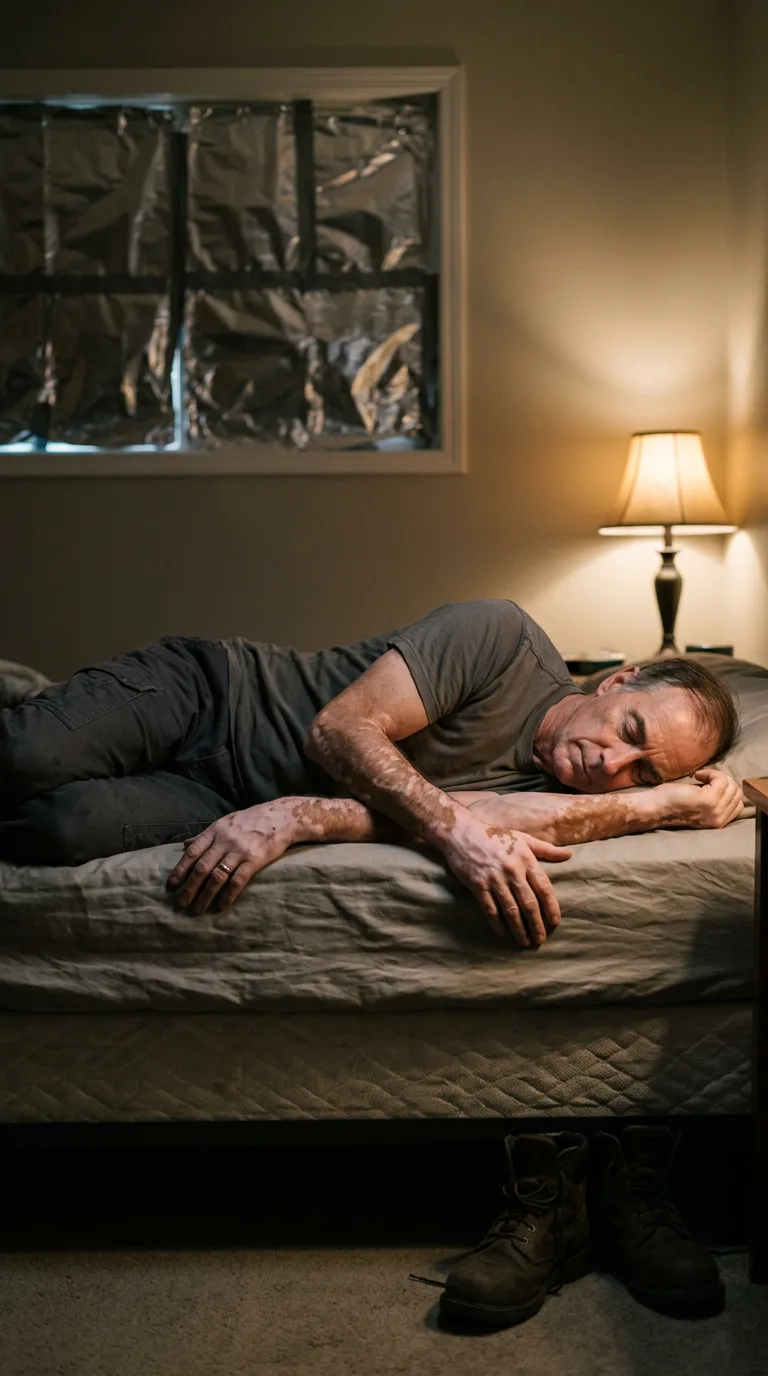
Rarest thing about him: Vitiligo — epic, 1 in 124
Season 0seed 1600485930 · engine v10
Character card
lineage 2NZHHJ
His body-swap story
@colin.hasbrook, wearing Brendan Sculley, rolled the wheel on and woke up as Marcus Whittier, spent under a minute in him, then spun the wheel and woke up as Cody Hutnik
Backstage in Seattle, you are gripping a sandbag with a hand that is not going to stay yours much longer, and Brendan Sculley's lower back is barking at you the way it always does by the second act. You have been him less than a minute, and that is already too long. This body works fine — thirty years younger than most of the men you've worn, a decent set of shoulders — but Brendan is broke in the way that matters to you, three hundred dollars in a checking account and a landlord who calls twice a week, and you did not spin a hundred and thirty-two times to stand in the wings of a community theater counting tomorrow's rent. You set the sandbag down mid-cue, walk out past the stage manager without a word, and by the time you reach the alley you already have the site open in your head, the wheel already spinning behind your eyes before your thumb ever finds the button. Something plainer. Something with money sitting quiet in a bank somewhere in Georgia. You spin.
The room arrives before the man does: dim, close, a smell of foil-warmed air and old carpet cleaner. A corner of the tape has given up on the window and a blade of afternoon light lies across a face that is not looking at anything, eyes shut, one arm folded under a graying head. Then the light does what light does and the eyes open into it, dry, unblinking, and you are behind them, and the first thing that comes up through the body is not thought but ache — low back, both knees, a dull line down the left hip like something has been grinding there for twenty years and stopped only reporting it as new.
The shirt is still against your spine, twisted where he slept crooked, and it gives you the morning before this one: gray T-shirt off a hanger in a dark closet at five a.m., the smell of fabric softener his wife buys because he complained once, years ago, that the other kind made him itch behind the vitiligo patches, where the skin runs strange from good to bad and back. The cargo pants are still on, belt still cinched — he came in off a double, sat on the edge of the bed too tired to do more than get the boots off, and even that took him two tries because his knees don't bend the way they used to bend. The boots are down there on the floor, toes turned in, steel-shanked, and touching the mattress under your open palm gives you the warehouse floor instead: concrete through the soles, a scanner gun heavy on your wrist, a forklift somewhere behind a rack beeping its slow reverse, and the particular tired that isn't sleepy so much as used up, twenty-two years of pallets and case counts and a body that clocked out being younger than it is now.
The wedding band on the left hand is warm from being slept on, and it opens wider than the rest — a wife's voice saying his name the way she says it when she's not angry, just tired of the shift work, tired of eating dinner alone at eight and breakfast alone at six; an ex-wife's voice from further back, sharper, a kitchen in another house, boxes already half packed, no kids to fight over, which somehow made it lonelier instead of easier. There is money under all of it, more than this room admits — a broker's number saved wrong in an old phone, a account statement he keeps meaning to show her and doesn't, embarrassed by how much and how little difference it seems to make to how his back feels at four in the morning. There is a bottle in a cabinet somewhere close, a taste that comes up the back of the throat unbidden, and under that, older, a pack of cigarettes he quit eleven years ago and still misses at exactly this hour, the hour between shift and sleep, when the body doesn't know what to do with its own hands.
You lie there a second longer wearing all of it, the ache and the dye job flattening gray at the roots and the vitiligo patch warm along the jaw where the sun bar had just crossed it, and there is real affection in the memories, a whole marriage of small forgivenesses, and none of it is yours, and all of it is, now.
You bring the left hand up in front of your face — his hand, mottled pale and brown across the knuckles, the ring loose enough to turn with your thumb — and you turn it over once like you're checking it's attached.
"There you are," you say, to no one, to the light on the foil, to the version of you that was standing in a dark wing in Seattle four seconds and a hundred and thirty-three lives ago, and you don't know yet how long you'll let this ache sit in you before you go looking for the next one.