Marcus Tillery
Fictional. Generated by AI — not a real person, and no likeness of one is intended.
34, barber in Eastern Kentucky · rolled by @colby.marsh · card — no film
History
who has worn him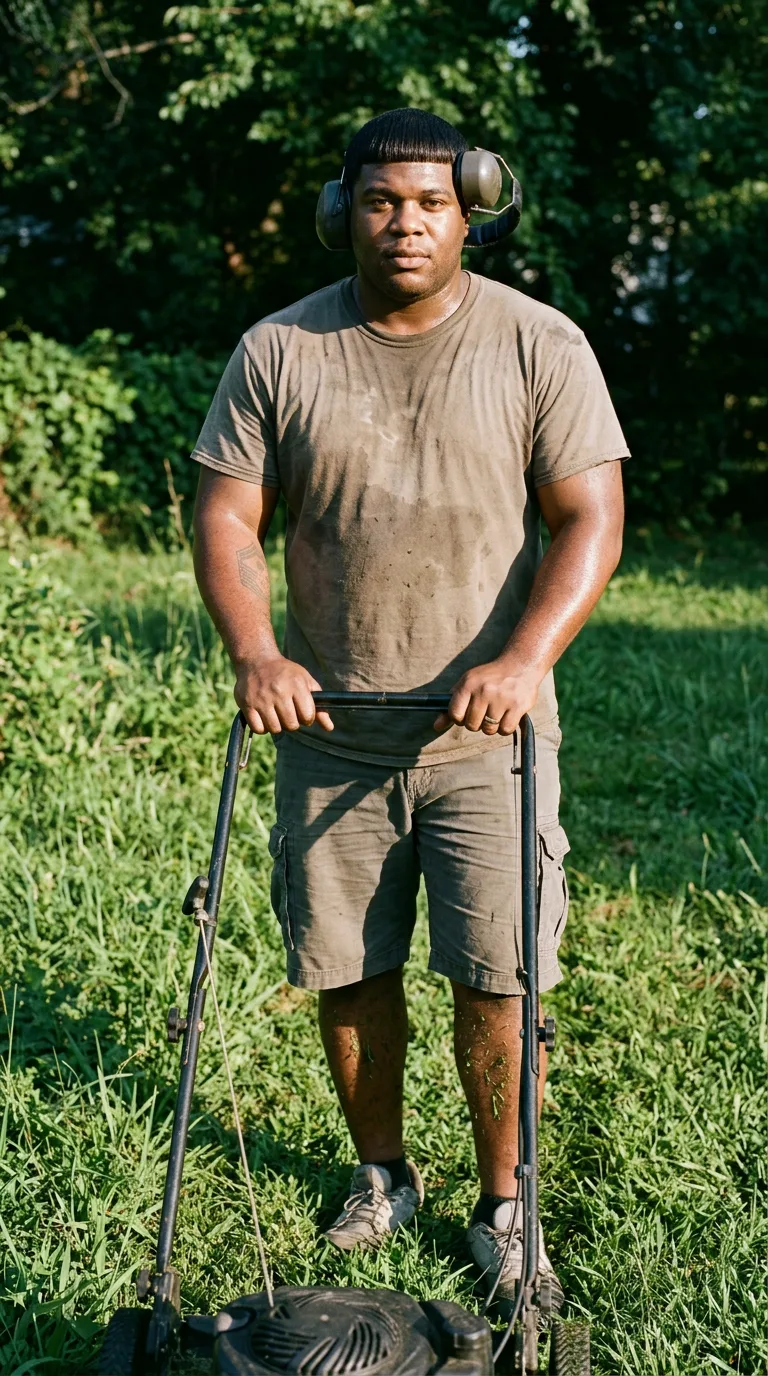
Rarest thing about him: A caesar — rare, 1 in 57
Season 0seed 829158295 · engine v10
Character card
lineage PYNCV3
His body-swap story
@colby.marsh (admin), wearing Trent Okamura, rolled the wheel on and woke up as Marcus Tillery
Trent Okamura's apartment is too quiet at this hour, and his knees ache from a body that has never once run a mile in its life. You are standing at his kitchen counter in his boxers, his badge catching the light off his phone screen, and you hate him already — the six-four frame that stoops through every doorway, the beauty mark he keeps checking in mirrors like it means something, the gun on the counter you have no intention of ever touching. Three minutes ago you were a locksmith in Tulsa, before that a roofer, before that a boy who never got old enough for any of it to matter. Trent Okamura is number forty-one and he is soft in ways you didn't expect from a cop — anxious, underslept, married to a job that clearly doesn't love him back. You didn't spin again for a reason you'd say out loud. You spun again because his hands were shaking a little, standing there at 2 a.m. deciding, and shaking hands are for men who haven't done this forty-one times. You open vessel.cards on his phone, thumb the wheel, and let it go.
The mower catches on a note lower than the one before it, and then you're the one holding the bar.
Grass is halfway up your shins, wet-green and clinging, and the air smells like gasoline and cut clover and something sweeter underneath — honeysuckle, maybe, off a fence line you can't see yet because you haven't turned your head. Your right earmuff has slipped down against your jaw. You lift a hand off the bar — thick fingers, a plain gold band catching no light at all because there isn't much, just gray predawn — and you push the earmuff back up over your ear, unhurried, because his body already knows this motion belongs at the end of a row. The engine, which stumbled for half a second on nothing, settles back into its drone. You keep walking. The next pass runs dead straight beside every crooked row that came before it.
It's the bar under your palms that gives you the first flash — not a memory so much as a certainty, arriving whole: *this mower pulls left, always has, you correct for it without thinking.* Then more, unlooked for, pouring in through what your hands are already holding.
Marcus Tillery. Thirty-four years old. A barber for twelve of them, six of those with his own chair at Ridgeline Cuts off Route 15, the shop smelling of Barbicide and hot lather and the particular hum of clippers left running too long. You feel it in your forearm before you see it — the tattoo, the insignia, a unit patch inked into skin that used to sweat under a different kind of uniform, and with it comes heat and dust and a name shouted across a motor pool that isn't in this state or this decade. That part of him closes as fast as it opens, the way the worst and best years sometimes do.
The grass under your shoes brings the yard itself — how many Saturdays, how many mornings exactly like this one except lit different, sun already up instead of held back behind the tree line the way it is now, because something in you, in him, knows this hour is wrong for this chore and can't say why. Marcus mows at dawn on his days off because the shop opens at nine and the grass won't wait and neither will his wife's opinion about the height of it. Nights he doesn't have a shift bleed into mornings he does, and the yard doesn't care which.
Your shirt — his shirt, dried sweat already darkening the collar though the sun's barely up — gives you the morning he put it on: reaching into a drawer half-full of shop shirts that smell permanently of talc, pulling this one because it was the top one, not the good one. Cargo shorts next, grass-strap already ghosted into the hem in the shape they'll dry into again by noon. He'd stood in the bathroom a second too long that morning, not looking at anything, the ceiling fan clicking overhead, thinking about his ex without meaning to — Danielle, gone eight months, and still some mornings his chest does something before he catches it and puts it away. His wife was still asleep down the hall. He didn't wake her. He never does, on these mornings; she works nights at the hospital in Prestonsburg and this is the only hour that's his.
The bar again — muscle memory older than thought — and you get the shop itself, full afternoon light through the front window, a client's head tilted just so under your palm, the particular satisfaction of a line so clean it doesn't need checking. His hands click a pen a hundred times a day at the register when there's no comb in them, a habit his wife teases him for. His blood pressure meds sit on the bathroom shelf next to her contact case. He drinks maybe four times a year, a cigar on his birthday and after a good haul of tips, nothing more. None of it church, none of it prayer — just Sundays that are only Sundays, same as any other day off.
You feel his weight settle into your legs, thick through the thighs, strong across the back from twelve years of standing at a chair — this is a body built for bracing, not running, and it knows exactly how to hold a push mower dead level across a slope without thinking about it. Nothing in it hurts yet except the low, familiar ache behind the sternum that a doctor once frowned at and told him to watch.
You stop the mower. Look down.
Your hand — his hand, the ring dull gold, a fleck of grass caught under the nail — turns over once in the gray light like you're checking it's real.
"Wasn't done with that row," you say, to nobody, and look up into the tree line like it might answer you back.