Marcus Reddick
Fictional. Generated by AI — not a real person, and no likeness of one is intended.
39, chief executive in New York · rolled by @colin.hasbrook · card — no film
History
who has worn him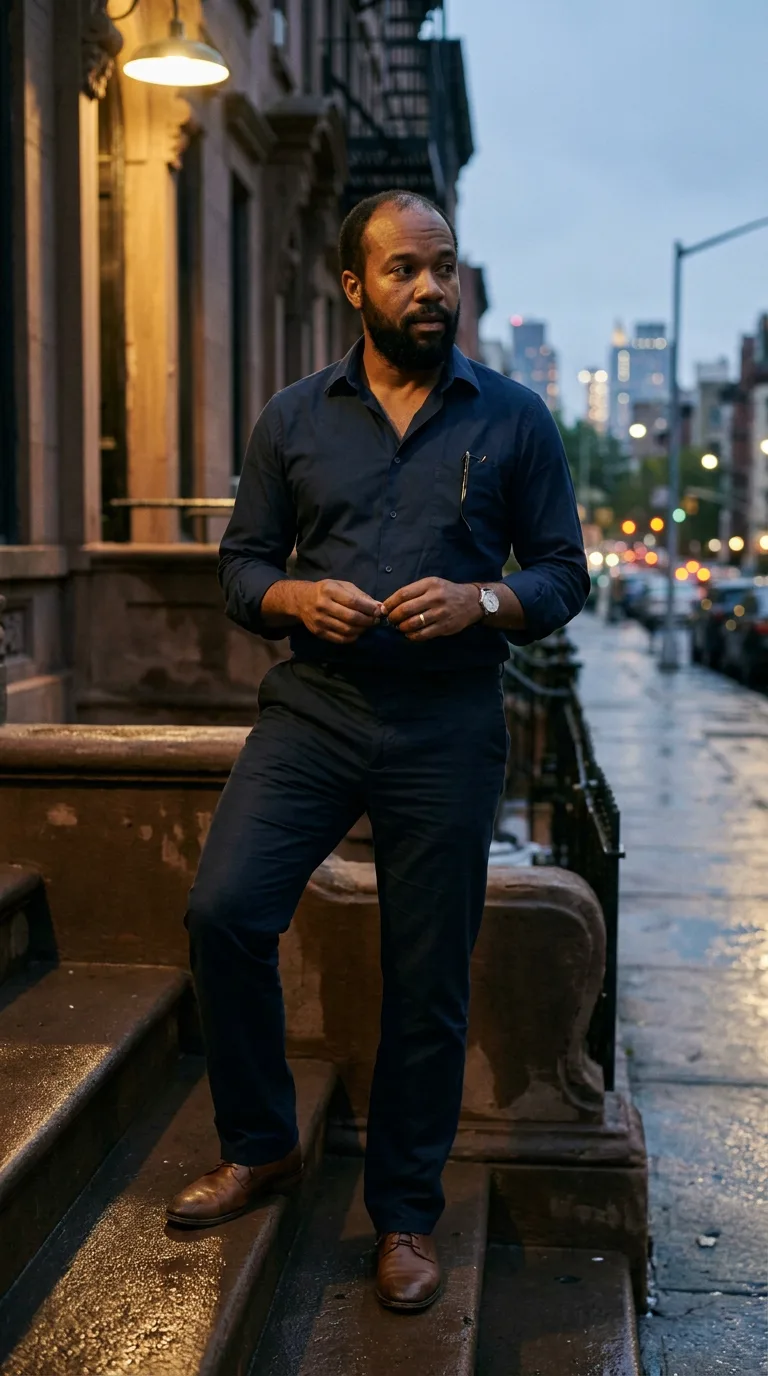
Rarest thing about him: Historically Black Protestant — common, 1 in 25
Season 1seed 1627456131 · engine v11
Character card
lineage 2NZHHJ
His body-swap story
@colin.hasbrook, wearing Dalton Braswell, rolled the wheel on and woke up as Marcus Reddick, spent under a minute in him, then spun the wheel and woke up as Silas Kotch
The help desk ticket queue glows on the monitor, and Dalton Braswell's hand is on the mouse, and it is not doing anything you want it to do. Four minutes in this body and already you know its whole ceiling: freckled forearm, gut pressing soft against the desk edge, a headset cord tangled where it always tangles. Somewhere behind you a supervisor is explaining call metrics to nobody. The coffee here tastes like a filter that has never been changed. You spun the wheel and got a kid with a helpdesk badge and a life that fits in a cubicle, and four minutes was enough to know it, the way you always know within four minutes — this one has nothing left to surprise you. So you go back. Not because Dalton did anything wrong. Because he didn't do anything at all.
—
The lever comes down somewhere far from here and here is where you land: standing on a wet stone stoop, streetlight the color of a candle behind your — his — shoulder, cold brownstone rail under two fingers of the hand not doing up a shirt button. Mid-button. The fabric is navy, fine cotton, and your fingers — his fingers, thicker than the ones you just had, a ring warm from body heat on the left — fumble the placket wrong once, push it through the wrong hole, and stop. Then correctly, slowly, like a man reading instructions for something he built with his eyes closed a thousand times. Ten more buttons after that, each one checked. No one across the wet street glances up. A cab throws light along the gutter and is gone.
The shirt is what starts it. Not the button — the collar, settling against a beard that scrapes it just so, and there's a whole morning in that scrape: an apartment two flights up, his wife's radio going in the kitchen, the particular ache low in his back from a red-eye flight two nights ago that he hasn't told her still bothers him. Marcus Reddick, thirty-nine years, chief executive of a logistics firm whose name means nothing to you and everything to eleven hundred employees, getting dressed in his own bedroom mirror at an hour when Ohio would call it lunch and Brooklyn calls it the last blue hour before dark comes down for good. He is not dressing for morning. He is dressing for the overnight call with Singapore, the one that never moves no matter how many times he asks it to, the reason his body clock runs backward six nights a week and his wife sleeps alone on the good side of the bed until he crawls in at four.
The watch band — his right hand finds it on the left wrist, an old habit of checking it's fastened — brings back the day his father gave it to him, cheap steel thing, said a man tells time on his own wrist or he's working for somebody else's clock. His father is three years dead now. The grief in that memory is old enough to have gone quiet, like a bruise you only find by pressing.
The pen in the shirt pocket — his fingers brush it doing the last button — is where the office comes in sideways: the glass-walled conference room forty floors up, the city lighting itself below like a circuit board, the moment six months ago when a board member used the word *restructuring* and Marcus felt his whole chest go to concrete and said nothing, because saying nothing is the job too. He has two children who are mostly asleep by the time he's dressing for work like this, and a wife who married a man with normal hours and got this instead, and somewhere in the mortgage payments and the private school tuition and the leg that bounces under every table he's ever sat at, there is a tiredness that has become so constant it reads to him now as simply Tuesday. Thursday. Whatever day this is. He stopped counting the specific ones years ago.
The rail under his palm, wrought iron, cold and a little rusted at the joint — that's just tonight. He was thinking about nothing. He was thinking about the walk to the car, the driver probably already double-parked, the particular tilt of his daughter's handwriting on a note stuck to the fridge that he saw on his way out and didn't stop for. Ordinary. His hands were moving through the last motion of a shift that started at sundown, the one his body learned so well it no longer asks his mind for permission — until it does, once, wrong, and then very carefully, right.
You look down. The hand at the end of your arm is a stranger's hand doing a familiar man's job, dark-knuckled, a plain gold band worn soft at one edge from twelve years of turning it when he's nervous, which — you can feel it now — he is always a little bit nervous, all the time, underneath. You turn it over once, like checking it for damage.
You lift your eyes to the wet street, the sodium light, the shape of a city that isn't the one you were just in.
"Okay," you say, out loud, to no one, in a voice that isn't yours yet and is already starting to be.