Marcus Otey
Fictional. Generated by AI — not a real person, and no likeness of one is intended.
50, bartender in Dallas · rolled by @colby.marsh · card — no film
History
who has worn him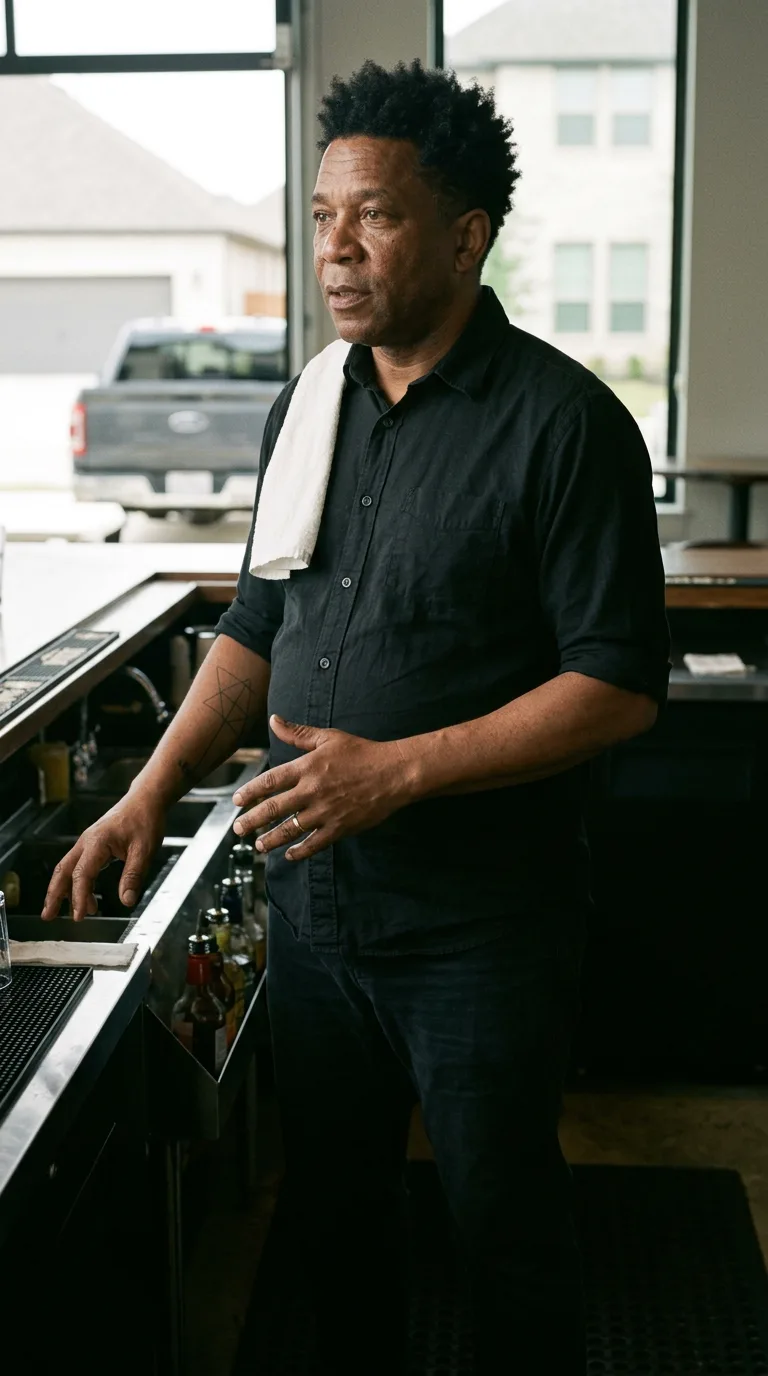
Rarest thing about him: One, upper arm — rare, 1 in 13
Season 0seed 951768229 · engine v10
Character card
lineage PYNCV3
His body-swap story
@colby.marsh (admin), wearing Dalton Vosberg, rolled the wheel on and woke up as Marcus Otey, spent 19 minutes in him, then spun the wheel and woke up as Colby Marsh
The itch starts in the vitiligo, or that's where you decide it starts, because you have to put it somewhere. Dalton Vosberg's kitchen is small and clean and smells like the inside of a fire truck, faintly, permanently, a smell his own nose stopped noticing years before you arrived in it. You are twenty-three and six feet even and your skin has these pale continents drifting across brown, and it is a good body, an honest body, a body that ran into a burning duplex nine days before this and dragged a dog out by the collar and did not think itself a hero for it. You have been him three hours and forty-six minutes and you already know the whole shape of tonight: he will reheat something, he will watch something, he will go to bed early because the next shift comes early. There is nothing wrong with that life. It is only that you have had it before, or a life shaped exactly like it, twice now, two different bodies that were young and decent and tired in the same four ways, and boredom is its own kind of hunger, and you are hungry. You take out your phone. You open the site you always open. You do not let yourself think about the dog.
The wheel spins and you are behind a bar you have never seen, gripping a pour spout mid-tilt, and your hand — his hand — is already correcting, tipping back a half-second too late, vodka lipping the rim of a speed rack bottle instead of going into it. You set it down. You pick it up again. You do it right, slow, like a man relearning a hinge he's turned ten thousand times. Nobody is watching. The bar is empty, chairs still up on two tables, a window full of early evening and, past it, a pickup truck nosed into a driveway between new houses that all look like they were poured from the same mold last spring. Your knee is bouncing against the underside of the bar, has been the whole time, will not stop now that you've noticed it. There's a towel over your shoulder. Your nose aches faintly in a way that has nothing to do with today.
The rag on your shoulder is the first door. It swings open onto a Tuesday four years back, restocking after a slow shift, Rhonda's laugh from the office in the back, the particular ache in his lower back from bending into the low cooler — and then the door widens and it isn't a Tuesday anymore, it's every night this room has ever held him, the low gold light after close, the regulars whose names arrive with their drink orders, Dale who only tips in quarters as a bit that stopped being funny to everyone but Dale. Your hand finds the bottle you were reaching for and the label brings back the distributor's name, a bad batch in 2019, an argument with an owner who's since sold the place to somebody easier to work for, this current one, who lets him run the well like it's his.
The shirt is next, black, worn soft, and putting it on this morning comes back through the fabric against your back: buttoning it in the bathroom mirror of a house that still smells like drywall glue because it's only two years old, the wife — Denise — handing him his phone off the dresser without looking up from her own, the two of them moving around each other in the practiced choreography of nineteen married years. Rolling the sleeves to the elbow, the way he always does, the tattoo on his upper arm catching the light — fine lines, geometric, a shape he got at forty-four for reasons he told Denise and nobody else, and the memory of getting it arrives too, the buzz of the needle, deciding halfway through he didn't regret it. The wedding band is a small cold weight and a whole marriage comes with it: an argument about money that was really about fear, the two of them slow-dancing badly in the kitchen to something on the radio, her hand flat on his dad-bod stomach saying she liked it fine, thank you.
His son is a photo on the back bar he doesn't look at often because looking at it during a shift feels like bringing him to work, and touching the frame's edge while wiping it down brings back a graduation, a hug that lasted a beat too long because neither of them wanted to be the one who let go first.
Your feet know this floor mat, the give of rubber worn thin in the same three spots from nineteen years of standing. Your body is fifty and carries it honestly — the low ache in the knees, the way the diabetes makes itself known as a tiredness with no clean edge to it, the bounce in the leg that has never once stopped since he quit cigarettes eleven years ago and needed somewhere to put the wanting. His hands know bottles the way your old hands knew a hose coupling — without consulting anyone.
You look down at them, brown, a little thick through the knuckle, a crooked-nosed man's hands, and turn one over in the low bar light like it might tell you something it hasn't already.
"Order up," you say, to no one, because it's what the mouth wants to say before the mind catches it, and then you laugh once, short, and lift your eyes to the window, to the truck in the driveway, to whatever is coming.