Dalton Vosberg
Fictional. Generated by AI — not a real person, and no likeness of one is intended.
23, firefighter in Miami · rolled by @colby.marsh · card — no film
History
who has worn him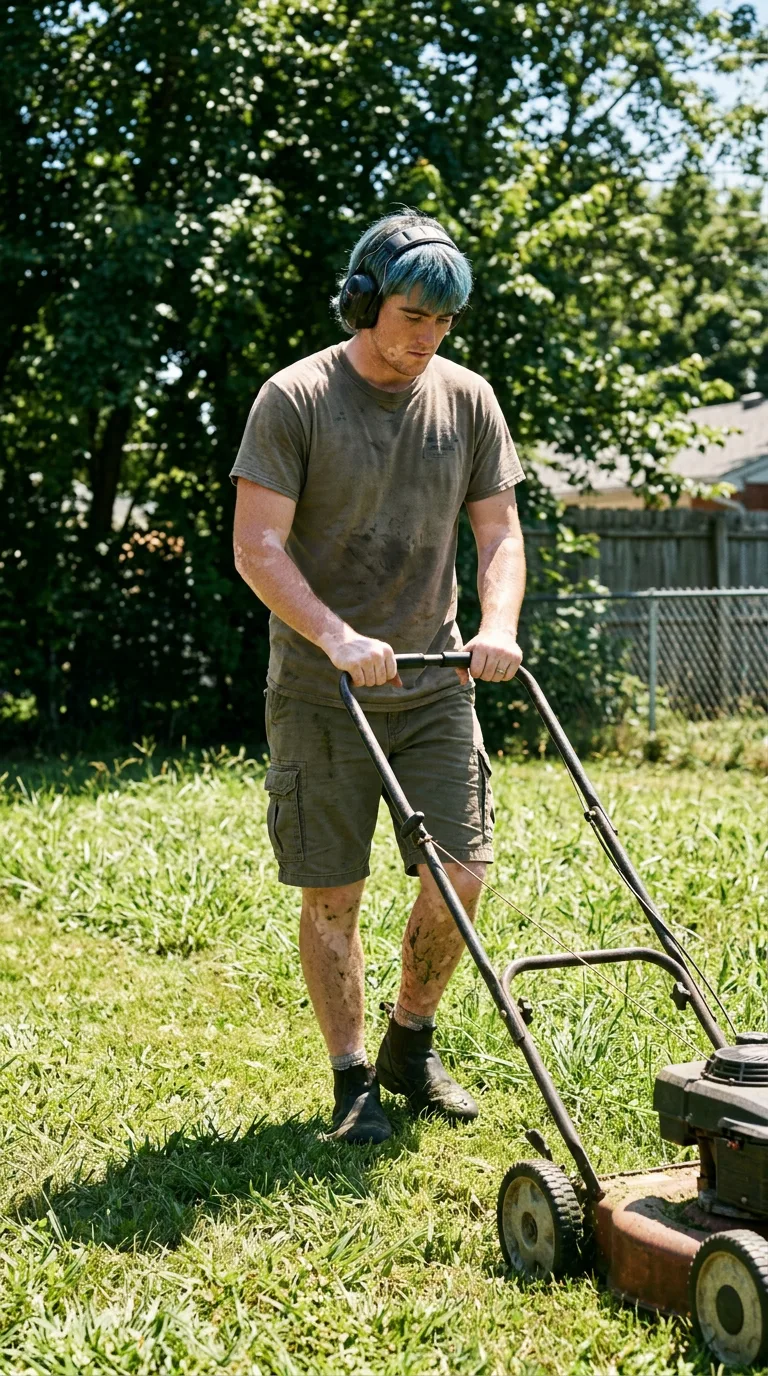
Rarest thing about him: Vitiligo — epic, 1 in 128
Season 0seed 328603460 · engine v10
Character card
lineage PYNCV3
His body-swap story
@colby.marsh (admin), wearing Wesley Cordero, rolled the wheel on and woke up as Dalton Vosberg, spent 4 hours in him, then spun the wheel and woke up as Marcus Otey
The bee sting is what does it.
Not pain, exactly — Wesley Cordero's body doesn't really feel pain the way you remember pain feeling, not anymore, not after seven hours and forty-nine minutes of being him. It's more that the sting lands on the inside of his forearm, right where the wedding ring tan-line isn't, because Wesley Cordero doesn't wear his ring to the hives, and something about the small white welt rising there makes you suddenly, unbearably aware that you are standing in a stranger's yard holding a stranger's smoker, wearing a cleft chin like a mask that fits too well. You've been enjoying him. That's the problem. Light frame, green eyes, the calm hands of a man who talks to insects for a living — you liked him enough that you almost forgot you were renting him. The sting isn't the reason. It's just the moment you notice the boredom underneath the liking, the itch that seven spins have taught you is never going to go away on its own. You set the smoker down on the stand. You go inside, you sit at his kitchen table, you open the laptop to the page with the wheel on it, because Wesley Cordero was never going to be the last one, and some things about yourself you stopped pretending to fight around spin four.
You pay. You spin.
The mower is under your hands before you understand you have hands again — vibrating, warm-gripped, a dead-straight line of cut grass opening up in front of you like a wound closing. The engine had faltered, some cough in its two-stroke throat, and now it catches and steadies and you are standing in full sun holding the bar with both palms, an earmuff loose against the side of your head, grass clippings stinging against shins that are not your shins, that are pale-blotched and sunburned in patches like a map of somewhere with borders drawn by no one. You reach up without deciding to and settle the earmuff back over your ear. The next pass runs true. You didn't do that — his body did, some muscle-memory older than you, finishing the job before you'd arrived to claim it.
The heat comes first, thick and wet, nothing like Los Angeles — Miami sits on your new skin like a hand. Then the shirt: STATION 48 across the chest in red, soaked through at the spine, and touching it — being it, the fabric against his back — opens something. A locker room, steam off a shoulder, someone slapping this exact shirt against your chest last Christmas, laughing, *put it on, rookie, you earned the ugly one.* You did earn it. Six months on the truck by then. You remember — no, he remembers, and it comes to you sideways, the way all of this comes — the first structure fire that was really his, heat pressing the visor of his mask like a hand on his face, and how afterward nobody said anything about the good part, only clapped him on the back once, hard, and that was enough.
The mower handle under your palms gives you more: cutting this same lawn every other Sunday for a woman two doors down who tips in lemonade and cash both, because his own yard doesn't need it, his own yard is a balcony with a rail warm from the sun and a view of haze sitting low over water he never learned to want to swim in. Ocean smell arrives from nowhere, salt and hot tar, though you're standing in someone's chain-link backyard three miles from any beach. Neon on wet tile, some nights, walking home. A girlfriend's laugh through a screen door. Her name arrives like a held breath let out — Marisol — and with it a whole soft ordinary evening, her feet in his lap on that balcony, the two of them arguing gently about whether flan needs orange zest. Before her, another name, sharper-edged, more recent in the leaving than the loving: a fight in a parking lot outside a Publix, the words *you're never really here, even when you're here* said to him like an accusation he still doesn't fully understand, eight months gone and still capable of putting something cold in his chest when it surfaces now, mower vibrating under both hands, cicadas working the heat into a single long note.
The shorts he's wearing — cargo, dirt at both knees — came off a hanger this morning without much thought: he'd been half-asleep, on days off after a 24-on, the kind of tired that lives in the legs more than the eyes. He remembers dragging the mower out of the shed still damp-haired from the shower, remembers the ring on his left hand catching the light — not a wedding ring, just a ring, silver, from nowhere sentimental, a gift from Marisol he wears more than he means to think about. His hands know this bar, know the pull-cord's stubborn kick, know the particular give of a lawn gone a week too long. Twenty-three years old in a body built average and easy, no gym-built muscle, just work-built — forearms that lift stretchers and haul hose, thighs sore today in the low, honest way of a man who ran three miles before eight a.m. because the shift makes you keep your body ready even on the days it doesn't ask you to. The vitiligo patches on his hands feel like nothing at all to him, no different from the rest of the skin, a thing other people notice and he stopped noticing years ago — and standing in it now, you notice it as something almost tender, unfussed-over, worn the way calluses are worn.
You stop pushing. Grass stalks lean drunk against the still blades. You lift one hand off the bar — pale-splashed, sun-pinked at the knuckles, a thin ring catching the light — and turn it over slowly, like it might tell you something the memories haven't already.
"Hell of a Monday," you say, out loud, to no one, in a voice that isn't yours and is, now, for however long this turns out to be.