Marcus Lindqvist-Orozco
Fictional. Generated by AI — not a real person, and no likeness of one is intended.
51, biologist in El Paso · rolled by @marco.villagrana · card — no film
History
who has worn him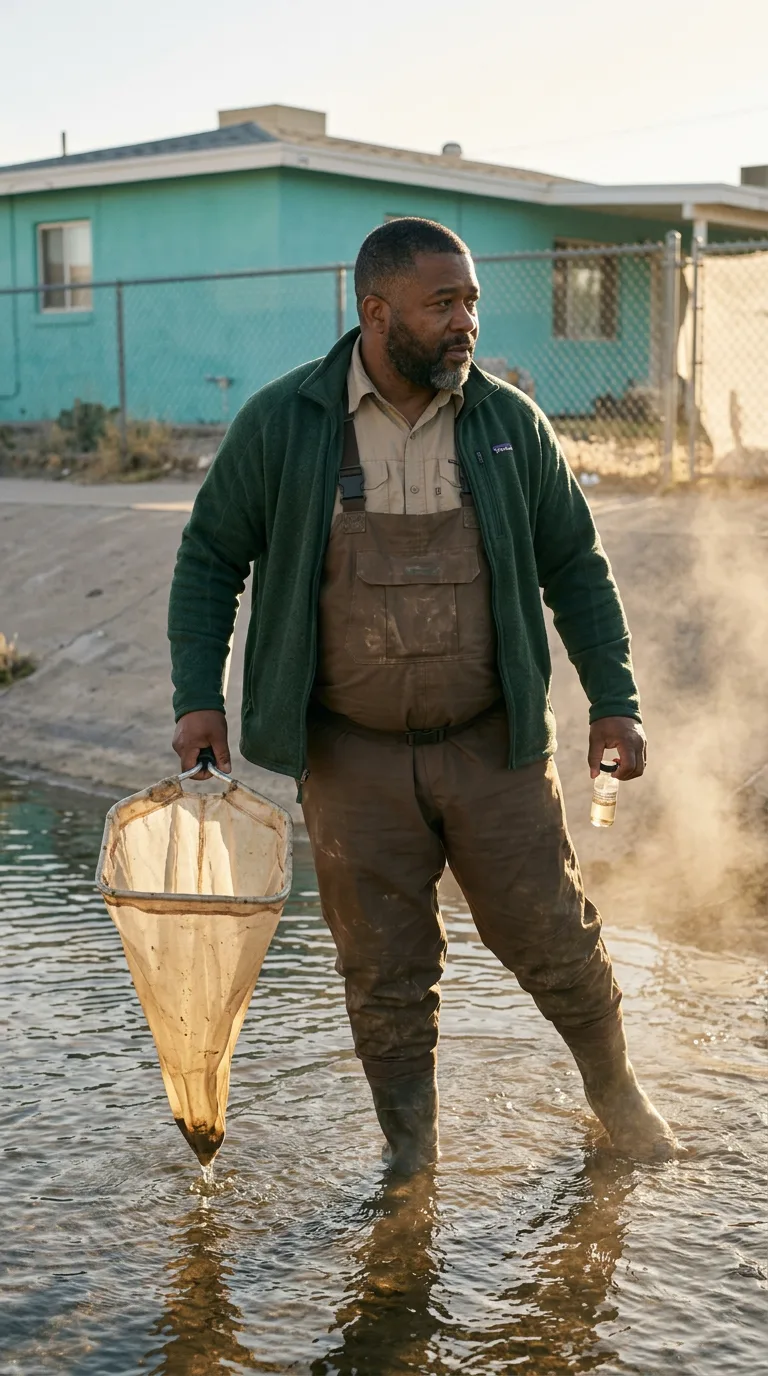
Rarest thing about him: Biologist — uncommon, 1 in 858
Season 1seed 1486726456 · engine v11
Character card
lineage LJL8SV
His body-swap story
@marco.villagrana, wearing Kevin Liao, rolled the wheel on and woke up as Marcus Lindqvist-Orozco, spent 4 minutes in him, then spun the wheel and woke up as Zayd Halabi
Wait — that surname pattern feels off for this heritage; let me name him properly.
NAME: Marcus Deloatch HOOK: You spin a wheel for the 131st time. It gives you a man knee-deep in a creek.
---
You are three minutes into being Kevin Liao when you decide he is not worth keeping. He is standing in a beige conference room in Las Vegas, the gap in his front teeth catching the light off somebody's laptop, and everyone around the table is waiting for him — for you — to say something about a budget line item. Kevin Liao has a wife texting him about a dinner reservation and a knee that clicks when he sits, and none of that is the problem. The problem is that this is all there is. A room. A number. A Thursday afternoon with nothing in it worth having stolen. You spun for this. You spun sixty-two times before this to get something better than this, and there is nothing about an engineering manager's gap-toothed mouth saying "let's circle back" that justifies the seat you are in. You excuse yourself, walk to the restroom, and open the site on your phone with his thick, soft hands.
The wheel spins. It does not ask why. It never does.
The creek water is cold through the waders before it is anything else — cold and moving, pushing at your calves with a patience that has nothing to do with you. There is a net in your right hand, a small brown bottle in your left, and the net is already sweeping backward through the current, wrong, the motion aborted halfway and started again — slow, correct, deliberate, like a man relearning a thing his own body has done ten thousand times. You do it again. And again, checking each pass, ten sweeps in a row that a body this practiced has not needed to check in years. Steam or mist lifts faintly off the water in the low sun. A turquoise house sits behind chain-link thirty yards off, dust hanging gold in the light. Somewhere behind your sternum a heart that is heavier than any heart you've wire yourself into lately is beating hard and even, unbothered, still on its lunch-hour rhythm though the sun says otherwise — a man on an early shift, done with the creek before the heat comes up, home already turning gold behind him.
The waders come first, before anything else, in a memory that arrives through the rubber pressed to your palms: him sitting on the tailgate before dawn, working his left leg into the boot foot, grunting some, fifty-one years old and heavier than he was at thirty and not ashamed of it, just aware of it, the way you're aware of weather. Cold morning. He'd pulled the green fleece on over the tan shirt because May mornings in the Franklins still bite before seven, zipped it to the throat, patted the little vial bottle in his breast pocket to make sure it hadn't rolled out overnight — habit, not worry. He does this six days a week. He has done this for eleven years, university contract, county contract, whoever's paying for the water quality data this quarter, and the creek doesn't care whose grant it is.
The beard gives you the rest, oddly — his hand comes up without your asking it to, scratches once at the gray flecking his chin, and you're standing in his bathroom eight months ago while Denise laughs at him from the hallway for taking so long over "a beard nobody's grading you on," and he laughs back because she's right, and because he likes that she teases him, likes the particular unbothered weight of a woman who has been beside him six years and stopped auditioning for him around year two. No ring — they never got around to it, or didn't need to, the facts of it settled some other way between them that neither one bothers explaining to people who ask. There's a daughter somewhere in the calluses of his right hand, seventeen, sharp-mouthed, who called him "Dr. Fish Man" through her whole childhood and only stopped when she got old enough to be embarrassed by affection instead of proud of it. He misses when she wasn't embarrassed. That comes through the net handle, worn smooth where his grip always falls.
The nose comes through nothing you touch — it's simply there, a low ache of memory living in the bone itself, crooked since a summer league basketball game in 1991, a forearm he never saw coming, blood on a court in Baton Rouge, and the strange lifelong vanity of never getting it reset because Denise told him once, years after they met, that she liked it uneven, said it made him look like a man who'd actually lived instead of one who'd been drawn.
The water is still moving against your borrowed calves. Church on Sunday, most Sundays — a low hum of hymn he doesn't sing out loud but knows anyway, an inheritance from a mother long dead, running under everything he does like groundwater. He has never smoked. Has never wanted a drink badly enough to have one. His pleasures are small and specific: the smell of creek mud, the particular find of a species that shouldn't be there, the quiet of a house painted a color the neighbors call ugly and he calls his.
You look down at the hand holding the sample bottle. It is broader than any hand you've worn in months, the knuckles swollen slightly with fifty-one years of weather and work, a thin white scar you don't remember earning across one finger. You turn it over once, slow, watching water run off the net and darken the toe of the boot.
"Didn't feel that," you say, out loud, to no one, in a voice heavier and rounder than your last one, and you don't know yet if you mean the water or the thing that just happened to the rest of your life.