Kevin Liao
Fictional. Generated by AI — not a real person, and no likeness of one is intended.
58, engineering manager in Las Vegas · rolled by @marco.villagrana · card — no film
History
who has worn him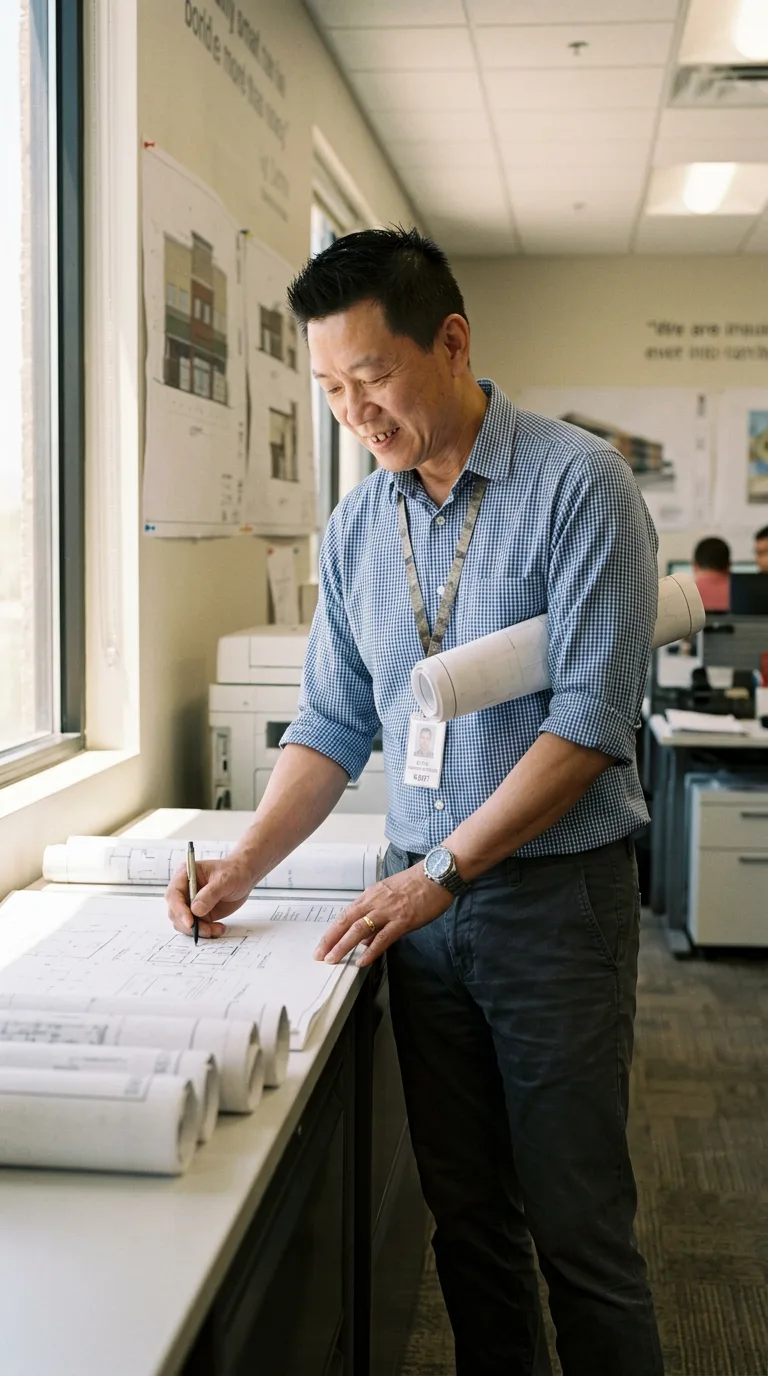
Rarest thing about him: Widowed — common, 1 in 84
Season 1seed 1582387585 · engine v11
Character card
lineage LJL8SV
His body-swap story
@marco.villagrana, wearing Ramón Achebal, rolled the wheel on and woke up as Kevin Liao, spent 3 minutes in him, then spun the wheel and woke up as Marcus Lindqvist-Orozco
The mud is what does it. You are Ramón three minutes now, and the first thing this body tells you, before you have even decided anything, is that its boots are wet through and its knees ache in a way that has nothing to do with age and everything to do with forty years of kneeling in dirt that was never yours. You stand at the fence line at the end of the day, looking at the shape of a barn against a sky going orange, and you think: this is fine, this is a life, but it is not a life you want to keep feeling from the inside. Ramón's shoulders are tired in a specific animal way. His hands smell like hay and diesel. There is a green-eyed tiredness sitting behind his face that isn't yours and that you don't want to carry into tomorrow. So before the feeling can settle into something you'd have to call home, you take the phone out of the barn coat, thumb still clumsy with someone else's calluses, and you open the page with the wheel on it.
You spin.
The pen is between two fingers, tip already touching paper, and for half a second the line goes crooked — a jag where a straight riser should be — before the hand stops, corrects, and draws it again, slow and exact. Then another line, checked. Then another. You are standing at a long table under a window with hard desert light coming through it, plans unrolled and weighted at the corners, a copier humming somewhere behind you, and the body you are in is tall in a way Ramón's never was, its weight settled differently, feet planted wide and sure on carpet tile instead of mud. There's a lanyard swinging slightly against a checked shirt. A pen still in the fingers, warm from being held. You did not have to reach for this one. It reached where it always stands, out of habit, and now the habit is yours to inherit or ruin.
The shirt is the first thing that talks. It is tucked and pressed and it remembers, in the fabric-memory way facts have of surfacing through touch, a mirror at five-forty in the morning, sleeves buttoned at the cuff first and then rolled twice, unevenly, because he never cared that they matched. Someone else used to straighten that collar for him. Not anymore. He does it himself now, glancing at nothing, humming nothing, the apartment quiet the specific quiet of a place two kids used to fill and don't anymore because they're grown and calling on Sundays instead. The ring is next — the left hand closes slightly around the pen and there she is, whole and sudden: Angela, seventeen years gone now, her laugh in a kitchen that got sold, the two of them at a card table drawing up their first house on the back of a napkin before either of them had a license to build anything. He wears the ring not out of grief exactly anymore, just out of not seeing a reason to take off a thing that was never in his way.
The lanyard against his chest gives up the badge photo — him younger, less gray, same gap in the teeth, taken the week he made manager, proud in a way he'd never admit to the guys under him. The paper under his palm gives up ten thousand mornings just like this one: coffee gone cold by nine, a superintendent on the phone about a beam clash, the particular satisfaction of a detail finally resolving on the page after three bad tries. He loves this. Not loudly. He loves the shape of Tuesdays. He was in church last Sunday, is thinking already, underneath everything, about being in one this Sunday too, alone in the pew where four people used to sit.
The floor under his shoes remembers the walk in before dawn, employee entrance, badge beep, the strange hour of this job that puts him crossing a casino loading dock while the town he oversees three towers for is still shutting down its night. He is fifty-eight and he has never once, not one shift, needed anyone to check his work before today, and some part of him that isn't watching yet will wonder, an hour from now, why his eyes went to that line twice.
His hands are not smooth instruments. There's a tremor in them, small, old, the kind that started maybe six years back and that he's stopped mentioning to doctors because it never gets worse, just stays, a low current under whatever he's doing. It's there now, faint, under the pen. His shoulders carry height well but carry fifty-eight less well than they used to — a low ache between the blades from bending over tables like this one for three decades. His jaw is smooth, shaved this morning with a hand that knows the mirror by feel. His mouth, when it's not working, sits in that gap-toothed almost-smile that isn't performing anything, it's just how his face rests.
You set the pen down. You turn the hand over, palm up, and watch the small tremor move across it like something with its own weather, and you think about Ramón's hands, steady and cracked and calloused and not yours anymore, not ever again, gone the second you left them standing at a fence in Ohio.
You look up, past the unrolled plans, out through the window at the hard Nevada light, and you say, to no one who's listening and everyone who might be:
"Okay. Let's see what today's got."