Marcus Freeney
Fictional. Generated by AI — not a real person, and no likeness of one is intended.
52, veterinarian in Coastal Maine · rolled by @colin.hasbrook · card — no film
History
who has worn him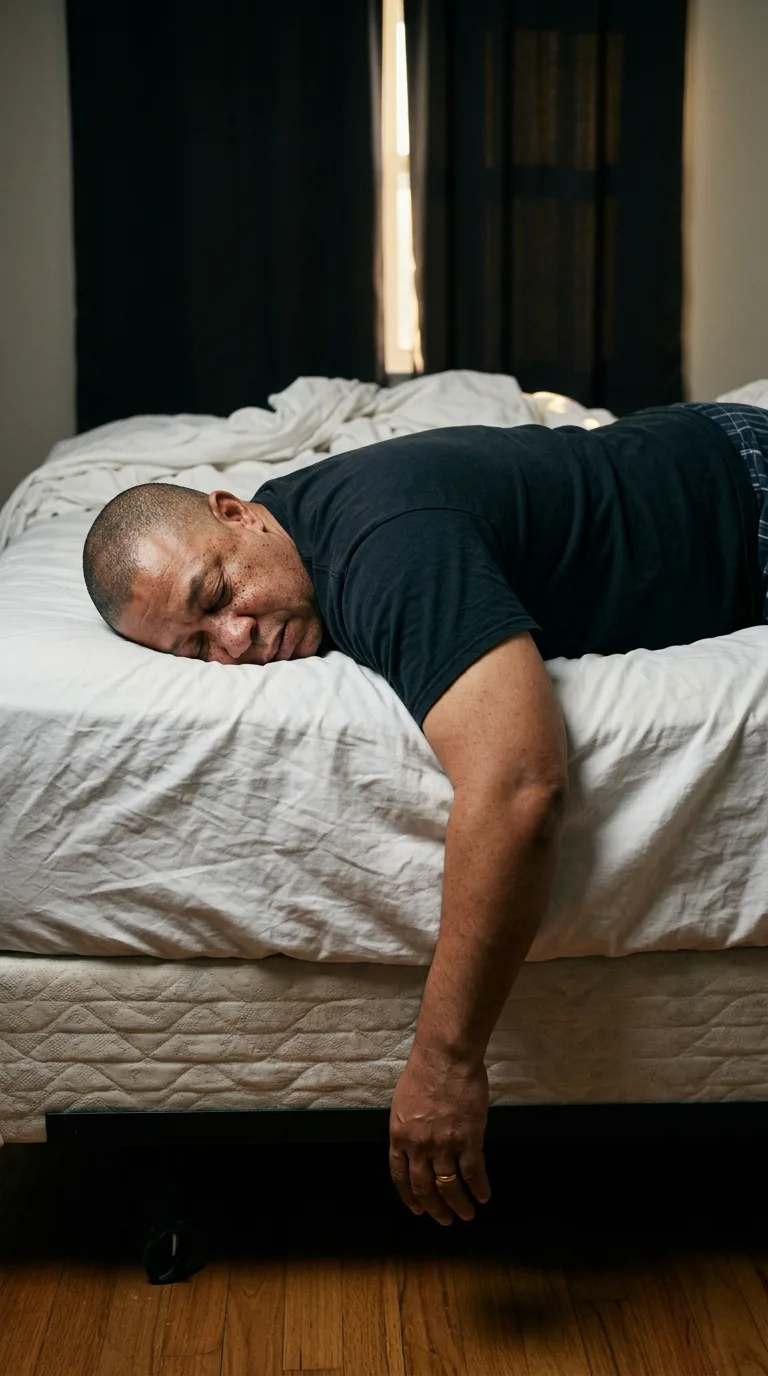
Rarest thing about him: Veterinarian — uncommon, 1 in 128
Season 0seed 1782940027 · engine v10
Character card
lineage 2NZHHJ
His body-swap story
@colin.hasbrook, wearing an unnamed body, rolled the wheel on and woke up as Marcus Freeney, spent under a minute in him, then spun the wheel and woke up as Danny Wysocki
The trowel is still in his hand when you decide, and that is the problem — you have been eighteen years old and skinny and South Asian and holding a trowel over a square of Ohio dirt for three minutes now, and already you know this one is a mistake. The field director is talking about stratigraphy. Somewhere behind your ribs, in a chest that isn't built for it yet, there's a boredom so total it feels like falling asleep standing up. You spun the wheel this morning wanting something and it gave you a boy on a dig who has never once in his life done anything that mattered by lunchtime. You set the trowel down in the dirt, gently, out of some leftover politeness that isn't yours, and you take out your phone, and you go back to the page with the wheel on it.
You pay. You spin.
——
The breath changes before you do — ragged, then even, one long pull of Maine air through a nose full of freckles you have not grown yet — and the arm that was hanging off the mattress lifts itself, folds up onto a chest that is wider and heavier than any chest you have wandered into in the last hundred men. Your hands come together over your sternum like a man laid out for a viewing. You did not do that. Something in him did it, some old habit deeper than you, and you are only riding on top of it, a stranger arriving into a stillness that was already forming before you got here.
It is a Sunday. Late morning in this room by the look of the light through the gap in the curtain — thin, cold, a sea-light, nothing like Ohio light — and somewhere behind you a body clock that has no business being asleep at this hour is already complaining about it. You feel the size of him first, the way you always do, a heaviness settling into you like a coat two sizes too big and made of lead. Fifty-two years in this body and every one of them is sitting on your hips and knees like sediment.
——
The sheet is under your palm and it gives you the first of it: not the sheet, but the person who bought it, years back, in a store in Bangor with a woman's hand in his, her laughing at him for taking so long over a thread count, and something in your borrowed chest goes warm and stupid remembering her laughing. Denise. The name arrives with the warmth already attached, no separating them.
You are face up now, on your back, the posture wrong for him — you know this the way you know a coat is inside out, some felt-sense that isn't language — but the room keeps giving. The mattress under your shoulder blades: nights of it, hundreds of them, her spine against yours, a dog once, before the kids were old enough to say no more dogs, before there were three of them big enough to say anything.
The wedding band on the hand at your chest is warm from your own skin already, and it opens like a door. Nineteen years married. A porch. A proposal that he'd practiced twice in the truck and still fumbled, and she'd said yes before he finished the sentence, laughing at him again, always laughing at him, gently, like it was a thing she loved doing.
The high blood pressure lives in you like weather, a pressure you can feel now that you're looking for it, a thing he takes a pill for every morning without thinking much of it, the way you take breathing.
And the freckles — you can't see them, but you can feel where they are, across a nose that has been sunburned every summer since childhood on a boat that isn't his anymore, an uncle's boat, gone now, an uncle gone too, and the freckles are the only inheritance he kept.
The work comes through last and biggest: an exam room, a steel table, dogs shaking on it, cats flat with fear, a whole population of animals who trusted him with their pain because he had a way of going quiet and slow with his big hands that scared nothing. Thirty years of that. A boy who wanted to be a marine biologist and ended up, by a long slow drift of decisions, becoming the man who put down half the town's dogs with a hand on their heads and did not let himself cry until the car.
He does not drink anymore — there was a year, once, that the memory slides past too fast for you to hold, and then it's gone, replaced by the relief of not doing it anymore, which is its own kind of full feeling.
His hands, you notice now, want to go to his mouth. Some old animal habit — the nails bitten to nothing at the edges, a nervous thing from a life that from the inside doesn't feel nervous at all, just careful, just a man who worries in a room by himself about people he loves.
Three kids. Four. You can't tell yet, the memory of them arriving in a pile, tangled, all their ages at once — a boy's graduation, a girl's first steps, an argument at a dinner table that ended in laughing — Denise's laugh again, always hers, like the house runs on it.
——
You lift the hand off your chest and hold it up into the cold window light, turn it, look at the ring, look at the bitten nails, look at freckles scattered up the back of it like something poured out of a shaker.
It is not the hand you meant to have this morning. It is heavier, and it aches faintly in the joints, and it is a stranger's hand doing exactly what a stranger's hand does, and you did not expect to feel, already, something almost like relief.
You say, out loud, to the empty room and the gap in the curtain and the cold sea light coming through it:
"There you are."