Marcus Denny
Fictional. Generated by AI — not a real person, and no likeness of one is intended.
29, wrestling coach in Houston · rolled by @colin.hasbrook · card — no film
History
who has worn him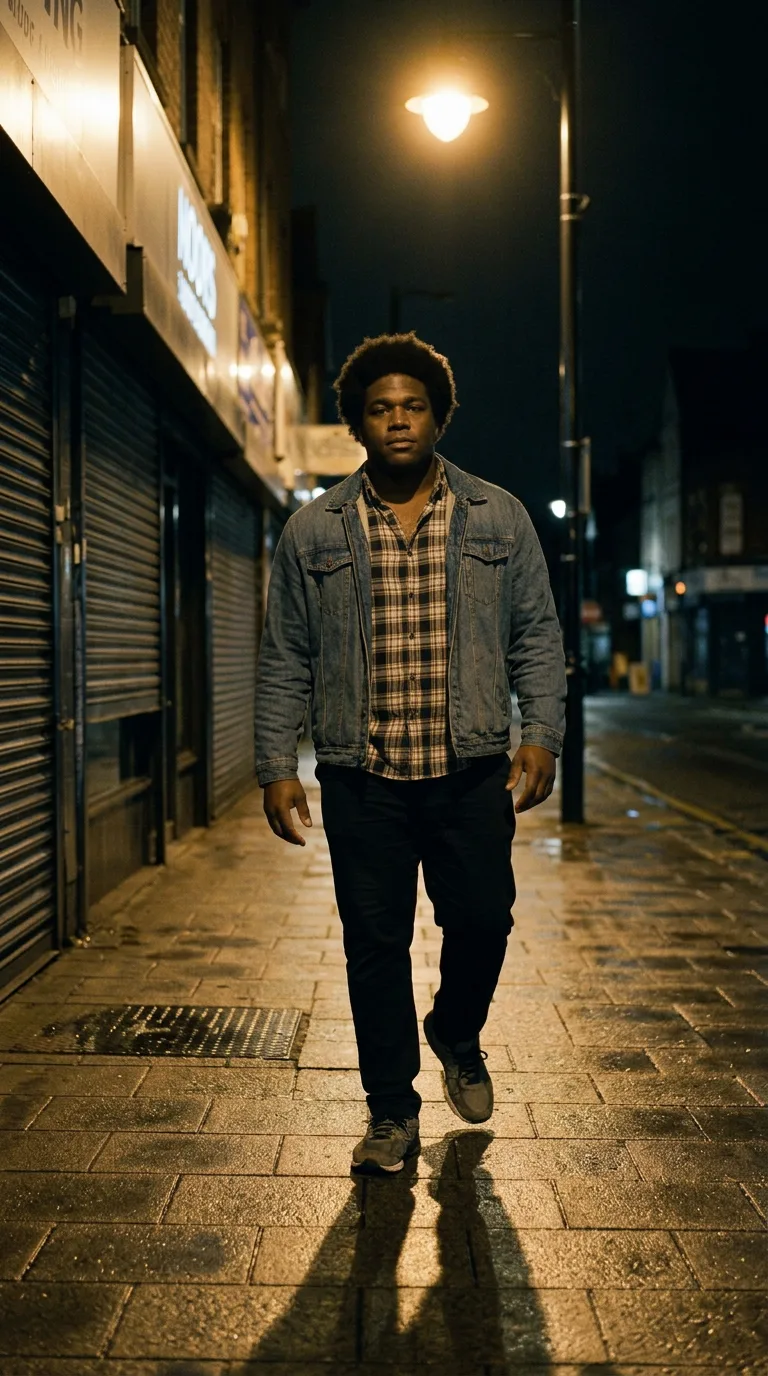
Rarest thing about him: An ancestral tradition — epic, 1 in 161
Season 0seed 1932780304 · engine v10
Character card
lineage 2NZHHJ
His body-swap story
@colin.hasbrook, wearing Patrick Meagher, rolled the wheel on and woke up as Marcus Denny, spent under a minute in him, then spun the wheel and woke up as Nathan Cordero
The route is done for the day, and that is the problem.
You have been Patrick Meagher for forty minutes now, which is long enough to know exactly what kind of afternoon this is going to be: the last parcel dropped at 3:40, the truck back at the depot by four, and then nothing — a studio apartment with a broken nose's worth of old fights in the mirror, a body that runs and doesn't stop running, knees good, lungs good, evening stretching out in front of it like a street with no mail left on it. You liked him for the first half hour. The green eyes, the compact quickness of him, the small satisfaction of a route walked clean. But a man who has done this four hundred and sixty-eight times knows the particular flavor of a Friday with nowhere to be, and you are already reaching for your phone before you have admitted to yourself that you are reaching for it.
You open the site sitting on the tailgate of your own truck, which isn't yours, in a fleet lot that smells like hot asphalt and diesel. The wheel loads slow on his cracked screen. You spin because the alternative is finishing this day as him, all the way to sleep, and you have never once done that when you didn't have to.
The wheel stops. Houston. Male. Twenty-nine.
—
You catch the parked car with a hand that is not the hand you had a second ago — thicker through the palm, a callus riding the base of every finger — and the stumble that was carrying you toward the curb simply resolves, like a radio finding its station. The scuff that had been dragging his left shoe on every third step doesn't come again. Forty steps, even and quiet, oil-black storefronts sliding by with their grates down, a streetlamp holding its little cone of orange over wet brick. At the corner you turn left. It is not the way home. You don't know that yet. You don't know anything yet except that you are big now, and warm with liquor that isn't your liquor, and the jacket hanging open over your shoulders is heavier than four hundred and sixty-eight bodies' worth of jackets before it.
The denim of it is the first thing that talks to you. Worn in at the elbows, a give to it like it's been shrugged on a thousand times without thinking, and it comes up through your arms as a Tuesday — no, a specific Tuesday, three years gone, buying it off a rack at a store that doesn't exist anymore, a girl's voice behind you saying *that one, that one's you*, laughing, not the girlfriend, the one before her, gone now to a city you — he — never visits. The flannel under it is softer, older, a gift, and it gives you a Christmas morning with a mother's hands smoothing the collar down flat before church, incense-smell of the tradition that isn't yours but sits in his chest anyway, patient and unbothered, something he doesn't examine, just wears the way he wears the shirt.
Your feet are the loudest thing. New Balances, half a size worked-in beyond new, and they know a gym floor before they know a sidewalk — the give of a mat under them, the particular crouch-and-drive of feet set wide, a whistle's weight remembered against a sternum though there's no whistle on you now, just the ghost-shape of a lanyard's habit at your throat. Marcus Denny. The name arrives with the shoes, oddly, the way a coach hears his own name shouted across a gym a thousand times until it stops being a name and becomes a direction to move in. You get boys in headgear circling each other on rubber, the particular held breath of a room before a whistle drops, the pride that isn't loud, that never once needed to be loud, of watching a kid you've had for three years finally stop flinching from the takedown. Your shoulders remember carrying an equipment bag that outweighs most of the freshmen. Your hands remember slapping a headgear strap snug, checking it twice, an old habit from watching a strap fail once, years back, and a kid's ear paying for it.
The girlfriend comes through the collar's smell — her perfume ghosted into cotton, faint, laundered eleven times over but still there if you know to look, and you do, his memory does: her laugh in the kitchen this morning, her taking the flannel off the hook and tossing it at his chest, *wear something that isn't black for once*, and him catching it one-handed without looking because he's caught a thousand things one-handed without looking. Comfortable, this life — not showy, a coach's salary padded by a father's old life insurance nobody talks about, a rented house with her name and his on the same lease. Two years in. Good years, mostly. He thinks about the ex sometimes, more than he'd say — a name that surfaces at bad hours, unbidden, the way this jacket surfaces her voice — but it's a small ache, an old bruise you press without meaning to.
Under all of it, the body: twenty-nine and heavy with it, weight that isn't fat so much as built, a wrestler's frame going soft at the edges the way they all do once the mat stops needing them daily. Knees that ache faint and familiar climbing stairs. A gut that presses warm and full against the flannel — big night, a rough one, more bourbon than the body wanted, and it sits behind your eyes now dull and spinning, the two a.m. street tilting very slightly even though your feet, his feet, have stopped scuffing and gone even.
You look down. The hand on the wet hood of the parked car is broad, dark, scarred nowhere in particular, calloused across four knuckles from years of open palms slapping mats. It is not your hand. It has never been your hand. You lift it off the car and turn it over under the streetlight like it's a stone you picked up off a beach, and something in you — old, four-hundred-and-sixty-eight-times old — says the only thing that ever needs saying at this hour, on this corner, in this borrowed weather.
"There you are."