Marcus Delroy
Fictional. Generated by AI — not a real person, and no likeness of one is intended.
32, delivery driver in Boston · rolled by @brian.okafor.lynch · card — no film
History
who has worn him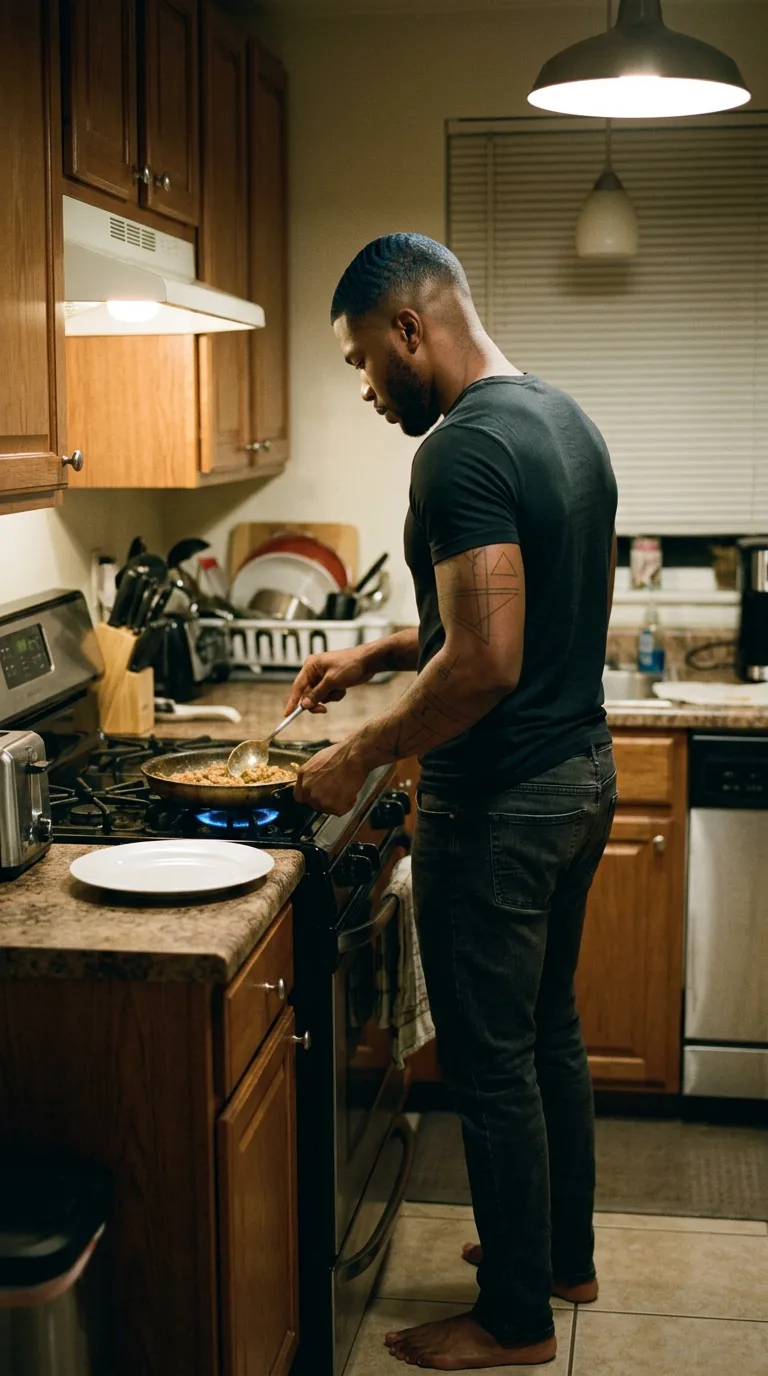
Rarest thing about him: Fashion color — epic, 1 in 56
Season 0seed 251457150 · engine v10
Character card
lineage 79CGDV
His body-swap story
@brian.okafor.lynch, wearing Russell Antczak, rolled the wheel on and woke up as Marcus Delroy, spent 1 minute in him, then spun the wheel and woke up as Gary Petrosky
Russell's knees ache standing at the gym's front desk, even at rest, even at nothing. That's the thing you notice first, sixty seconds into being him: how much this body costs to keep upright. A minute ago you spun and got him — fifty-one, silver-haired, thick through the shoulders in a way that used to be useful and now just aches — and you stood in his kitchen doorway in the dark not remembering the walk from bed. His hip talks to him. His hip has been talking to him for years, apparently, in a language you don't speak yet and don't want to learn. One minute in a body and already you're doing the math: fifty-one is a number that keeps counting whether you're driving it or not. You are not staying for that math. You go back to the site glowing on his phone, the wheel spinning under your thumb before you let yourself think better of it, because a coach's knees at midnight in Phoenix is not a life, it's a maintenance schedule, and you didn't come to this thing for maintenance.
The wheel stops. It always stops somewhere.
The spoon is already turning the other way before you understand your hand is on it. That's the first thing — the stir reversing itself, clockwise to counter, like the body corrected a mistake you didn't know you'd made. Steam off a pan. A hood light too bright for the hour. You salt without tasting, muscle doing what muscle does, and then you're reaching into the cabinet above the stove and your hand comes down with a second plate and sets it next to the first one, and you don't know why you did that, only that the hand knew and you were somewhere behind it, arriving.
The apron string of him — no, there's no apron, just a black T-shirt, soft with washing, and it's the shirt that gives you the first flash: him pulling it over his head this morning, no — last night, his night, whatever this is — arms up, fabric catching on the fade of his haircut, a small private wince because the blue dye still bleeds a little onto his fingers when it's fresh and he'd forgotten and now there's a faint ghost of it on the collar he doesn't bother fixing. Marcus. The name comes with the shirt, settles into your mouth like it was always going to be there. Marcus Delroy, and underneath the name a whole physical inventory rising up unasked: shoulders that carry boxes for a living, a lower back that's tight most mornings by hour four of the route, hands that know the weight of a package before the scanner confirms it, a scar-less economy of a body that works and works and doesn't complain, because complaining isn't really his language either.
The spoon's wooden handle gives you kitchens before this one — his mother's, a galley thing in Dorchester with a radio always tuned low, him nine years old on a stool not tall enough, her hip nudging him out of the way with a laugh, no bite in it. Church clothes hung stiff on Sunday, the particular ache of a tie done up by someone else's hands because his never got the knot right. The Historically Black Protestant cadence of a call-and-response still living somewhere under his ribs even though he hasn't been in a pew in eight months, not since — and here the counter under your palms gives you that, granite cold and real — not since Denise took the kids to her sister's for what was supposed to be a weekend and became a Tuesday and then became custody paperwork, became the two of them small and warm against him every other weekend, became him standing in this exact kitchen learning to cook for a table of one because a table of three had gotten too loud in its absence.
The van key on its hook by the door — you can feel it there without touching it, know it the way you know your own name in this body now — brings the job: pre-dawn dispatch, the scanner clipped at his hip warm from his hand a thousand times a shift, the specific tired of eleven hours on his feet that never quite counts as exercise, though God knows it should. He is good at it. He likes, mostly, that nobody watches him do it. He does not drink, has never needed to, took one look at an uncle's life and decided early that clarity was worth more than the alternative. No cigarettes, not one, not ever, a small stubborn cleanliness he's proud of and never mentions. A pill, small and white, taken most mornings without ceremony, for a chemical weather that used to knock him flat and now mostly just dims the room instead of collapsing it. He earned what he has — the well-kept duplex, the truck paid off, money enough that his mother stopped worrying out loud about him, though she still worries — earned it hour by hour, box by box, and never once let anyone see the earning as anything but ordinary.
The apron of steam off the pan brings the last thing, thin and specific: he does this most nights now, cooks enough for one and sets out two plates anyway, not from confusion but from a stubbornness that looks a lot like hope, in case the phone rings, in case this is the week the kids stay over on a school night for once. Nobody's coming tonight. He sets the second plate down anyway. That's the whole man, right there, in a gesture nobody will ever see him make.
You look down at his hands — Marcus's hands, dark-knuckled, a fine-line geometric tattoo climbing one forearm like a diagram for something that was never built — and you turn one over slowly under the hood light, watching it not because it's strange but because it's good, because thirty-two feels like a gift after fifty-one, because this is a man who takes care of what he's given and you intend, for however long this lasts, to let that be true of you too.
"Two plates," you say, out loud, to the empty kitchen, and you don't put the second one back.