Marcus Delery
Fictional. Generated by AI — not a real person, and no likeness of one is intended.
29, factory foreman in Boston · rolled by @colin.hasbrook · card — no film
History
who has worn him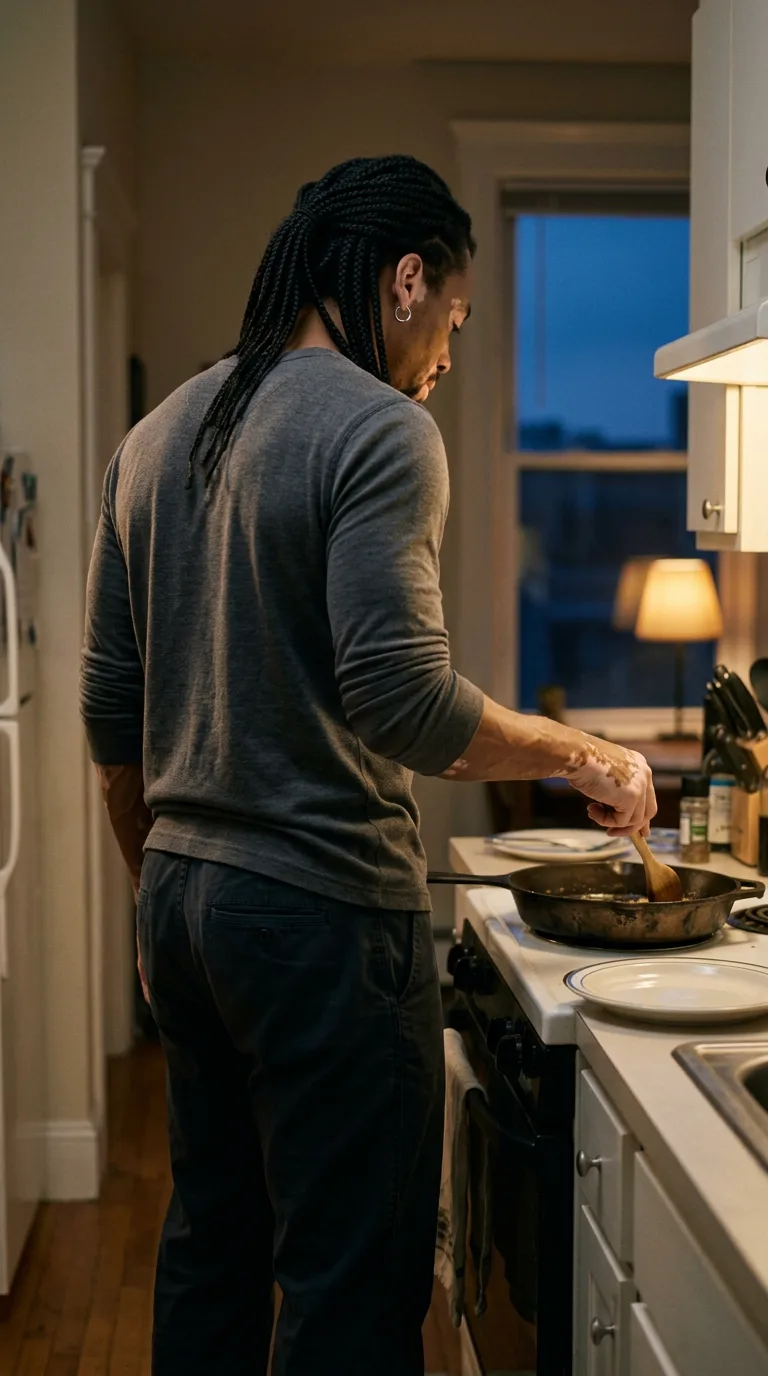
Rarest thing about him: Box braids — uncommon, 1 in 312
Season 1seed 1881775765 · engine v11
Character card
lineage 2NZHHJ
His body-swap story
@colin.hasbrook, wearing Terrance Boyd, rolled the wheel on and woke up as Marcus Delery, spent under a minute in him, then spun the wheel and woke up as Rene Balderas
---
You are Terrance Boyd for the length of a breath more. Los Angeles keeps its afternoon light flat and hard through the break-room window, and you can smell the produce floor three doors down, cardboard and refrigerant, a smell you have hated for less than a minute and already know you will hate again if you stay. Your knees ache in a way that isn't yours, not really, a short man's knees, weight distributed wrong for what your head remembers weight should feel like. There's a gold tooth catching the light when you check your face in the dark of a powered-off monitor. Fine work. Not enough. It's never the body — you learned that four hundred spins ago — it's the five minutes after, when the wanting comes back like a held breath let go, and today it came back before you'd even clocked in. You didn't come here to stock shelves. You came here to leave.
You open the site on your phone in the break room, thumb on the wheel, and you don't wait to see where Terrance Boyd's shift card goes.
—
The spoon is already turning the other way before you understand your arm is doing it. Salt falls into the pan in a small hiss and you do not taste it, because tasting isn't the point right now, motion is, hands finishing what they started before you got here. A cabinet door is warm under your palm — a second plate, white, chipped at one edge, and you are setting it down beside the first without deciding to.
You are tall. That arrives before anything else does, the sheer distance between your eyes and the stovetop, a body built for reaching things other bodies need step-stools for. Braids shift against your neck and shoulder when you turn your head, weight you feel drag half a second behind the movement, like a separate animal riding along.
The wooden spoon handle is worn smooth in one spot, and that's where it starts — a callus, a groove, a thousand stirrings of a thousand dinners for one, and under it: him.
Marcus, twenty-two, a line supervisor telling him he had "foreman eyes," whatever that meant, and him not believing it until the promotion came through anyway. The floor at shift change — that specific clatter, conveyor belts slowing, guys clocking out around him while he's still walking the line checking torque numbers, radio on his belt squawking somebody's name that isn't his. He likes that job. Likes being the one people check with. Doesn't love the noise, twelve hours of it, but the quiet after is good, the T ride home good, this kitchen good.
The shirt sleeve rolled at your forearm gives you a whole morning — him standing in front of the mirror doing the sleeves exactly like this, one fold, then the next, because his mother taught him that a man rolls his sleeves the same way every day or he isn't paying attention to himself. The vitiligo catching the bathroom light, the patches on his hand and up past his wrist, the ones on the left side of his face he stopped hiding from cameras around twenty-five, stopped hating around twenty-six. Someone he dated before — Alicia, and it comes with a whole ache, an apartment he doesn't live in anymore, a fight about time, about a schedule that ate weekends, about a son neither of them handled right in front of — his son, four years old, who asked him once why his hand looked "like the moon," and Marcus laughed so hard he had to sit down on the bathroom floor, and it's one of the best things that ever happened to him and you are holding it now like it's yours, except it isn't, it's borrowed, it's the shirt talking.
Sabrina's voice comes through the counter somehow — texted him twenty minutes ago, running late, on her way, don't wait to eat — and that's why there's one plate and now two, that's why the pan keeps going, he's cooking slow so it's hot when she walks in.
Your feet — his feet — ache pleasantly, the good kind of tired, the kind that comes from twelve hours on a concrete floor in steel-toes, from walking a line you're proud of. A leg you're not thinking about is already bouncing, tapping against the cabinet under the sink, a tic that outlives whatever job it started in.
The earring is cold for one instant against your neck when your head turns toward the door — nobody there yet — and then warms.
—
You look down. Two hands, one pale-splotched, both holding a spoon that isn't moving anymore. You turn them over, both sides, like you're checking them for a warranty sticker, like they might still have a smaller man's hands hiding underneath.
You look up, into the dark window glass where a face that isn't yours is reflected back at you, braids swinging loose past a jaw you've never worn before tonight.
"Smells good," you say, to no one, to whoever walks in next, to the plate you didn't put there yourself.
Somewhere the wheel is still spinning for the next man, and you don't know yet if it'll be tonight, or years from now, or the moment Sabrina's key hits the lock.