Marcus Delaine
Fictional. Generated by AI — not a real person, and no likeness of one is intended.
42, management consultant in Chicago · rolled by @marco.villagrana · card — no film
History
who has worn him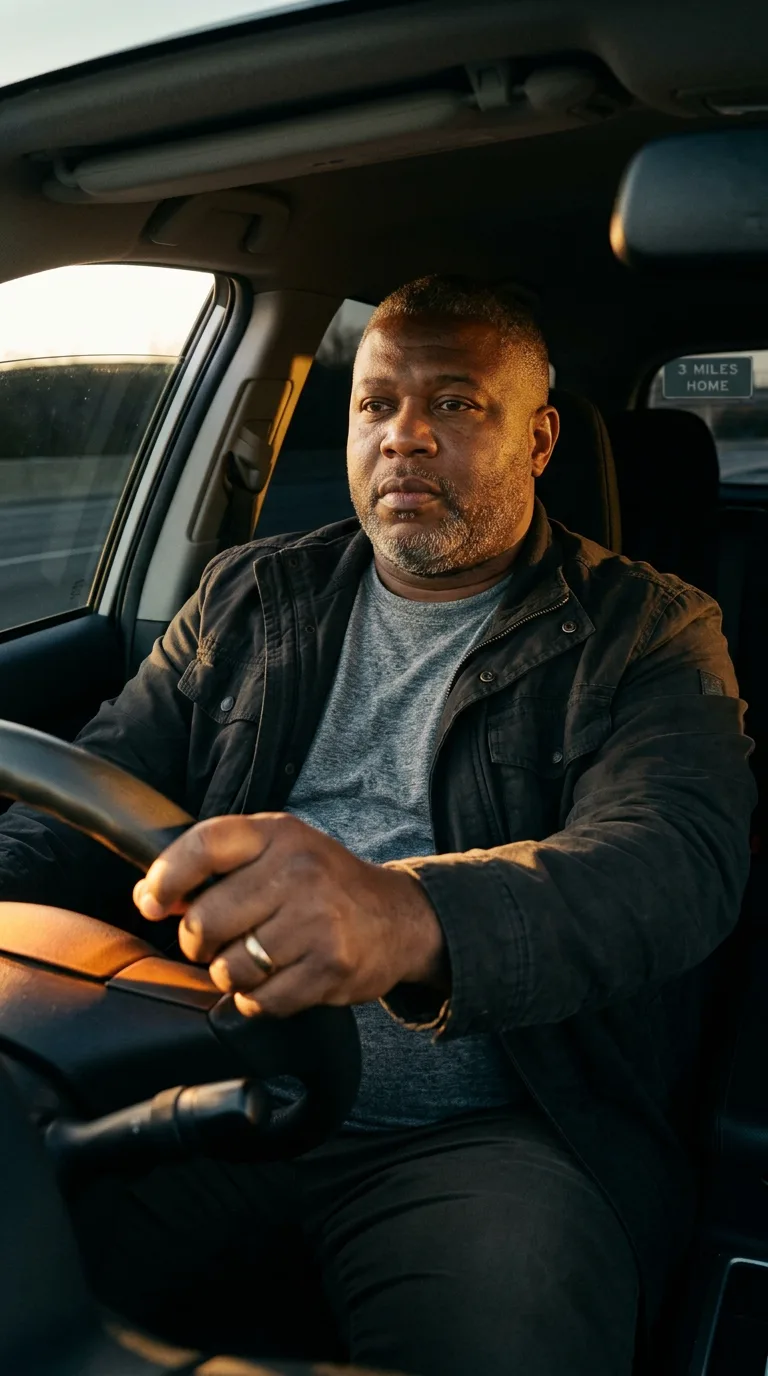
Rarest thing about him: Picks at his cuticles — common, 1 in 34
Season 1seed 1500659023 · engine v11
Character card
lineage LJL8SV
His body-swap story
@marco.villagrana, wearing Rigoberto Salcido, rolled the wheel on and woke up as Marcus Delaine, spent 4 minutes in him, then spun the wheel and woke up as Manuel Otis
You are three minutes old in Rigoberto's hands and already tired of them.
They ache. That's the thing nobody warns you about, spinning into a body already sixty-five years lived-in — the knuckles swollen at a hangar bay in Miami, the smell of jet fuel baked into skin that isn't yours yet either, some coworker calling him Rigo from across the tarmac like it means something. You stand there wearing a stranger's tired joints, holding a socket wrench that his hand knows and yours doesn't, and you think: not this. Not tonight. Three minutes of him and you already want out — not out of the wheel, just out of him, because he is thin and worn and every step pulls at a knee that has nothing left in it, and greed is easier to feel than to name, so you don't name it. You just want more. You always want more. The phone is in his coverall pocket, the site already open from before, like you knew you'd be back before you finished landing.
You spin.
The wheel doesn't ask if you're sure.
—
The car is warm and it is not your hand on the wheel and then it is.
You feel the highway before you feel anything else — the low highway hum through a seat that is not a bucket seat, it is built for a bigger man, and you are that man now, all at once, hips and shoulders and the particular ache low in the back that comes from sitting in airport lounges half your life. Your hands are at ten and two and then they aren't; they slide down and out along the wheel like they've done this ten thousand times, wider, lower, easy. The dash light is amber on knuckles that are not swollen anymore, not old anymore — thick, though, solid, a wedding band catching the glow. A sign passes outside going the other way. Something in the car's small brain notices the drift and corrects for you before you've even decided which way to go, and your thumb finds the turn signal stalk and clicks it down for an exit you have never taken and never will again.
Three miles from home. Not your home.
—
The shirt is what opens him first.
Not the jacket — that's just canvas, cold-weather, doesn't know him. It's the t-shirt underneath, grey cotton gone soft at the collar from a hundred washes, and the second your back settles into the seat it gives you a morning: his hand pulling it over his head in a hotel room in Denver, a client deck already glowing on the laptop across the room, his wife's voice small and far away on speakerphone asking if he'd eaten anything besides the granola bar, and him saying yeah, lying, because the thought of describing the sad little continental breakfast bar felt like more effort than the lie. Marcus Delaine. The name comes with the shirt, unhurried, like it was always going to.
The ring gives you more, and gives it heavier. Sharon. Fourteen years married, and before her — before, and this is the part that arrives with a kind of ache that isn't yours but sits in your chest like it is — Denise, who he saw four months ago for coffee that wasn't supposed to mean anything and meant something anyway, who he hasn't called since, who he thinks about on flights more than he'd ever admit out loud to anyone, least of all himself. You get the coffee cup in her hand, the way she laughed with her whole face, the specific guilt of driving home afterward going the speed limit like driving carefully could undo it. You get none of it resolved. He never resolved it. That's just where it sits.
The wheel under your palms gives you work — decks, decks, decks, a boardroom in Dallas where a VP twice his age called him "kid" until the numbers Marcus laid out made him stop — and the leather of this exact wheel gives you the drive itself, an unremarkable Tuesday closing out an unremarkable week, nothing special about tonight at all except that it is his and he was almost home. Three miles. He'd been thinking about dinner. Whether Sharon had started it or was waiting on him. Small, warm, forgettable thoughts, the kind a man has when nothing is wrong.
Your body — his body, yours now — is heavy through the shoulders and gut in a way that has settled rather than arrived, forty-two years old and starting to know it in the knees when he takes stairs two at a time out of habit rather than ability. Strong hands, still, good for gripping a suitcase handle through six connecting flights a month. Your thumb finds the cuticle of your index finger without being told to, worries at it the way it's worried at it in a thousand meetings, waiting rooms, boarding lines. Salt-and-pepper stubble under your — his — jaw, kept close and neat because he can't stand it any other way. No drink in him for years now; you feel that too, a low steady clarity that has nothing to hide behind.
The turn signal is still clicking. Nobody's home to notice yet.
—
You bring both hands up off the wheel and look at them in the dash light — thick fingers, the band catching amber, a thumbnail worried pink at the edge — and for a second the car just drifts, engine holding its line better than you are.
"Okay," you say, out loud, to no one, in a voice that isn't yours and is now. "Okay."
You don't turn the wheel back yet. You just sit with his hands a while longer, feeling how little they know about what just happened to them, and somewhere behind that thought, already, faint and patient, is the wheel waiting for you to want someone else.