Marcus Delacroix-Bell
Fictional. Generated by AI — not a real person, and no likeness of one is intended.
52, student in Toronto · rolled by @colin.hasbrook · card — no film
History
who has worn him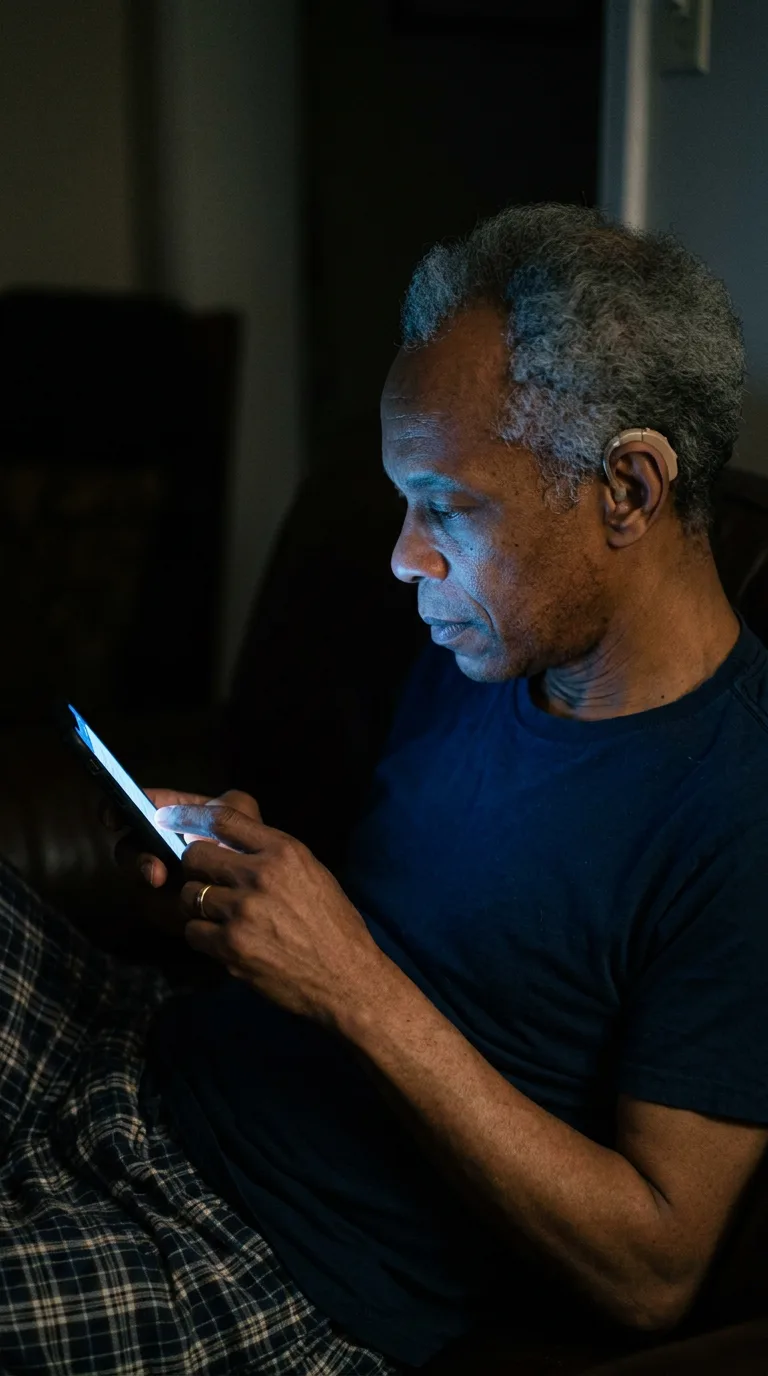
Rarest thing about him: Student — rare, 1 in 484
Season 0seed 988461457 · engine v10
Character card
lineage 2NZHHJ
His body-swap story
@colin.hasbrook, wearing an unnamed body, rolled the wheel on and woke up as Marcus Delacroix-Bell, spent under a minute in him, then spun the wheel and woke up as Danny Okamura
The classroom is empty and it is not even six in the morning and you are standing in it anyway, which tells you something about how this one has gone. Twenty-nine years old, green eyes, that scar through the eyebrow that girls used to ask about before you were old enough to have a story ready for it. You have graded nothing. The whiteboard still has yesterday's warm-up written on it in handwriting that is not quite your own, because it isn't, not really — you've only had these hands three minutes, thereabouts, and they still write like the man who owned them for twenty-nine years, before you spun into the middle of his Tuesday and told his fiancée over the phone that everything was fine, just tired. You are already tired of him. That is the whole of it, if you are honest, which you are not required to be, not even with yourself. He was supposed to be a good one — athletic, tenured-track, a life with corners you could grow into. Three minutes in, standing at his own desk, you understand you do not want to grow into anything. You want the wheel. You always want the wheel. You take out your phone — his phone — and you open the page with the wheel on it before the classroom lights have finished their warm-up flicker, and you spin without asking what you might get, because that has stopped being the point in you for a long time now.
The dark comes first, and blue light on your cheek, and a thumb that is not stopping — it goes faster, past a photo of a granddaughter, past a headline about a snowstorm, past a text from someone named Priya still unread, and the thumb belongs to someone with more bone in it than you had a second ago, less muscle, a wedding band cold against the glass. You are lying on your side. Somewhere behind your held breath a hearing aid sits snug and unfamiliar in your ear, and the room hums at a pitch that isn't quite hum, more like a held-back roar with the top sawed off. You do not blink for longer than a man should. Then you do.
The shirt is what gives him to you first — a soft navy T-shirt gone thin at the collar from washing, and it comes with the smell of fabric softener his wife buys in the big blue jug from the Costco on Dupont, and with the smell comes her face, unhurried, the gray coming into her hair the same as his, the two of them joking last week about matching. Her name arrives a half-second behind her face: Adaeze. Married twenty-six years. There was an ex before her, Colleen, who he thinks of maybe twice a year now, mostly when a certain kind of March light comes through a certain kind of window, and there's no ache left in it, just a marker of who he used to be, filed and closed. The plaid pants against your legs bring back this morning — no, not morning, whenever this is, the room says afternoon-dim with the blinds half down, but the pants remember being pulled on at what felt like the start of a day, his knees complaining the way they do now every single time, a twinge in the left one he has stopped mentioning to anyone because Adaeze already worries enough. His hands know the phone without thinking; his thumb has fifty years of muscle behind the mechanics of scrolling and none behind slowing down, because slowing down is not what men his age do with a phone at two in the afternoon on a Monday when they should be asleep — and there it is, the shape of the wrongness: night class. He drives for a delivery company three nights a week, has for the six years since he went back to school, financial aid stretched over a bright student loan spreadsheet Adaeze keeps for him because numbers on a screen make his chest go tight. Fifty-two years old and back in undergrad, business administration, because the auto parts warehouse where he worked for eighteen years closed and did not reopen and severance does not last the way they tell you it will. His leg is already bouncing under the sheet, has not stopped bouncing since he was young enough that his mother used to put a hand flat on his knee in church to still it, an old habit his body keeps for him without his permission.
The backpack strap, when your fingers find it in memory rather than in the room, brings the campus lawn: laptop balanced on his knee, a boy half his age asking to borrow a charger, the small daily miracle of not being the oldest person anyone has ever seen holding a highlighter. He likes it there more than he expected to. He is bad at math and good, unaccountably, at organizational behavior, likes the professor who calls on him by name like his age is not the whole of the room's read on him. He prays before exams, has since he was a boy in a church basement in Scarborough with a ceiling fan that never worked right, and he still does not drink, has not since before either of his kids could talk, and he quit the cigarettes the week his daughter was born and has never once told anyone how close he came in the parking lot outside the hospital, alone, holding an unlit one like a man holding a decision.
The hoodie is folded on a chair somewhere in the dark you can't see yet, gray, City University across the chest in letters gone soft at the edges from a hundred washes, and putting it on this morning — his morning, hours behind this exact second, a fold of time the wheel does not bother to smooth — came with him standing in front of the mirror thinking he looked like somebody's substitute teacher, thinking it without malice, an old joke with himself. The ring is the last thing that comes through, small and plain and warm from his own hand, and with it: a wedding day in a church basement much nicer than the one from his childhood, Adaeze's sister crying too loud, his mother already gone two years by then and everyone pretending the empty chair wasn't as loud as it was.
You lie there a moment longer in the two-in-the-afternoon dark of a man who sleeps when his shift says to, not when the sun does, his phone gone still under a thumb that has finally, for the first time in an hour by his clock, stopped moving.
Then you look at the hand. His hand — spotted faintly at the knuckle, the ring catching what little light there is, the leg still going under the sheet without asking you first. You lift your eyes off it, into the dark where a window must be, and you say, to no one, in a voice that comes out lower and rougher than the one you left behind in a classroom in Honolulu six time zones and forty minutes ago:
"Okay. Okay, let's see."