Marcos Fuentes
Fictional. Generated by AI — not a real person, and no likeness of one is intended.
53, farmhand in Atlanta · rolled by @bryce.kellerman · card — no film
History
who has worn him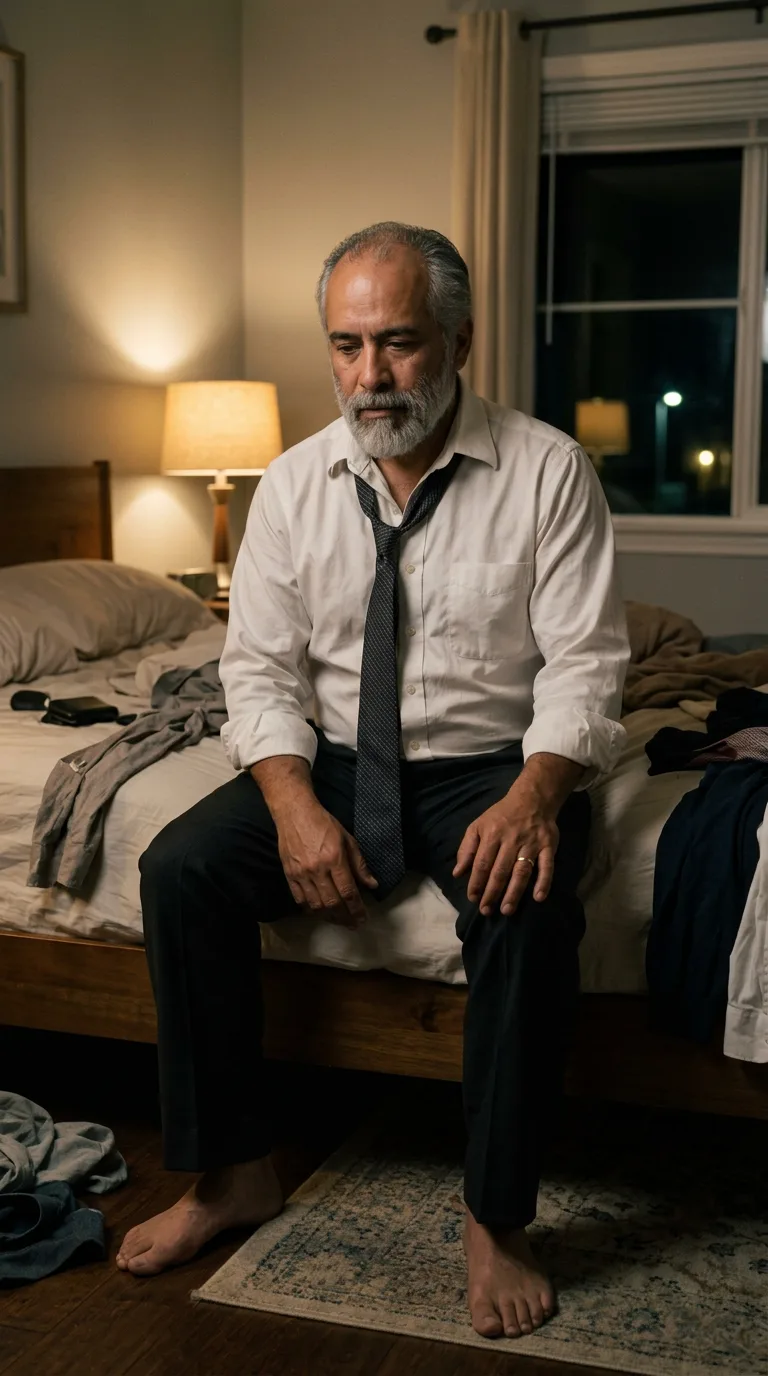
Rarest thing about him: Getting dressed for work — common, 1 in 48
Season 1seed 1756266886 · engine v11
Character card
lineage 9IC4OB
His body-swap story
@bryce.kellerman, wearing Neil Kowalik, rolled the wheel on and woke up as Marcos Fuentes, spent under a minute in him, then spun the wheel and woke up as Larry Feinglass
The shop smells like WD-40 and cut brass, and it is closed, and it is Neil Kowalik's, and you are sick of it. Six hours and fifty minutes of a body that works — muscle you didn't earn, a jaw that photographs well, a life with a register full of twenties — and none of it is yours and somehow that is the whole problem. You stand in the dark storeroom in his skin, biting nails that are not bitten because Neil never bit his, and the itch is not for Neil's life, it's for the wheel itself, the drop in the stomach before it lands you somewhere. You tell yourself it's boredom. It might be greed. You don't examine it further. You open the laptop, the vessel.cards page loads its slow gold wheel, and you spin it at an hour when only insomniacs and the newly rich are awake, and somewhere far off, in a house that is not this one, a Saturday is already old.
The hand stops on a button.
You feel the ribs first — a smaller cage than Neil's, softer at the belly, the specific ache of fifty-three years standing in furrows. The shirt is half-done and wrong, buttoned one off, and your fingers — his fingers, now — undo it without your telling them to and redo it correctly, like something in the muscle already knows this shirt better than you do. The tie goes up and knots itself into a shape this bedroom has never seen, some knot Neil's hands knew and this man's never did, and you feel that wrongness land in the room like a dropped plate, though nothing actually falls.
Then the shirt collar against the back of your neck opens like a door.
Sweat-softened cotton, washed four hundred times, and suddenly you're standing in the closet of a house on a cul-de-sac, the lamp with the yellowed shade throwing its small circle, and it's — Christ, it's still summer-thick even at this hour, the AC straining, and you (he) are getting dressed for the funeral of a man you worked forty acres beside for eleven years, and your hands are shaking doing the buttons because Beto Salinas is dead of a heart nobody knew was bad, and grief comes up through the shirt fabric like heat off asphalt.
That's not tonight. That's a year gone. But it's in the shirt anyway, folded into the weave along with everything else this shirt has been for.
The tie is worse, or better — the tie is his wedding, twenty-six years back, a church in Griffin, Georgia, his mother alive then and crying in a pew, his first wife's face before it was his first wife's face, before Denise got tired of a man who smelled like the fields no matter how he scrubbed, before the divorce that took two years and cost him almost nothing because there was almost nothing to take. You feel that failure sit in the chest without apology, an old bruise pressed by a stranger's thumb. Then, closer, warmer — Rosa. Rosa's hand fixing this same tie badly, laughing, her breath smelling like the coffee she drinks too much of, in the kitchen four years ago before his daughter's quinceañera, and the love in it is so plain and unglamorous it nearly buckles your knees, which are his knees, fifty-three years old and stiff every morning until the second cup.
His hands — bitten nails, blunt, know the weight of a crate of beets like a language, know exactly how far to bend before the back complains. Farmhand hands, sun-cured at the knuckle, a plain gold band worn thin on the left one. You feel the calluses as a kind of pride he never bragged about. Three kids, or more — a flash of a boy's graduation gown, a girl's laugh over a phone held too close to her face, a name you don't catch, gone before you can hold it. A drink most nights on the back step with Rosa watching the fireflies, never a cigarette, never wanted one. A man who half-believes something is watching over the rows without needing a church to tell him so.
Why is he dressed at this hour, tie and all, in the dead middle of a Saturday night while the house sleeps? Something pulls at the edge of it — early truck to the co-op, a harvest that doesn't wait for daylight, some understanding between him and the dark that this is simply when the work starts. It comes with no complaint attached. It is just Tuesday made of Saturday. It is just his life.
You look down. The hands are shaking slightly, not from him — from you, still arriving, still finding the edges of a shorter body, a rounder gut, a beard that itches at the jaw in a way Neil's clean face never did.
You turn them over once, like checking they're real.
"Well," you say, to the dark window, to the lamp, to nobody, "let's see what you've got, Marcos."