Manny Figueroa
Fictional. Generated by AI — not a real person, and no likeness of one is intended.
63, house painter in Philadelphia · rolled by @colin.hasbrook · card — no film
History
who has worn him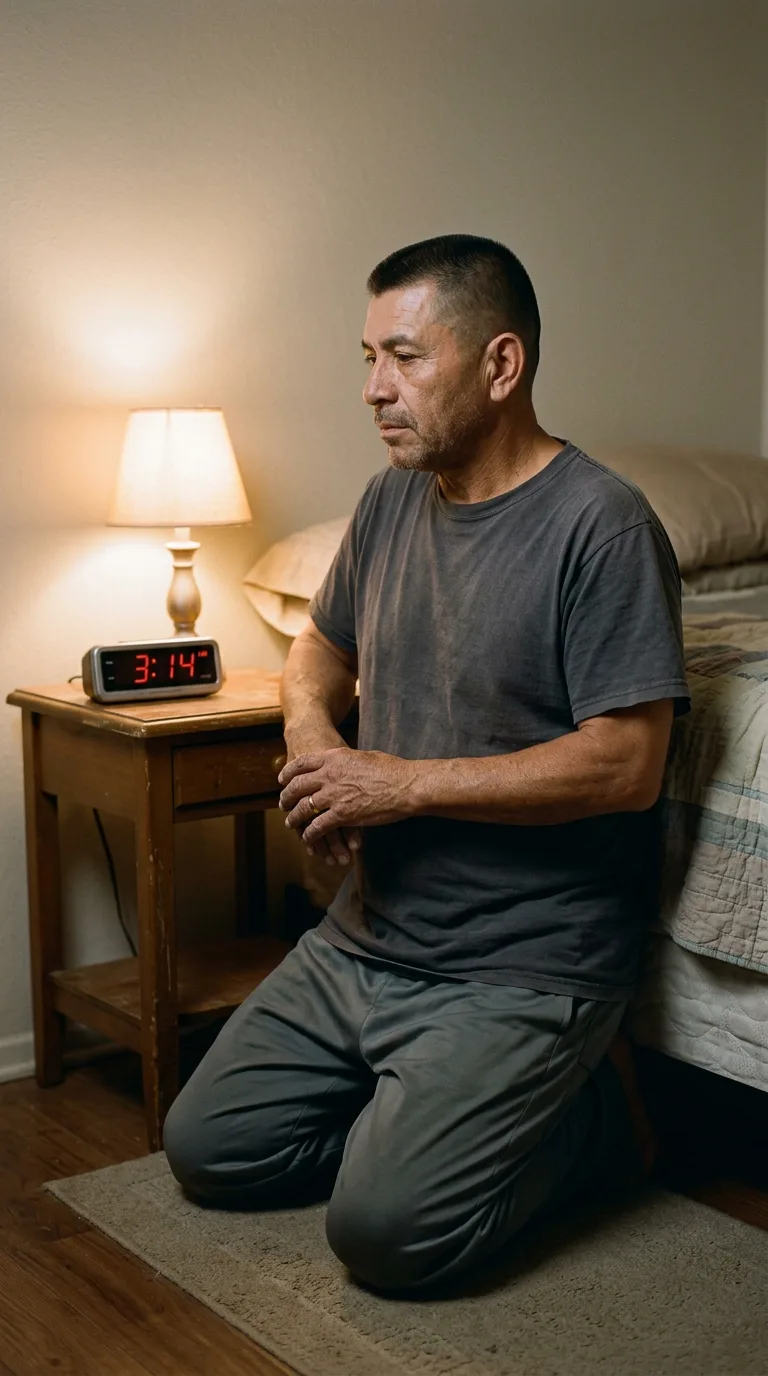
Rarest thing about him: House painter — rare, 1 in 87
Season 0seed 905514681 · engine v10
Character card
lineage 2NZHHJ
His body-swap story
@colin.hasbrook, wearing an unnamed body, rolled the wheel on and woke up as Manny Figueroa, spent under a minute in him, then spun the wheel and woke up as Héctor Reyes
The welder's hands are good for exactly one thing and it isn't this. You've had them three weeks and you're tired of the grip strength, the way the knuckles ache when the AC kicks on, the way this man's whole apartment smells like flux and old coffee and nothing else, ever, no matter what you do to it. Thirty-five, blue eyes, a body built for holding a torch steady, and it turns out that's all it was built for. You ate his lunch today standing up at a job site in Hialeah because sitting down felt like giving up on the day, and somewhere in the chewing you decided: enough. Not boredom exactly. Something closer to hunger with no name on it. You drove home at two in the afternoon, told the foreman your stomach was bad, and sat down at the kitchen table in front of the laptop with the wheel already loading before you'd admitted to yourself you were doing it again.
You spin. The wheel gives you Philadelphia, gives you a Monday afternoon that is also, somehow, this Monday afternoon, gives you a man on his knees.
The amen comes out of you half a beat before you're ready for it, before you're braced, and you're already rocking up onto your feet when the floor of him closes over your head like water. Your knees find the carpet again on their own, without asking. Forehead to the bedspread. The quilt smell — fabric softener, a little must — arrives before anything else does, before you even have a name for whose nose this is.
You are kneeling. Your — his — hands are still loosely laced, resting against the edge of the mattress, and the first thing that comes up through them isn't a memory, it's just weight: sixty-three years of it, settled into a low ache across the shoulders that has nothing urgent to say, that has said it every morning for a decade and stopped expecting an answer. The t-shirt against your back is soft in the specific way of a shirt washed four hundred times, and putting it on this morning comes back to you sleeve-first — one arm up, a small grunt, the other arm following slower because that shoulder doesn't lift the way it used to since the chemo, though the chemo itself is old news now, a closed door with light still leaking under it. Remission. The word sits in the chest like a held breath you're allowed to let out only partway.
The ring is on the hand nearest your face. Cool, then warm. Rosa's ring, though it's his ring — Manny's — and Rosa's been four years gone and the band still fits because he never once tried to see if it wouldn't. Through the metal comes an afternoon thirty-some years back: her laughing at him for painting a client's dining room the wrong shade of white — there are, she said, thirty different whites, mijo, and you have found the one nobody wanted — and him defending it anyway, proud and wrong. And behind that, further back, a girl who was not Rosa, a name that still makes something in his chest tilt a little when it surfaces, an old ache gone soft and fond with age, unfinished the way first things stay unfinished even inside a whole finished marriage.
The nightstand clock is what his eyes were open on when the amen almost got said too easy, too automatic, the way it does most nights now — a habit more than a hope. Through the wood grain under his knee, a whole life of floors: kneeling on drop cloths, on ladders, on the lip of a bathtub taping a line clean at 6 a.m. before a house wakes up around him. His hands know the pull of a brush loaded just right, the particular give of a two-inch sash cutting a corner, know it the way they don't know how to hold a phone call from either of his kids without his throat going tight — one in Allentown, one further, both fine, both busy, both loving him from a distance he built himself out of not wanting to be a burden.
His face — you feel the habit before you understand it, his hand already drifting up off the bedspread toward his own jaw, thumb finding the stubble there the way it does forty times a day without him noticing, checking himself the way another man might check a pulse.
You feel how tired the body is in a way that has nothing to do with age and everything to do with a day already half spent painting someone else's kitchen white, and how the prayer wasn't really about anything — just a thing he does, some nights, kneeling because his mother knelt, meaning less than half of it and still doing it right.
You lift your head off the bedspread. The room is dim, lamp-lit, ordinary. You look at the hand with the ring on it, turn it over once, study the paint under the nail that won't come out no matter what he scrubs.
"Rosa," you say, out loud, to no one, "I did it again," and you don't know yet if that's an apology or just the first honest thing this mouth has said all day.