Malik Ashford
Fictional. Generated by AI — not a real person, and no likeness of one is intended.
29, teacher in Los Angeles · rolled by @colton.vasek · card — no film
History
who has worn him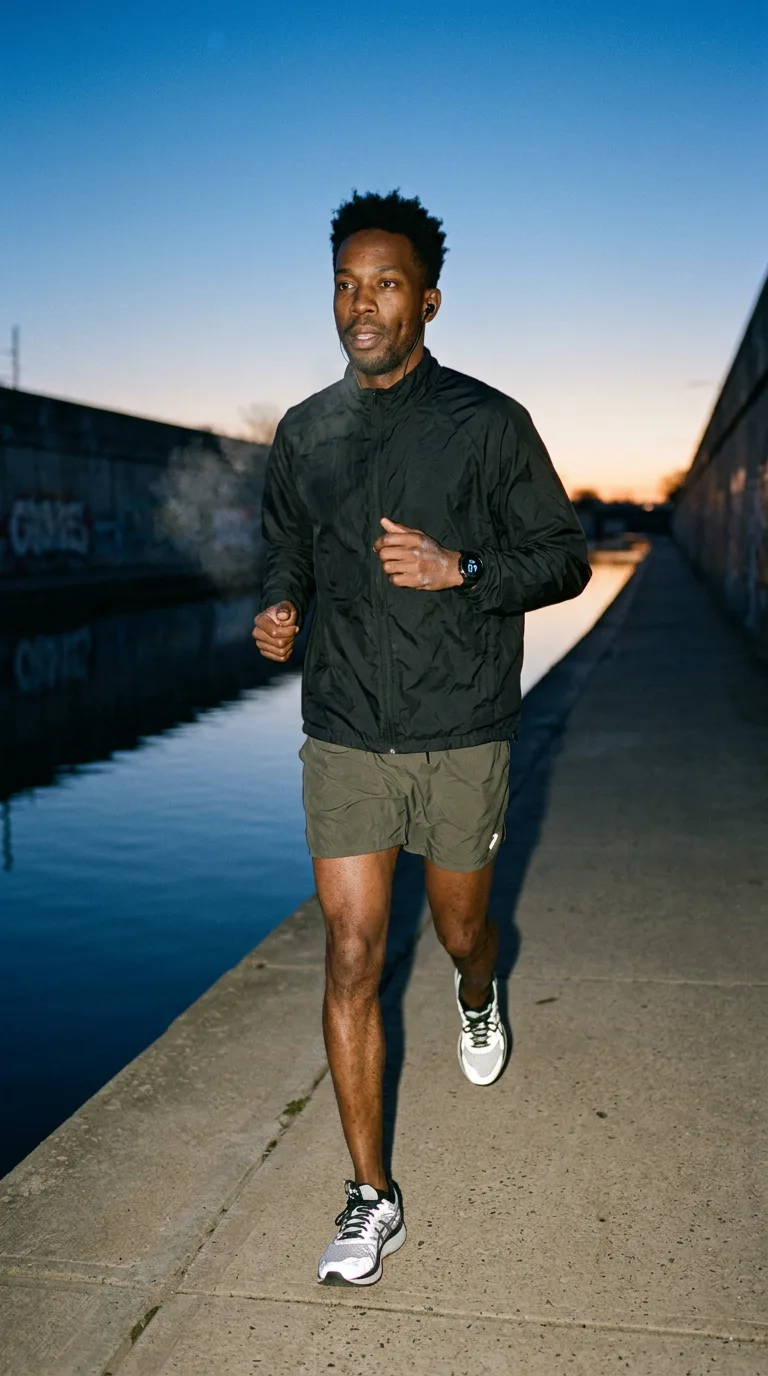
Rarest thing about him: Deep in the hole — $25k to $100k under — rare, 1 in 30
Season 0seed 442213714 · engine v10
Character card
lineage Y1E4FB
His body-swap story
@colton.vasek, wearing David Okonkwo-Reyes, rolled the wheel on and woke up as Malik Ashford, spent 5 minutes in him, then spun the wheel and woke up as Owen Tanaka
You are sitting on the edge of David Okonkwo-Reyes's bed in the dark, and your knees already ache from a day you didn't live through. That's the thing nobody tells you about a dad bod with bad wiring in the wrists — it comes with sixty-four years of complaint baked into it, and none of the memories to make the complaint feel earned. Somewhere down the hall a window unit rattles. It's the middle of the night in Pittsburgh, a Saturday, everybody asleep, and you have been David for five minutes, and in that five minutes you have already learned the specific dull throb behind his left eye that means the glaucoma drops are two hours late. You did not sign up for the drops. You did not sign up for the pale, sun-shy skin that has spent sixty-four years hiding from exactly the kind of light you actually want. You have his phone in your hand, the screen too bright, and vessel.cards is already loading because you decided this twenty seconds after you arrived, before you'd even learned his name properly, before you'd unclenched the hand that isn't used to holding a phone this way. You are not cruel about it. You are just already gone. The wheel spins where his thumb tells it to.
The stumble is nothing — two steps, arms catching themselves, and then you are running.
Not walking into a run. Already inside one, already four miles deep, lungs open like a door somebody left that way on purpose. The air is Los Angeles pre-dawn, cool and a little sweet with jacaranda rot from somewhere off the path, and it goes into a chest that has room in it, real room, ribs that don't complain, a heart that just does what you ask without a co-pay. The watch on your wrist buzzes a split it doesn't recognize because for one half-step your gait belonged to someone else, and then it's yours again, or his, or — you don't have the grammar for it yet. Earbuds feeding you a podcast voice mid-sentence about the Lakers' bench depth. Canal on your left holding the last of the streetlights in a long orange smear. You are twenty-nine years old in every way that matters to a body, and it is obscene how good that feels after David's knees.
The shorts are the first thing that talks to you. Thin nylon, worn soft at the inner thigh from thousands of strides, and touching them gives you the smell of a locker room that isn't this one — a high school gym, floor wax, a coach named Odell yelling about box-outs, fifteen-year-old Malik on a bench because his growth spurt hadn't caught up to his ambition yet. That's not this morning. That's ten, twelve years gone, and it comes anyway, unbidden, riding in on the shorts like it's been folded into the fabric.
The jacket is next, zipped to the throat, and it gives you a whole winter — three years back, a 5 a.m. group run with people from an app, a woman named Priya who kept pace with him for six weeks before she stopped showing up and he never found out why, and how much that had bothered him, quietly, the way small unfinished things do. Then the jacket gives you this morning specifically: pulling it off a hook by the door forty minutes ago, the apartment dark and warm, the courtyard palms outside dead still, no wind at all, an unfamiliar quiet because it's technically the dead of Friday night sliding into Saturday and nobody sane is up. He'd told himself the schedule was about beating the heat. It was actually about beating the thinking — Friday nights alone in that unit had gotten long since June, since he'd stopped bothering to pretend the dating apps were going anywhere, since the loan people started calling about the truck he cosigned for his brother and the brother stopped answering either of them.
The watch on the wrist gives you almost nothing — it's new, a birthday gift to himself, and there's not much history sunk into a strap that young — but the motion of glancing at it, the little flick of the wrist inward, that's old, that's from a hundred track practices, a body that checks its own pace out of habit long before there was a screen worth checking.
The shoes are the deepest well. Two years of them, resoled once, a half-marathon he didn't finish because of a hamstring, the humiliation of walking the last two miles past people who were still running, the private vow after that he'd never let his body embarrass him in public again — which is, you understand now, most of why he's out here at this hour instead of a normal one, alone, unwatched, so that whatever happens between him and the four-mile mark stays his.
And then the classroom comes, because it's under everything else the way a floor is under a rug — Tuesdays and Thursdays, seventh-grade English, thirty kids who call him Mr. Ashford and mean it two different ways depending on the day, the specific relief of an empty room after the last bell, chairs still warm, and how he'll stand at the front of it doing nothing for two full minutes some afternoons just because nobody is asking him for anything in that window. He likes them. He is careful never to say which ones he likes best. He is $61,000 in the hole on that cosigned loan and hasn't told his mother, and he picks at his cuticles during faculty meetings until they bleed a little and he has started wearing a bandage on his left thumb to church so his grandmother won't ask.
None of that weighs anything right now. Right now there is a body that runs like it means it, dimples cut into a face that isn't performing anything, breath fogging faint in air that shouldn't be cold enough for that but is, this once, this particular dawn. You slow. You stop, hands finding your knees the way his hands already know to, out of habit that isn't yours yet and already is.
You turn your palm up and look at it — the calluses along two fingers from chalk and whiteboard markers, the raw nub where a thumbnail's been worried down past where it should be — and you hold it there a second too long, like it might still belong to someone standing off-camera.
"Okay," you say to the empty canal, out loud, to no one, "let's see how long I can keep this one."