Lowell Anthony Granger
Fictional. Generated by AI — not a real person, and no likeness of one is intended.
64, retail sales associate in Seattle · rolled by @caleb.dean.whitfield · card — no film
History
who has worn him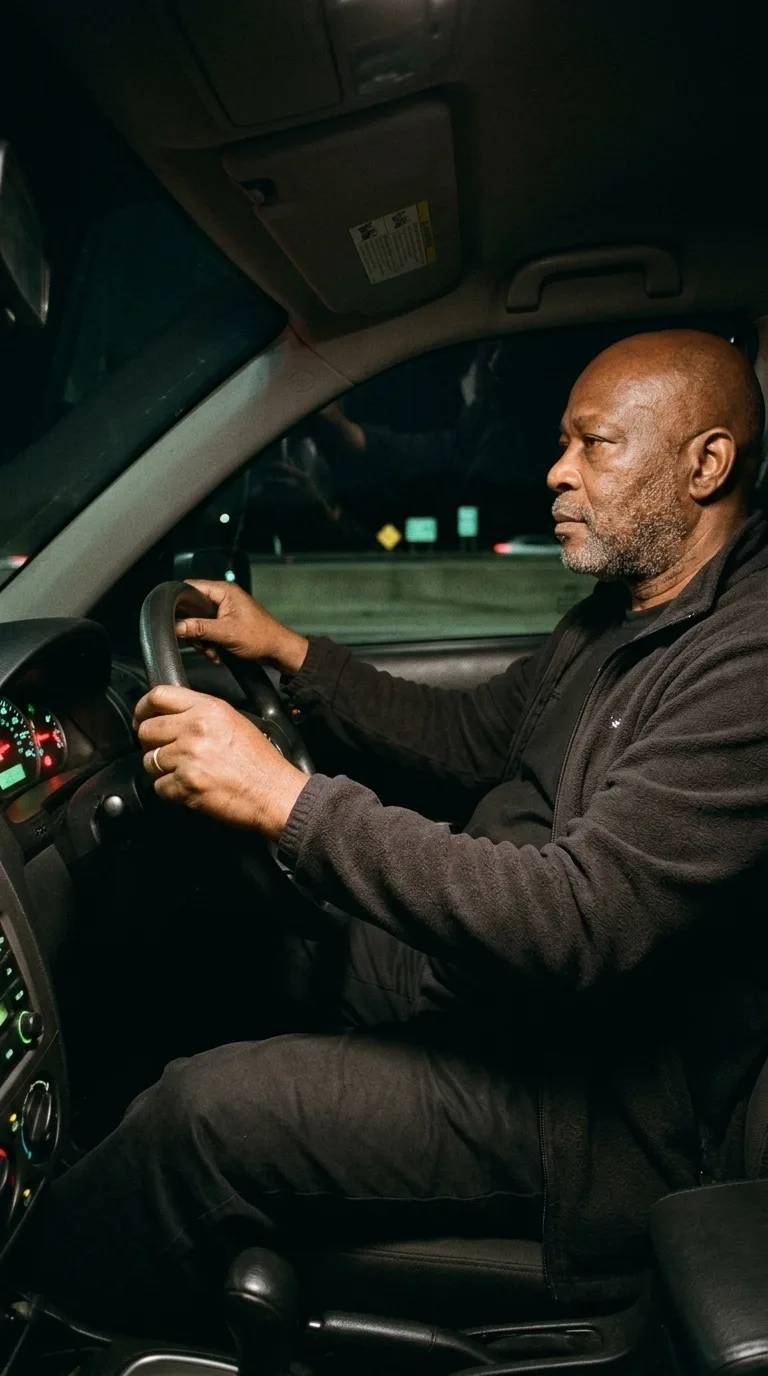
Rarest thing about him: Historically Black Protestant — common, 1 in 25
Face-off rating 1499 · not ranked yet
Season 1seed 1634824694 · engine v11
Character card
lineage A8GP7H
His body-swap story
@caleb.dean.whitfield, wearing Héctor Manuel Zamarripa, rolled the wheel on and woke up as Lowell Anthony Granger, spent under a minute in him, then spun the wheel and woke up as Gordon Wei Takahashi
You are standing at a sink in Houston, in a dead man's good bathroom light, and the unibrow is the problem. Not the unibrow. The way Héctor's face holds it, a permanent question you did not ask. His knees ache on the tile. His beard smells of solder and the lime he cut at dinner. Eleven-forty by the microwave in the next room, a Thursday, the whole house ticking down toward sleep, and his wife's shoes lined up by the door like she might still need them.
He is fine. That is what's wrong. He works, he lifts, he carries a ladder up without a sound. You wanted nothing from him and he gave it all, and tonight you picked up his phone and the wheel was already open in it, and your thumb knew the way.
You did not want a better man. You wanted someone you had not met yet.
Pay. Spin.
The car drifts a foot toward the line. You come in and pull it straight, smooth, one motion, as if the road were yours. Both hands leave the wheel and resettle lower, wider, and the dash glow lies across your knuckles, green and low. Dark highway, wet. Three miles from home, and you do not know whose home.
Then the turn signal ticks on. Not his exit. Yours, you think, though you do not know what that means yet.
The fleece comes first. It is warm and pilled at the cuffs, and the cuff against your wrist opens something: a Thursday morning, a closet, him standing in his socks on cold floor, choosing this one because it was the one she had washed. Her laugh from the other room, a woman saying *you'll freeze, Lowell,* and him zipping it to the chin to prove her right. The zipper teeth under your chin now. His fondness for her goes through you like a swallowed coal.
The wheel is thick under your palms, leather gone smooth where he grips. Ten and two, always, a rule from a father in a Buick on a gravel lot in Tulsa, a hand slapped for slouching. Your thumb finds the ridge by itself. The left leg is bouncing against the pedal well and will not be told to stop. It has bounced through every sermon, every hospital hallway, every ledger.
The ring is tight on the knuckle. Touching it with your thumb brings a church basement and a borrowed suit, her mother crying, and a promise he meant. Behind that comes the other woman, the first one, in a kitchen, saying his name flat as a dish put down. He still sends a card at Christmas. He never told his wife how long he stood at the mailbox.
Seat leather against your back, cool through the fleece, and a lower ache like a fist pressed above the belt. Sixty-four years of standing on store carpet, straightening boxes on a shelf, the price gun heavy in his hand, kids asking where the cables are and him always knowing. The soft belly presses the seatbelt. Trousers stiff at the knee. A slick of vape sweetness lives in the upholstery, and a ghost of the one drink, the two, the amber hour on the porch when the house goes quiet and he is only a man breathing.
The rain ticks. The exit sign slides up green.
You lift your right hand off the wheel and look at it. Broad, dry, a faint shine over the knuckles. You turn it over. It is yours and it is nobody's.
You look up into the dark glass, then past it.
"Well," you say, in a voice with gravel at the bottom. "Hello, Lowell."
The signal keeps ticking. You do not know how long he will fit, or when the wanting comes back for you.