Héctor Manuel Zamarripa
Fictional. Generated by AI — not a real person, and no likeness of one is intended.
58, electrician in Houston · rolled by @caleb.dean.whitfield · card — no film
History
who has worn him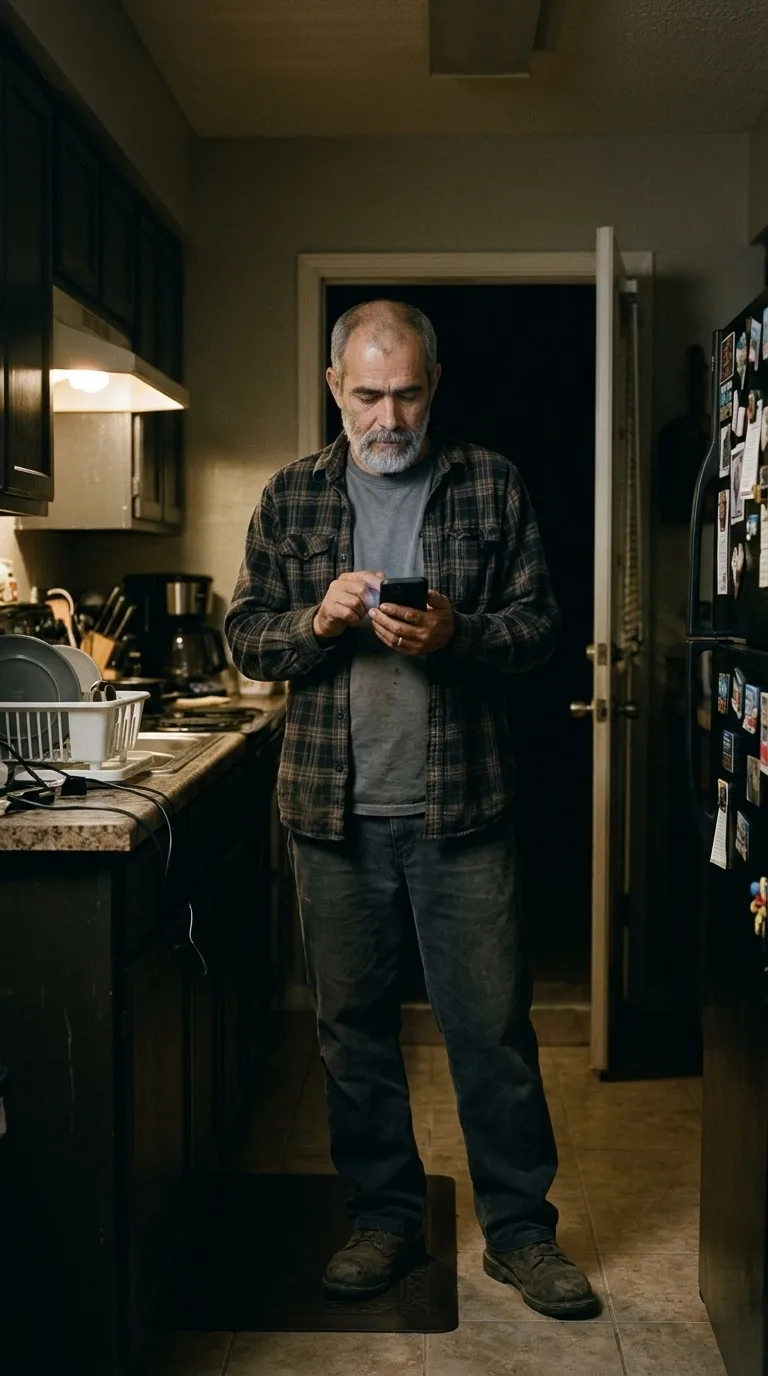
Rarest thing about him: Smokes and vapes — common, 1 in 52
Face-off rating 1500 · not ranked yet
Season 1seed 733098941 · engine v11
Character card
lineage A8GP7H
His body-swap story
@caleb.dean.whitfield, wearing Wade Lyle Becker, rolled the wheel on and woke up as Héctor Manuel Zamarripa, spent under a minute in him, then spun the wheel and woke up as Lowell Anthony Granger
The last one was a rancher, and I wore him for less than a minute. Long enough to know what stopped me. His boots were wrong. His knees were wrong. He had a gap in his front teeth, and my tongue would not leave it alone. Under the Houston heat, in the dark, with my thumb on the glass of a stranger's phone, I understood that I had spent something and bought a man who had nowhere to put me. So I pressed the button again. I did not give it a reason.
The wheel turns. The rancher's hat is gone, and with it the gap, the blond stubble, the whole big sunburnt idea of him.
Now it is a kitchen, dark except for the light under the hood. The tile is cool through the soles of boots that are not mine. My thumb is lifted off the glass of a phone, and it stays lifted. A watch is on the screen, a price under it like a door shut in my face. The number is more than his rent. I know that without knowing how I know.
I set the phone face-down on the counter. The granite-look laminate is cold and gritty under the heel of my hand. Nothing in me tells the hand to leave it there. It stays.
Then the flannel starts. It is soft, washed thin at the cuffs, and it holds the day's heat against my shoulders. Something comes up through it, not mine. A morning, a closet door with a bad hinge. His hands push the left arm in first, always the left, and he stands a second while a woman's voice behind him says something about the coffee. He is tired already. He buttons from the bottom up, and the third button hangs by a thread he keeps meaning to fix. The gray T-shirt underneath smells of conduit dust and the sweet burn of cut copper. I did not choose that smell. I know it as his.
My left thumb finds the ring and turns it. It is plain gold, worn flat on one side. A church basement comes with it, folding chairs, bad coffee, a woman in a yellow dress laughing at how badly he dances. He is twenty-six in that room, and he is afraid of her in the best way. The fear is still in the ring. It goes through my chest like a warm swallow.
The fridge hums at my right. Without looking I know the magnets: a school picture, a saint, a pizza place, a baptism card. One child. The word for her arrives before her face does. Something hurts in him, and it is not the knees, though the knees are real, stiff and grinding when I shift my weight, and a low ache runs down the left side of my back where thirty years of reaching overhead have set. His gut presses soft against the belt. His arms are stronger than the rest of him, wiry, with the stubborn strength of a man who holds a drill above his head for hours. His fingers already want a cigarette. They go toward the pocket, toward the vape, and stop. Under that wanting is the other thing, the drink he put down, and the long hard morning he decided it. I feel the hold of that decision in his jaw. It is the strongest muscle he has.
The beard is dense under my knuckles, the moustache joined to it. The brow is heavy above my eyes, and I feel the weight when I frown. I frown. The scalp at the crown is cool in the kitchen air.
Boots. Mud-heavy. They remember a ladder, a half-finished ceiling, conduit running overhead like ribs, and a younger man yelling a measurement down to him. He did not hate that job. He hated that it paid what it paid. That is what the watches were for. He did not want one. He wanted to be a man who could.
I lift my hands and turn them over. The knuckles are thick, the nails ridged, a burn mark shining pale on the web of the thumb. They are the hands of someone who has been careful his whole life. They are mine now.
I look up into the dark window over the sink and say, low, in a voice with gravel in it, "Okay. Héctor."
The name feels borrowed, like the shirt. Somewhere in me the wanting is already folding itself small, patient, and I do not know whether it wakes in an hour or a year.