Kenji Osako
Fictional. Generated by AI — not a real person, and no likeness of one is intended.
45, trucker in New York · rolled by @marco.villagrana · card — no film
History
who has worn him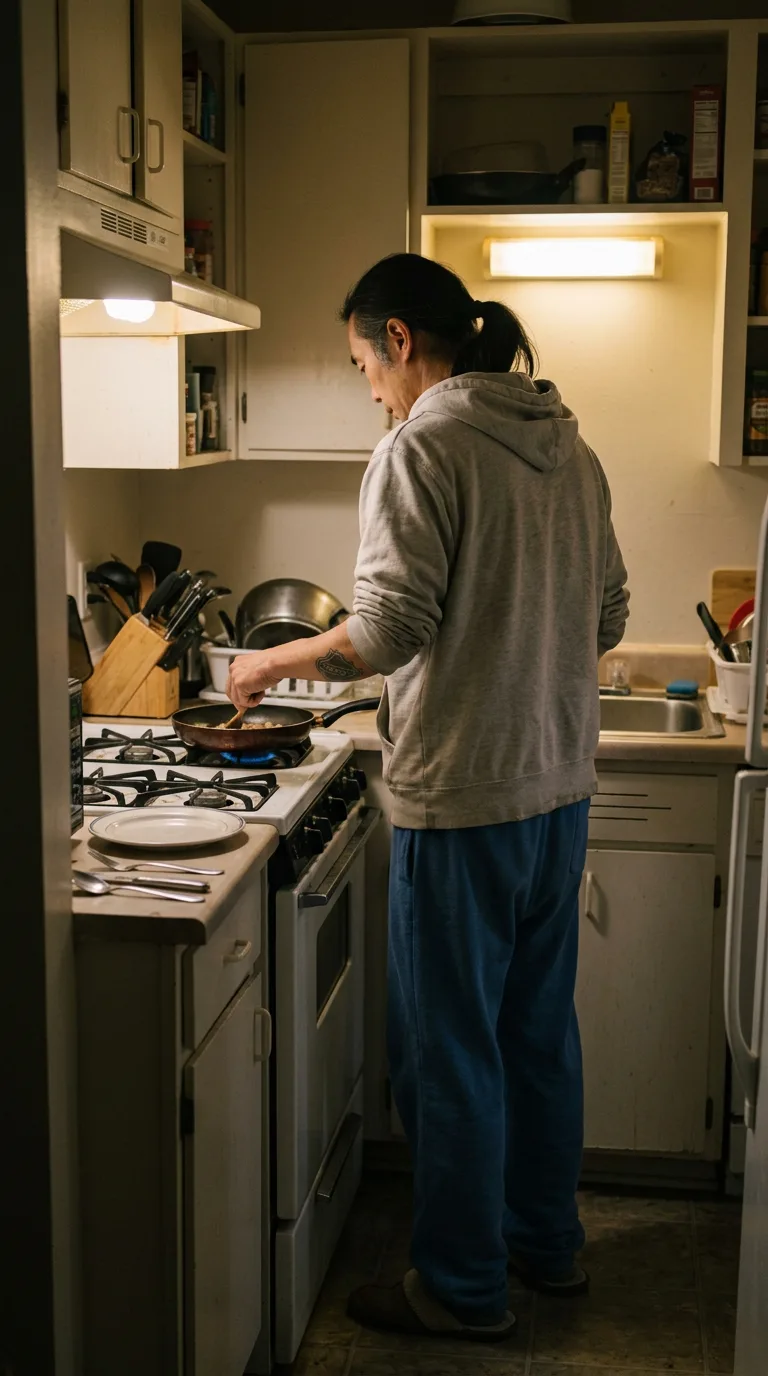
Rarest thing about him: A ponytail — rare, 1 in 139
Season 0seed 5320342 · engine v10
Character card
lineage LJL8SV
His body-swap story
@marco.villagrana, wearing Rubén Salcedo, rolled the wheel on and woke up as Kenji Osako, spent 3 minutes in him, then spun the wheel and woke up as Farhan Qureshi
The dentist's hands are good hands, and that is the problem.
Four minutes in this body and you already know its whole trick: precision without appetite. You are standing in an exam room that smells like mint and latex, mid-sentence to a hygienist about a crown, and the hands are steady the way a machine is steady, not the way a person is. Rubén Salcedo built this life like he built a bridge — load-bearing, correct, nothing wasted — and somewhere in the four minutes of being him you found the seam. He has not wanted anything in a long time. Even his greed is orderly. You spun the wheel the first time for hunger, and this man has none left to lend you. Friday afternoon light comes through the blinds in bars across his green eyes in the little steel mirror over the sink, and you think: not this one, not today. You set down the little pick and mirror, tell the hygienist you need five minutes, and you are gone before you've finished the sentence.
The wheel spins into evening.
The spoon is already turning the other way in your hand before you understand you have a hand, and then the smell hits — garlic gone a little too far in butter, the high tin whine of a range hood fan — and you are twelve hundred feet up in someone's low ponytail, someone's back to a small kitchen, someone's shoulders that carry weight differently than any shoulders you've wire yet. You correct the stir without thinking, the way muscle does before a mind arrives to argue with it. You shake salt into the pan and do not taste it — no reason to, you don't know yet that you never do — and your free hand, already ahead of you, opens the cabinet and takes down a second plate. Sets it beside the first. You don't ask why. Not yet. The body knows before you do, and for a second that is the whole of what you are: a hand setting a table for a guest who is a habit, not a person.
Then the shirt gives it to you.
Flannel, red and black, unbuttoned over a gray tee, and the cuff against your forearm remembers itself onto you the way a bruise remembers a hit — this morning, or some morning close enough to it to blur, sitting on the edge of a mattress at four fifteen with the window still black, buttoning this exact shirt one-handed because the other hand is holding a phone checking load numbers out of the Hunts Point terminal. Kenji Osako's mornings all run together into one long gray hallway with a rig at the end of it. You feel, arriving in pieces, the particular ache low in his back that isn't injury, just miles — eleven years of a captain's chair shaped wrong for a body shaped wrong for it, skinny in the arms, soft in the middle, the kind of soft that comes from sitting still at sixty-eight miles an hour for a living. Your knees know a loading dock. Your right hand, the one on the spoon, knows the particular grain of a shifter knob worn smooth, knows a ratchet strap, knows the cool ridged plastic of a chew tin lid flicked open one-thumbed without looking.
The ballcap on the hook by the door — you didn't put it there tonight but you feel him doing it a hundred other nights, hanging it by the strap before he even has his boots off, a habit older than the cap itself, which is itself older than some of his relationships. The tattoo on your inner forearm warms under the rolled cuff like it's been waiting its turn: a crest, a team he has followed since he was nine years old in a house in Queens where his father worked nights and hockey was the one thing on television that didn't require English to love. He got it at twenty-six, hungover, half-serious, and has never once regretted it, not even the year the team was terrible, not even this year.
The kitchen keeps talking. Cabinets he installed himself, badly, one hinge still sticking. A knife block he filled wrong on purpose because the good knife should be reachable without looking. The second plate — you understand it now, holding it, its cool circle against your palm — is not for anyone specific. It is for the shape of someone. He sets it out some nights without deciding to, the way another man might leave a light on. Divorced, no — never married. Datings that didn't take. A woman two years back who liked that he was steady and left because he was only steady, nothing louder underneath that she could find. His mother's voice from a phone call last Sunday, asking if he's eating, if he's found a church out there in Jersey where the routes lay him over, and him saying yes to the second thing and lying about the first. He is Evangelical the way he is a Ranger — quietly, on Sundays when the road allows, hymns he still knows every word to without trying, a faith that asks less of him than the diagnosis did, the ADHD that took forty-one years and a fed-up doctor at a DOT physical to finally get a name, and which explains, retroactively, an entire life of half-finished garages and speeding tickets and a logbook he is fanatical about now precisely because everything else in him wants not to be.
The pan under your hand is close to done. You feel his hunger, small and plain — not for anything, just for dinner, the last honest appetite of a long day, the truck parked and cooling three blocks over, the tobacco tin already waiting on the windowsill for after.
You look at your hands. Not Rubén's, not anyone else's — these, the ones already reaching to turn off the burner, faint old grease-scar across two knuckles you didn't earn and are already fond of, and you turn one over slow in the stove light like you're checking it's real.
"Didn't realize I set two places," you say, to the empty second chair, and you don't know yet if that's him talking or you, and neither does the room, and neither does the wheel, spinning somewhere behind both your lives, patient, unbothered, in no hurry at all to tell you when it's your turn again.