Karim Aziz
Fictional. Generated by AI — not a real person, and no likeness of one is intended.
24, personal trainer in Philadelphia · rolled by @colin.hasbrook · card — no film
History
who has worn him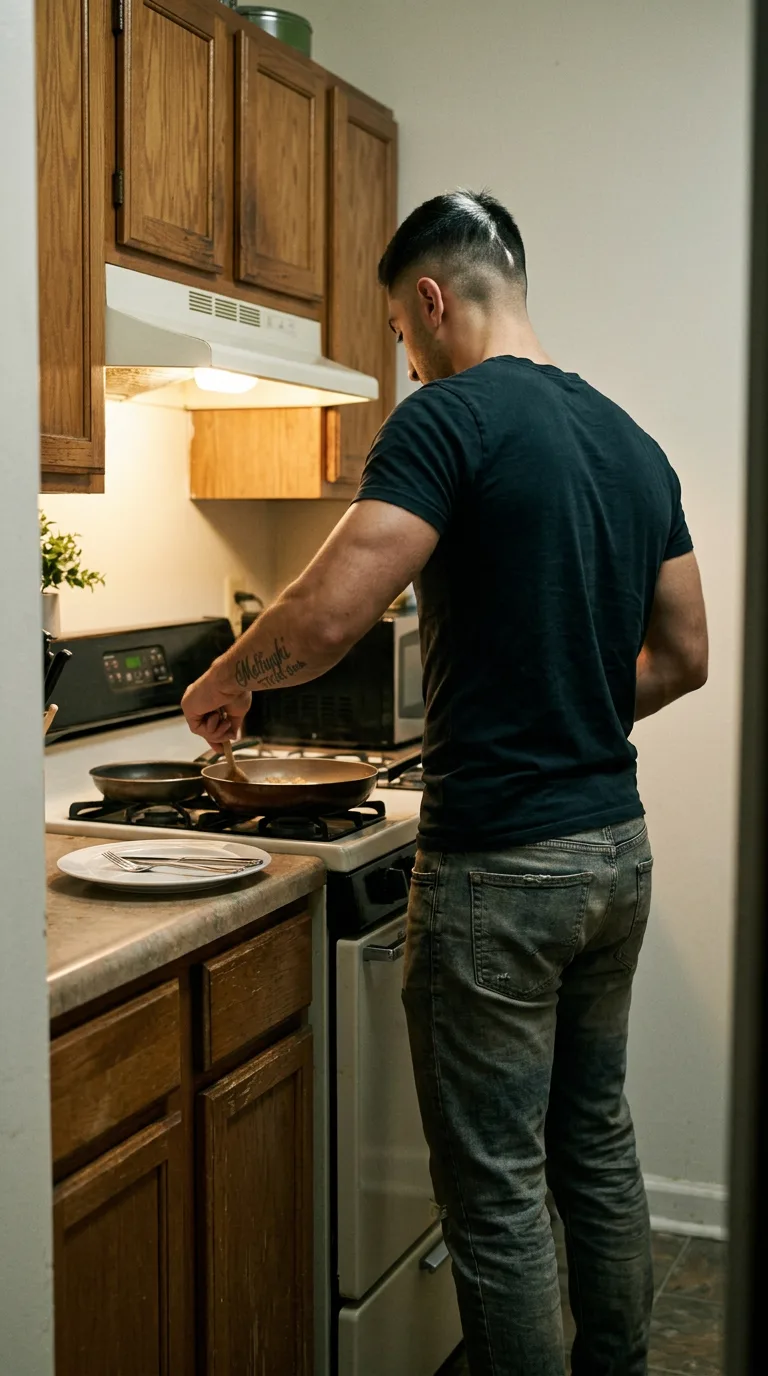
Rarest thing about him: A white streak in the hair — epic, 1 in 102
Season 0seed 1399034098 · engine v10
Character card
lineage 2NZHHJ
His body-swap story
@colin.hasbrook, wearing Gary Whitlock, rolled the wheel on and woke up as Karim Aziz, spent 1 minute in him, then spun the wheel and woke up as Derek Vansell
The knees are the reason. Gary Whitlock's knees, sixty years of ladders and shingles in them, and it is the middle of a Monday and you are standing on a half-torn roof in Denver with the sun flat and mean overhead, and something in the left one grinds like a drawer that doesn't want to open. You have been him less than an hour, all told, spread across two sittings, and already you know this is not a body you want to keep wearing into whatever this job becomes at four o'clock. You climb down. You sit in the truck with the AC blowing on Gary's sunburned neck and you take out the phone and you go to the page with the wheel on it, because that ache is exactly the kind of small, stupid, unglamorous thing that has sent you back eighty-nine times before. Not a tragedy. Just — enough. You pay. You spin.
The stirring stops mid-circle.
It starts again the other way, and that is the first thing you notice — not the kitchen, not the light, but that your own wrist did something you didn't tell it to, correcting a rotation that was never yours to begin with. You are salting a pan you didn't taste. You are twenty-four again, in a body that isn't fighting you anywhere, and the relief of that arrives before anything else does — before the room, before the smell of garlic gone slightly too far in butter, before you understand you are in Philadelphia and it is later here, the window over the sink already going gold-orange with an afternoon that back in Denver hasn't happened yet. Your hand — his hand — reaches into the cabinet and comes down with a second plate and sets it beside the first, unasked, and you have no idea why until the plate's cool weight against your fingers gives you the first flash: her laugh, somewhere behind you in this same kitchen, some other evening, telling you not to overdress the salad again.
That's Leyla. The name comes with the plate, the way names do here — riding in on an object like they were left inside it on purpose. You didn't put the second plate down. He did, out of habit, before you arrived, and you are only now catching up to a decision his hands made before you existed in them.
The t-shirt is next — plain navy, worn soft at the collar — and touching your own chest through it gives you this morning, or what would have been this morning if this were still his day: him standing in front of the mirror pulling it on one arm at a time, favoring the left because the right shoulder's been barking since Thursday's overhead press, an old resentment between him and his rotator cuff that never quite goes away and never quite stops him either. Twenty-four is nothing like sixty. You roll the shoulder now, testing it, and it moves the way a shoulder should, easy and complete, no grinding drawer anywhere in it, and something in you that has been carrying Gary's knees for an hour exhales.
The forearm gives you more, and gives it hard. Script letters under your own eyes when you glance down mid-stir — Ahmad, and a date under it, and touching your own skin there, the ink old enough now to be part of the skin rather than sitting on it, drops you straight into a hospital hallway, fluorescent and too bright, a phone call, a brother two years younger who should have had forty more years and didn't, and the tattoo going on eight months later in a shop on Girard with a guy named Nunzio who didn't ask questions while Karim cried without making a sound. You didn't know this was in you a second ago. Now it sits in your chest like his did, immediate and unearned, a grief you are only borrowing but that borrows you right back for the length of the memory.
The whistle on its cord — not around your neck right now, but you know exactly where it hangs, on a hook by the door, worn so smooth the black rubber's gone pale at the mouthpiece — brings the gym floor: 6 a.m. clients, a woman he's trained for three years who cried once telling him about her divorce between sets, the particular tired satisfaction of a Tuesday when everyone shows up and nobody cancels. He loves it there in a way he doesn't examine. He is good at it in a way that isn't vanity, just true.
The counter under your palm is cool laminate, decades old, and it gives you the rowhouse itself — three flights up, marble steps out front worn into a shallow bowl by a hundred years of other people's shoes before his — and Leyla's key already on his ring, and the particular quiet of cooking for one on nights she works late, which is what tonight was supposed to be before you arrived and made it something else without meaning to.
Your leg is already bouncing. You notice it the way you'd notice weather — under the counter, heel going against the floor in a rhythm that started before you got here and doesn't seem to belong to any thought you're having. The whiskey lives above the fridge, and you know without being told that there is more of it gone than there should be by Monday afternoon, and that this is a fact he has agreements with himself about that he doesn't keep. The cigars are in a drawer by the door, for the porch, for later, for after Leyla's home and asleep. None of this is anything he'd say out loud. It comes to you anyway, the way all of it does — sideways, through his own kitchen, uninvited.
You look down at your hands. They are steady, young, someone else's entirely — no ache in them anywhere, no sixty years, no ladder-thick calluses, just a faint burn scar across two knuckles from a pan grabbed too fast once, and a white streak of hair falling into the edge of your vision when you tip your head, which startles you more than the tattoo did.
You turn the spoon over once in the pan, slow, watching your own fingers do it.
"Okay," you say to the empty kitchen, to the second plate, to nobody. "Let's see how long you last."