Gary Whitlock
Fictional. Generated by AI — not a real person, and no likeness of one is intended.
58, roofer in Denver · rolled by @colin.hasbrook · card — no film
History
who has worn him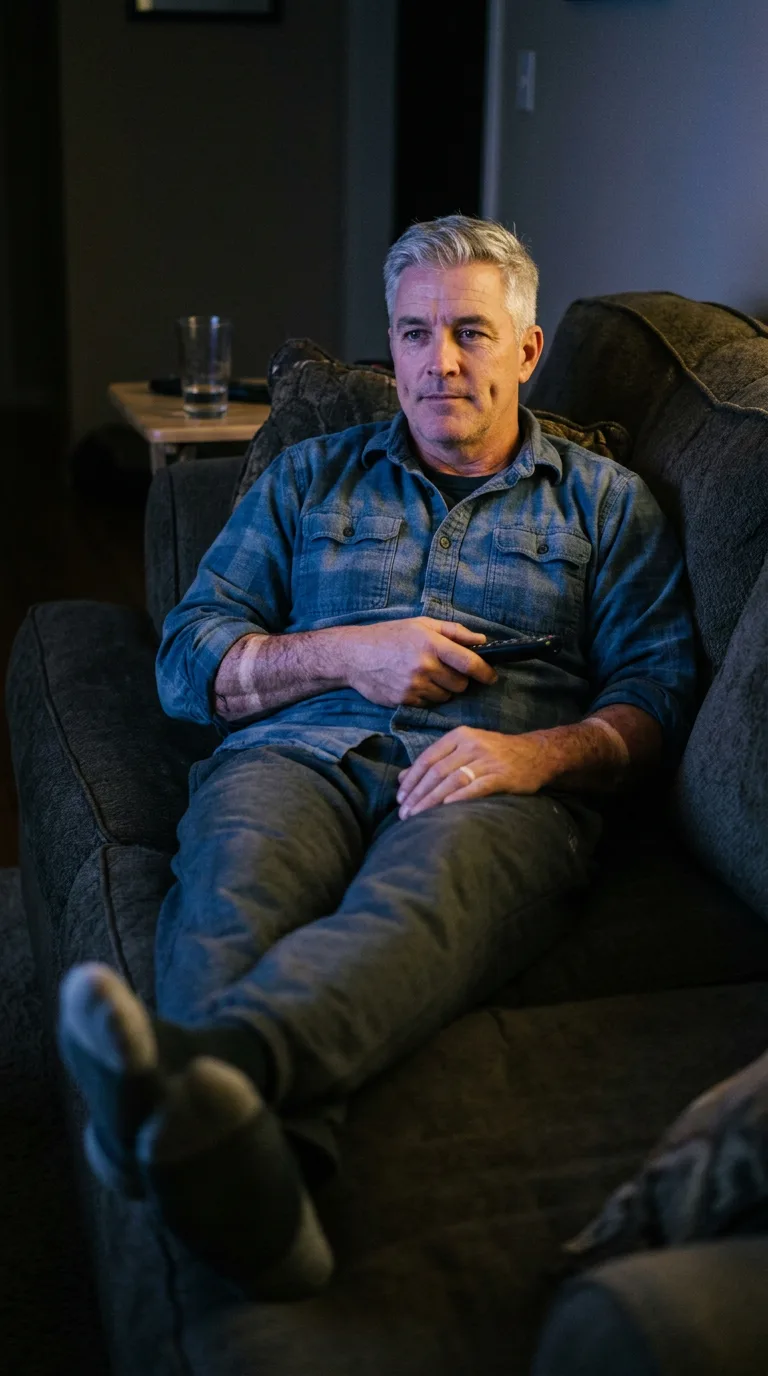
Rarest thing about him: Roofer — uncommon, 1 in 83
Season 0seed 94390809 · engine v10
Character card
lineage 2NZHHJ
His body-swap story
@colin.hasbrook, wearing Emilio Restrepo, rolled the wheel on and woke up as Gary Whitlock, spent under a minute in him, then spun the wheel and woke up as Karim Aziz
You are standing in a hallway of a house that is not yours, in a body that is not yours, and you are looking at a framed diploma you paid for with eleven years and did not want anymore.
That's the honest version. The Nashville version has a name attached to it, a license number, a waiting room full of people who trust the hands you're currently wearing, and it is Monday afternoon and you have canceled the last two appointments because you cannot make yourself walk back down that hall. You have been this man less than a minute, the site said, though it feels longer, the way all of them start to feel longer once the noticing sets in — the ache behind this man's eyes from squinting at monitors, the tightness in his shoulders that is not injury but habit, thirty-five years of being careful arranged into a permanent flinch. You spun for him nine spins ago because being brilliant looked, from outside, like it might be interesting to be. It is not interesting. It is a pager that never stops and a body that carries its fear in the jaw. You did not want to feel important. You wanted to feel like weather — arriving, changing something, moving on. This man does not move on from anything. He revises.
So you go back to the page with the wheel on it, standing in his front hall in your socks, and you spin, because there is nothing in this life you're not already tired of and there is a whole roomful of lives you haven't tried yet.
The screen brightens and you are sitting up straight on a couch you have never seen, and the light hitting your face is coming from a television that has just cut to something loud and colorful, and your hand, all on its own, sets a remote down on the couch arm like it has done that ten thousand times.
The room is dim around drawn blinds. Outside that dimness it is the middle of a workday, and you understand — before you understand anything else — that this body should not be sitting down. There's a soreness low in the back that reads less like an accident and more like decades, joints that click when weight shifts, and a strange guilty stillness in muscle that expects a harness and a twelve-two pitch and wind. He is not on a roof. He is on a couch, and the wrongness of that arrives with the memory attached to it, unbidden: rain. It rained this morning in Denver, hard enough that the crew scattered before eight, and Gary went home instead of standing around the yard drinking bad coffee, and he told himself he'd nap and instead put the TV on because the house is too quiet for napping in.
The shirt is against your back before you think to notice it, and it gives you the morning anyway: pulling this exact flannel off its hook, one arm and then the other, the left shoulder always sticking a half-second longer than the right because something in there has been wrong since a fall off a ladder eleven years back, nothing anyone ever operated on, just a thing you learned to swing around instead of through. Buttoning it one-handed on the drive because you were already late. The tan line on the ring finger catches light from the screen and brings a year all by itself — not the wedding, the *un*-wedding, Linda's voice gone flat and reasonable on a Tuesday, the two kids old enough by then to just nod like they'd seen it coming, which apparently everyone had but you. You kept coming to their games anyway. Sat on the far bleachers so it wouldn't be a thing.
Your hands are in your lap, and they want to be at your mouth — some part of this man's nervous system checks in twice a minute to see if there's a nail left worth worrying, and there mostly isn't, they're bitten down close and have been since he quit the cigarettes nine years ago and needed somewhere else to put his hands. You feel that want arrive and pass like a small tide. The tool belt is somewhere by the door where he dropped it. Its weight on his hip is a whole separate memory — the good one, the one that isn't sad: the town laid out under him on a clear pitch, the particular satisfaction of a course of shingles running true, the way his own two boys used to stand in the yard when they were small and yell up at him like he was something to be proud of. He is, still, proud of that part. The dimples show even now, even slack-faced in the blue light, because that's just his face, doesn't cost him anything, never has.
The lower back throbs its low steady note, the one that never fully leaves, the one that will get worse tonight climbing out of this couch. You feel fifty-eight in the knees. You feel it in a body that has earned every ache honestly, which is not nothing, coming from where you came from.
You look down at your hands — his hands, wide-knuckled, faint white scar along one thumb, nails bitten to nothing — and you turn the right one over slowly in the TV light like you're checking it's real.
"Well," you say, to the empty room, in his voice, "guess I'm not laughing at this one."