Kai Furtado
Fictional. Generated by AI — not a real person, and no likeness of one is intended.
34, food delivery courier in Honolulu · rolled by @connor.waskiewicz · card — no film
History
who has worn him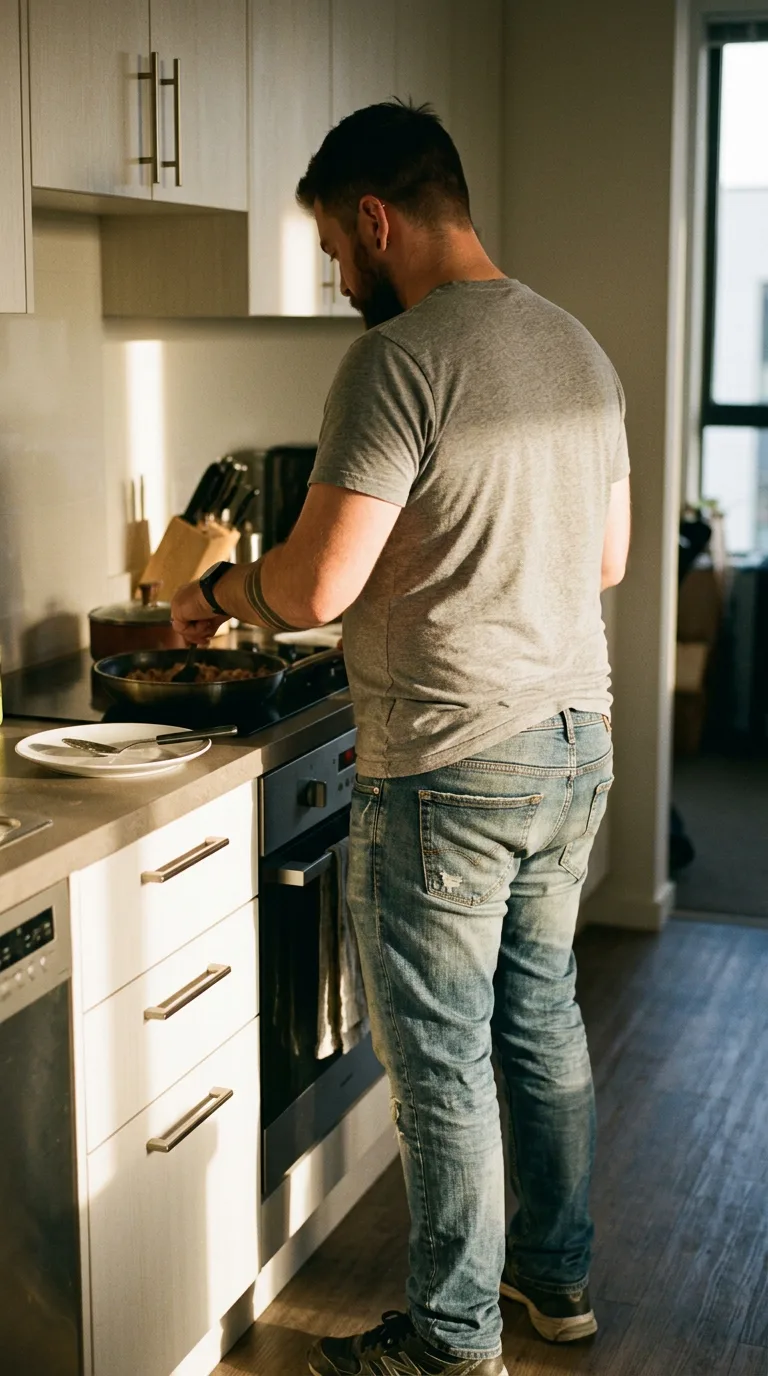
Rarest thing about him: A white streak in the hair — uncommon, 1 in 164
Season 1seed 192500984 · engine v11
Character card
lineage 2NZHHJ
His body-swap story
@connor.waskiewicz, wearing Brendan Kowalczyk, rolled the wheel on and woke up as Kai Furtado, spent under a minute in him, then spun the wheel and woke up as Colton Whitfield
Brendan Kowalczyk's mouth still tastes like the gold tooth catching on the inside of his cheek, that little click he does when he's thinking, and you are so tired of it you could scream. Almost midnight in Pittsburgh, and you have been him for less than a minute, sitting in the operations manager's dim kitchenette with his phone in his hand and his life spread out under you like a coat you already regret buying — the promotion he's chasing, the two ex-wives' worth of drama he doesn't even have yet because he's twenty-five and somehow already exhausted. Fine body. Boring hunger. You didn't spin because he did something to you. You spun because thirty seconds ago you caught yourself enjoying being him, and that is the one thing you cannot afford, nine hundred and sixty-seven men in, to start doing. So you open the site on his phone with his own thumb, watch the wheel with his own hazel-adjacent, no, brown eyes, and pay.
The spin lands and the kitchen changes before the light does.
You are turned three-quarters away from a window that's still gold with the last of it, a pan hissing under a wooden spoon that is already moving the wrong direction in your grip, correcting, because some dumb reflex of muscle wants to keep stirring the way it's been stirring for the last four minutes and you've just arrived mid-circle. Heat off the stove against a forearm gone thick and furred dark. A body settled low and soft through the middle, comfortable in itself, weight you didn't ask for and don't mind. You salt the pan out of nothing but habit, don't taste it, and your free hand — his hand — is already reaching up into the cupboard for a second plate before you've decided to want one.
That's when it comes.
The spoon handle is old, wood gone smooth and a little grey at the neck from a thousand washes, and it gives you a kitchen that isn't this one — a smaller stove, a woman's laugh somewhere behind you, Leilani, three years back, teaching him to make her mother's stew and threatening him with the spoon itself when he doctored it with hot sauce she disapproved of. Gone now. Gone the way exes go, into a folder in the chest marked *do not open during dinner*, except the wheel doesn't respect folders. It comes anyway, quick and warm and a little sad, and under it, more recent, steadier: Malia, who he is dating now, who was supposed to come by tonight and texted forty minutes ago that she's running late from her shift at the hospital, and that is why there are two plates and only one pan and a man alone at the stove setting a table for somebody who isn't there yet.
The t-shirt against your back — his back — is soft grey cotton gone thin at the shoulders from wear and from three years of a delivery bag's strap crossing it every day, and it gives you mornings: the alarm too early, the cartilage piercing in his upper ear still tender some days from where he re-pierced it himself at nineteen with a lighter and a sewing needle because he was too broke and too stubborn to pay a shop, his mother's voice from church saying he'd get an infection, he didn't. It gives you the white streak at his hairline, which he used to hate at twenty and now doesn't think about except when strangers ask if he dyes it, and he doesn't, it just came in like that at twenty-eight overnight almost, stress maybe, his doctor said nothing, his girlfriend runs a thumb along it sometimes like it's the softest part of him.
The jeans — no, not jeans now, whatever soft worn shorts he changed into after the shift, and that's its own memory: him this morning pulling on the reflective vest over the green jacket, checking the bike's charge at the little rusted carport under the tin roof, red dirt already dusting his ankles before eight a.m., the whole day a string of doorbells and thank-yous and one bad tip he's already forgiven by lunch because he doesn't drink anymore and doesn't smoke and has found, without quite noticing, that not being angry is easier now than it used to be. Sober four years this June. He clicks a pen he doesn't have on him right now and his fingers do the motion anyway against the spoon, an old tic with nothing to click, and that phantom gesture alone unlocks a whole year of order slips and receipt printers and a job he took because the beach was two minutes off every route and that turned out to be reason enough.
$40,000, give or take, sitting patient in an account he barely checks. Mainline Protestant mother still calling every Sunday to ask if he went. He usually didn't, this week he might. None of it is much. All of it is entirely his, and it comes up through your palms into a body that is thirty-four and soft and strong enough to lift forty pounds of food up three flights without thinking about it, knees a little tired at the end of a long day, beard damp at the jaw from the steam off the pan.
You set the second plate down beside the first.
You look at your hands — his hands, blunt fingers, a thin white scar along one knuckle from a bike chain years ago that isn't in any fact anyone gave you and so you don't touch it, don't invent past what's there — and you turn them over slow in the stove light, and something in the quiet, doubled kitchen makes you say it out loud, to no one, to the empty second chair:
"Wrong plate."
You don't put it away.