Jaylen Torres
Fictional. Generated by AI — not a real person, and no likeness of one is intended.
18, lifeguard in High-desert Nevada · rolled by @marco.villagrana · card — no film
History
who has worn him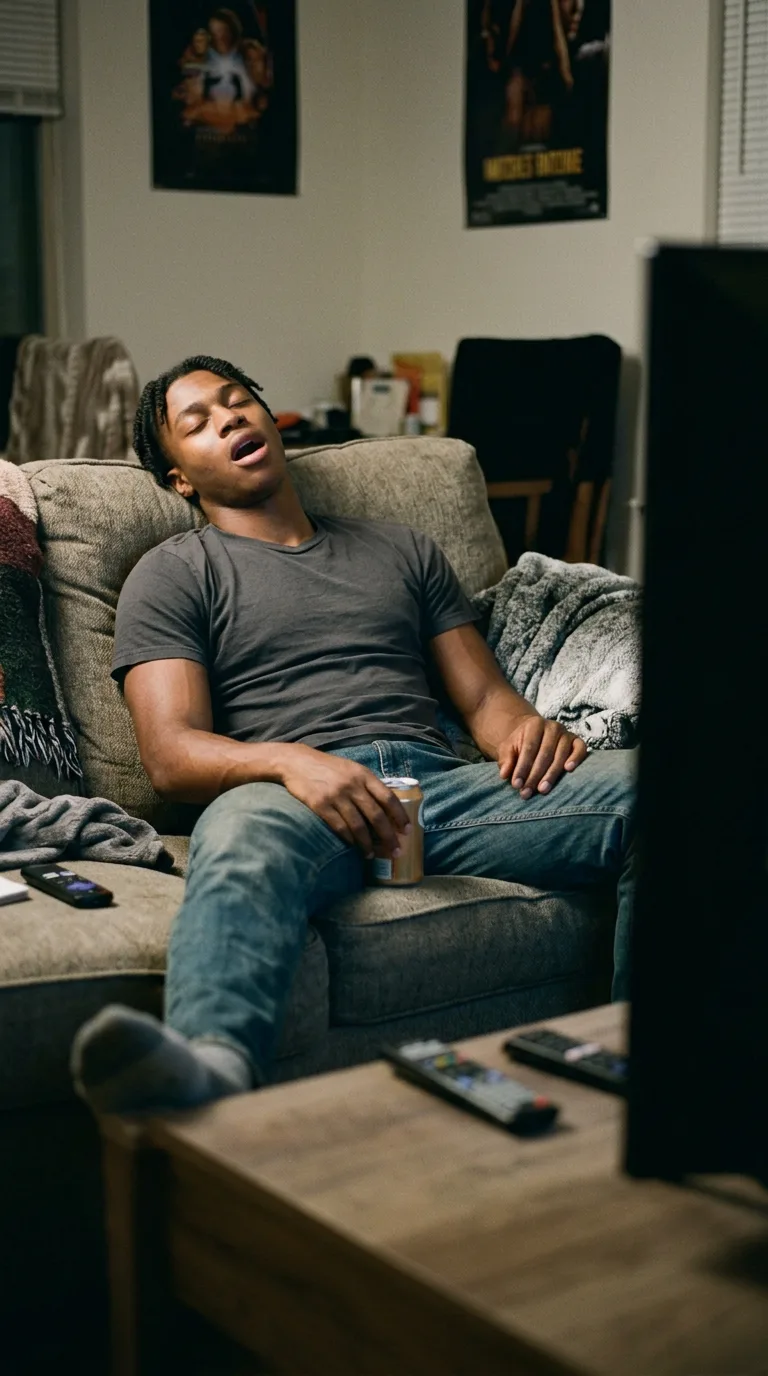
Rarest thing about him: Sober by decision — rare, 1 in 47
Season 0seed 222309449 · engine v10
Character card
lineage LJL8SV
His body-swap story
@marco.villagrana, wearing Daniel Cho, rolled the wheel on and woke up as Jaylen Torres, spent 23 hours in him, then spun the wheel and woke up as Saul Rosenthal
You are Daniel Cho for three minutes, and three minutes is long enough to know you made a mistake.
It is the smell that does it. Cho's apartment carries onion and old coffee and the particular staleness of a man who eats standing at the counter, and underneath the badge on the table by the door there is a photograph you didn't ask for and can't put down — a woman's face, a wedding you weren't invited to because you weren't there for it, his memory not yours, grief that isn't yours either but sits in the chest like it is. Retired eleven years. A knee that clicks on the stairs. A silence in the rooms that isn't peace, just the shape peace left behind when it went. You spun for muscle last time and you got a man carrying a house built for two who buried the second person nine years ago and never moved the furniture. Three minutes of that is enough. You want out before the ache finishes settling into the new shoulders. You want, plainly, to be young again, to be strong in a way that doesn't remember anything yet. So standing in his kitchen, Sunday evening going purple in the window behind him, you open the site on his phone with his thumb and you spin.
The couch takes you first, then the weight — more of it, all of it new, forearms thick where Cho's were lean, a can gone warm and sweating against fingers that are not shaking with age. Your head is tipped back on a cushion that smells like somebody else's detergent. On the screen a ball crosses a line and the crowd loses its mind and you sleep through the whole thing, because that's what he was doing when the wheel found him and the body does what it was doing until you tell it otherwise. The second replay comes around. Your thumb finds the volume before your eyes are all the way open — his thumb, actually, its habit surfacing before you've caught up to the rest of him — and you watch the ball and not the score, mouth still tasting like sleep, and something in the muscle already knows this remote, already knows this couch.
The shirt is what opens first. Gray cotton, soft from a hundred washes, and it gives you this morning in pieces — him pulling it over his head in a trailer that ticks and settles in the heat, one window unit fighting the whole desert and losing, the shirt already a little damp by the time he laces his sneakers because nothing in this town is cool before ten. He almost didn't wear it. Almost wore the red one instead, the one with the county seal, before he remembered today wasn't a stand day — Sunday, his day off, the only day the tower isn't his problem — and put on this one instead, the ordinary one, a boy dressing for nobody. The jeans give you less, just denim gone soft at the knee, the memory of him stepping into them half-asleep still, thinking about nothing, thinking about the pool.
The can in your hand doesn't taste like anything because he didn't drink it — cracked it out of habit standing at the fridge, held it the way his father held one, and never once brought it to his mouth. That refusal comes back whole: two years sober by his own choice, not a program, not a rock bottom, just a decision made alone in a bathroom mirror after a summer that scared him, and the small daily pride of a hand that reaches for a beer and does something else with it instead. There's a vape in his jeans pocket, and touching that through the denim gives you the parking lot behind the gas station, the taste of it, the guilty ten minutes twice a shift when the beach is nobody's business but his own.
The couch cushions bring the trailer whole — sagebrush pushed up against the step, hard blue shadow at two in the afternoon that has nothing to do with what this Nevada clock says it should be, because his real afternoon is hours behind wherever you just came from, and his body doesn't know that and never will. Movie posters on the wall, taped up crooked, ones he's had since he was fourteen and never had a reason to take down. A mother's voice somewhere down the hall or maybe just in memory, calling him lazy with no heat in it. A rosary he doesn't wear but keeps in the truck, from a grandmother he still goes to Mass for on the Sundays he isn't hungover on nothing but bad sleep. The stand at the beach comes next, sharpest of all — the sun-bleached wood of it under his palm, the whistle's cord worn soft at his neck, the particular alertness that lives in his shoulders all day and doesn't fully leave even here, slouched on a couch two hundred miles from any water. Kids he's pulled out of nothing more than a scare. The one summer he pulled a real one, a man twice his age, and the two full minutes afterward where his hands wouldn't stop shaking and nobody saw. Anxiety that has a name now and a small orange bottle in the bathroom cabinet, and the relief of that, the relief of somebody finally telling him what the chest-tightness was called.
His hand drifts to his own jaw without him — without you — deciding it, thumb along the cheekbone, an old unconscious thing his fingers do while his mind is elsewhere, and it happens now too, on this couch, in this new second, before you've caught up to owning the gesture.
You sit up. Eighteen years in the shoulders, in the forearms, strength that hasn't been asked to work today and is restless with the waste of that. The can is still cool at the bottom, warm everywhere your fingers touch it. You turn your hand over anyway, palm up, and look at it — calluses at the base of the fingers from the rescue tube's rope, a thin white crescent of a nail bed, nothing else, no mark anywhere, a hand that has never once been asked what it's worth.
You look up into the dead eye of the TV, where for a second your own face gives you back nothing but shine.
"Forty-nine," you say, to no one, and reach for the remote instead of the can.