James Petrakis
Fictional. Generated by AI — not a real person, and no likeness of one is intended.
65, mechanic in New York · rolled by @colin.hasbrook · card — no film
History
who has worn him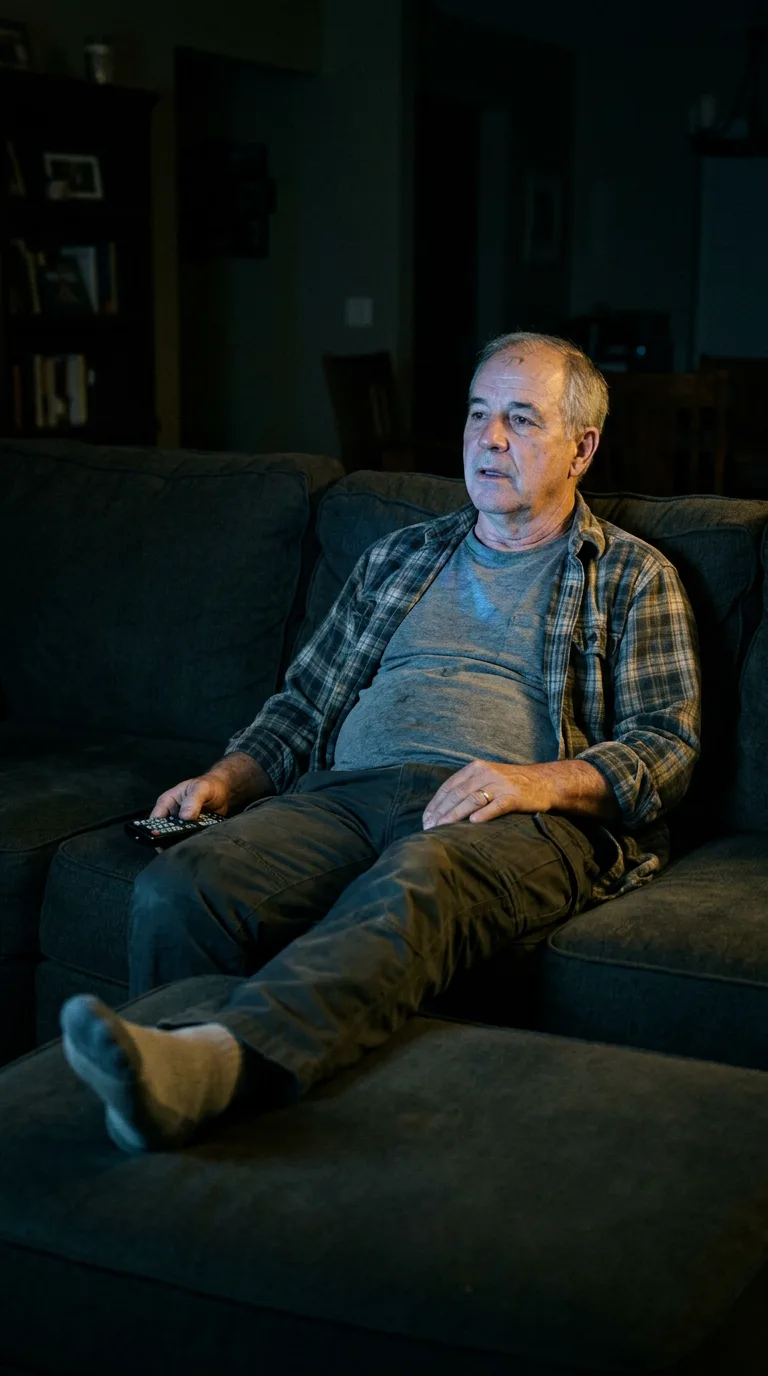
Rarest thing about him: Mechanic — rare, 1 in 61
Season 0seed 1572692579 · engine v10
Character card
lineage 2NZHHJ
His body-swap story
@colin.hasbrook, wearing Aurelio Bautista, rolled the wheel on and woke up as James Petrakis, spent under a minute in him, then spun the wheel and woke up as Kenji Tanabe
HIS LAST NAME IS Petrakis. He is Ronald Petrakis's brother, and they share it. HOOK: Ninety-nine men and now his brother's brother — the wheel never asks who's related.
---
The clinic smells like antiseptic and wet dog even in your head, and that's the first wrong thing about being Aurelio Bautista: you keep noticing smells that aren't yours to keep. Monday afternoon in Eastern Kentucky, sun coming sideways through the blinds of an office that isn't yours either, and you've been this man fifty-something seconds and already the itch is back. It's not boredom exactly. It's that a name surfaced in the last spin's afterglow — Ronald, a cop, Detroit, freckles across the bridge of a nose you wore for less than a minute — and something in you wants the other side of him. The brother. You didn't get to ask Ronald about his brother when you were Ronald. You want to know what he'd say. That's the whole reason, and it isn't much of one, but it doesn't need to be.
You open the site on the vet's phone with the vet's thumb. You spin.
—
The television cuts to a bright frame — a commercial, an ad for something you'll never remember — and in the half-second of white light you are sitting up straight in a dark room a state and an hour away, remote already set down on the arm of a couch that has given under your weight in this exact spot for eleven years. Your knee throbs before you understand you have a knee. There is a foot up on the ottoman in a gray sock going thin at the heel. There is weight in your belly you didn't ask for, warm and settled, plaid flannel open over a soft undershirt, a wedding band pinching slightly at a knuckle that has swollen with age around it. The show goes on. Something on it should be funny. You don't laugh.
The shirt is the first door. Flannel, worn thin at the elbows, and through it comes an ordinary Monday morning — his morning, hours behind this one, buttoning it standing in front of a dresser mirror with the light still gray outside, humming nothing, thinking about the Camry in bay two that wasn't holding a charge, thinking he should call his daughter before Wednesday because Wednesday always got away from him. Sleeves rolled twice at the cuff without deciding to, muscle doing it for him. The name patch on the other shirt, the work one hanging on the hook by the door — JIM — comes with its own small flood: thirty-one years at the same garage, half of them owning it outright, the smell of brake cleaner so deep in him now it doesn't register as a smell anymore, just as *work*, just as *Monday*.
The ring is a heavier door. It doesn't want to move; it never wants to move, and that's the point of it. Linda. Twenty-six years, and four more after the diagnosis that he does not, still, all these years later, let himself walk through in full. Her hand in the hospital, smaller than he remembered hands getting. The house too quiet after. He goes to church some, more than some, prays with a plainness that isn't asking for eloquence, just for company, and some nights it's enough and some nights the couch and the television are what stand in for it.
The knee — the old injury — comes up through the floor, through the socked foot on the ottoman: nineteen, a warehouse job the summer before he married her, a pallet jack and bad luck, and it never set right and thirty-some years of standing over engines did the rest. He touches his own face without thinking, has always done it, some old tell from childhood nobody ever broke him of, and even now, alone, hand comes up and rests along his jaw like he's listening to himself think.
There's a brother in this too, somewhere south and west of here, wearing a badge and a Detroit winter, and Jim's feeling toward him arrives soft and complicated and entirely unfinished — old rivalry gone gentle with age, a phone call owed, a holiday missed, nothing you did as Ronald that Jim would ever know about, and that not-knowing sits strange in you now, holding both ends of a thread neither man can see.
A daughter. Grown, a few hours off, good about calling on Sundays. Worth is comfortable now in ways it wasn't for the first twenty years, thanks to being careful and lucky and stubborn in equal measure, though you can feel he's never once thought of himself as a man who's "doing well" — just a man with a garage that's paid off and no one left at home to spend it on.
You sit inside all of it — sixty-five years, one long marriage and its long absence, a body that aches specifically at the knee and generally everywhere else now, hands that know the particular click of a torque wrench without looking — and the television keeps talking to an empty room.
You lift the hand off your face, turn it over, palm up, like it might have something written on it. Ring catching the blue light.
"Linda," you say, out loud, to no one, in his voice, and don't know yet if that's you or him saying it — and somewhere under the wanting to sit here a while is the other wanting, already stirring, the one that never really leaves: how long before you go looking at that wheel again.