Jamal Everson
Fictional. Generated by AI — not a real person, and no likeness of one is intended.
27, oil rig worker in Phoenix · rolled by @brian.okafor.lynch · card — no film
History
who has worn him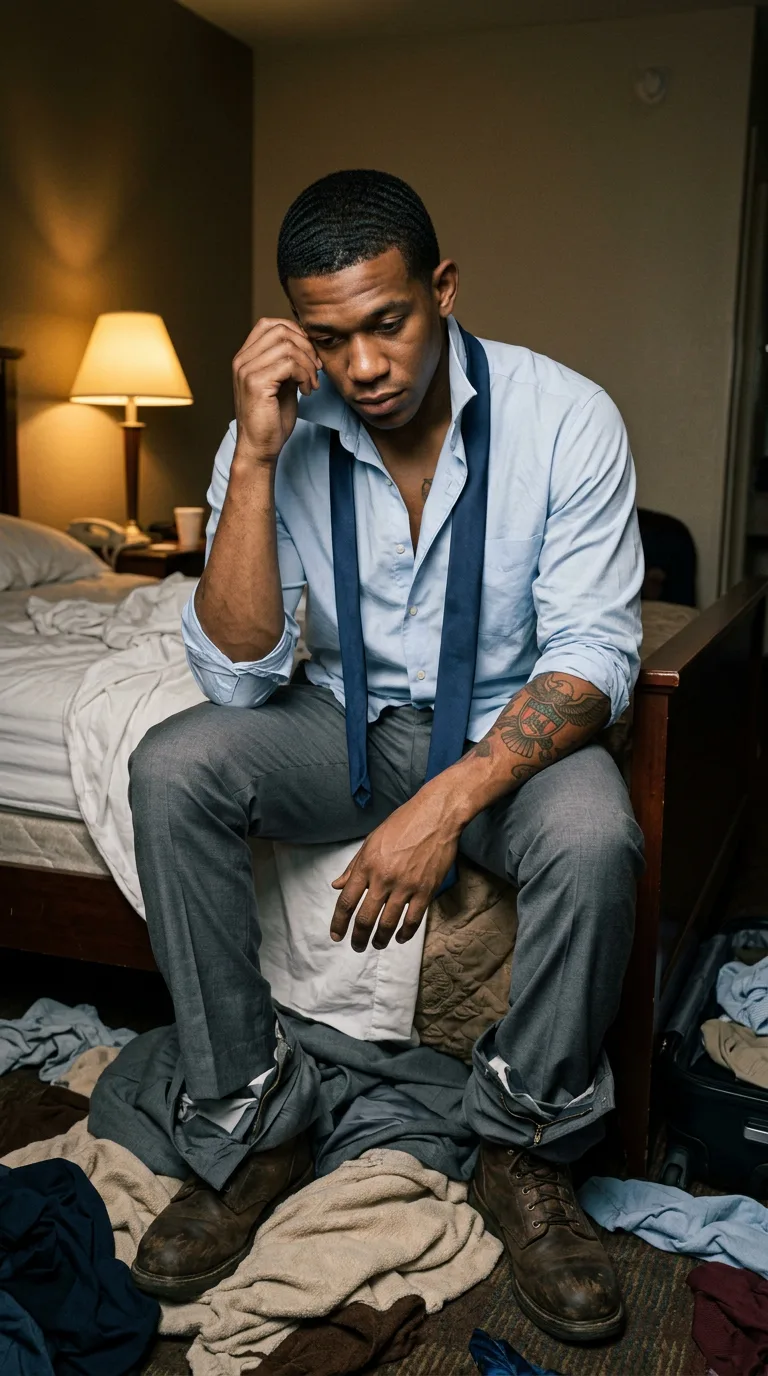
Rarest thing about him: Chronic back or joint pain — rare, 1 in 34
Season 0seed 1148770478 · engine v10
Character card
lineage 79CGDV
His body-swap story
@brian.okafor.lynch, wearing Wade Youngblood, rolled the wheel on and woke up as Jamal Everson
You're kneeling on Wade Youngblood's bad knee on a flat roof in Queens, the sky still bruised with pre-dawn gray, and the shingle in your gloved hand is already the ninth one you've torn up looking for the rot line. Fifty-six years old, and this body announces it with every joint. You are three minutes from the crew showing up. You are thirty-one spins deep into a life you keep not living, and the thought that arrives, unbidden and total, is: *I have felt this exact cold in this exact hand before.* Wade's hip clicks when he shifts his weight, familiar now, worn-in like a shoe you never asked to own. You didn't spin again yesterday because Wade did something. You spun again because Wade didn't — because there is a particular flatness to being a good, tired man with a pension and a granddaughter he calls on Sundays, and after four weeks in him the flatness got loud. You want the version of yourself that still doesn't know what's coming. You pull off one glove, thumb the site open on a phone that isn't technically yours, and let the wheel spin one more time before the sun's up over a roof you will never finish.
The tie is already crossing his throat when you land, mid-motion, his own fingers pinning it slack against a collar buttoned one hole wrong. You feel it before you see anything — ribs under your palm, narrower than Wade's, younger, a heartbeat going harder than the moment calls for. The room is dim and close and smells like hotel carpet and cheap cologne gone stale. Your hand — his hand — is flat against his sternum like you're checking he's still whole. The shirt is pale blue, damp at the collar from the shower he must have taken twenty minutes ago. You undo the wrong button. You do it up right. The tie comes off the loose fumble it was in and, without you deciding to, ties itself into a knot this man's hands have never made before, a fourth-finger Windsor nobody in this room's life has ever tied.
The shirt against your back gives it up first — a whole year, sleeve by sleeve. Jamal Everson, twenty-seven, standing in front of a mirror in this same shirt a hundred mornings, always a size too broad in the shoulder because he buys the cheap ones two-for-one at the outlet by the freeway. The fabric remembers his shoulders better than it remembers you. Then the belt, worn to his exact waist, brings back the locker room smell of the rig, salt and diesel and the specific ache that lives low in his back from the first week he started, an ache that never fully left and that you feel now, dull and constant, a tenant in his spine. His right forearm carries the half sleeve — a crest, a team he bled for on Sundays his whole childhood, his father's team before that, a Saints logo inked into skin at twenty-two in a shop in Mesa with his cousin holding his other hand and laughing at him for wincing. The memory comes with the specific sting of the needle and the pride after, rolling the sleeve down to hide it from his mother for a month.
The bed behind him — behind you — is a hotel bed, sheets thrown, and touching the corner of it with your calf brings back an argument, low-voiced so as not to wake the room next door, about why he keeps taking the away hitches, the two-week stretches offshore that pay better and cost him weekends. Her voice. Her name arriving soft and whole: Denise. Asleep down the hall right now in the house they share, four hours behind wherever this rig has him tonight, because this is the middle of her night and somehow the deep middle of his workday — a man dressing for a shift that started while Phoenix slept, a hitch schedule that eats his clock and hers both. The phone on the nightstand, when your eyes land on it without touching it, is enough — a photo of her asleep that he took once just to have it, tenderness he'd never say out loud.
His hands know things yours never did: the particular grip for a wrench slick with mud, the rhythm of gloving up at 4 a.m. in gravel-yard cold before the desert burns hot by ten, the twinge that flares in his left knee on the metal stairs down to the deck, old and small and permanent. He doesn't drink much — a beer or two most nights, watching whatever's on, Denise's feet in his lap — and doesn't smoke, never picked it up, watched his uncle die slow from it and decided as a teenager he wouldn't. None of this is dramatic. It is just a life, ordinary and specific, worth more to him than the five figures it's actually worth on paper, and none of it — not one memory — carries any warning that it's the last morning it happens to him.
You look down. His hand — your hand now — turns over in the lamplight, and the tattoo shifts with the tendons, the crest catching gold. You lift your eyes to find the mirror instead of a lens, because there is no camera here, only the two of you that were never two people at once until right now.
"Didn't tie it like that yesterday," you say, to no one, in his voice, and reach for the jacket on the chair.