Isaac Reyna
Fictional. Generated by AI — not a real person, and no likeness of one is intended.
21, farmer in Rural Texas · rolled by @marco.villagrana · card — no film
History
who has worn him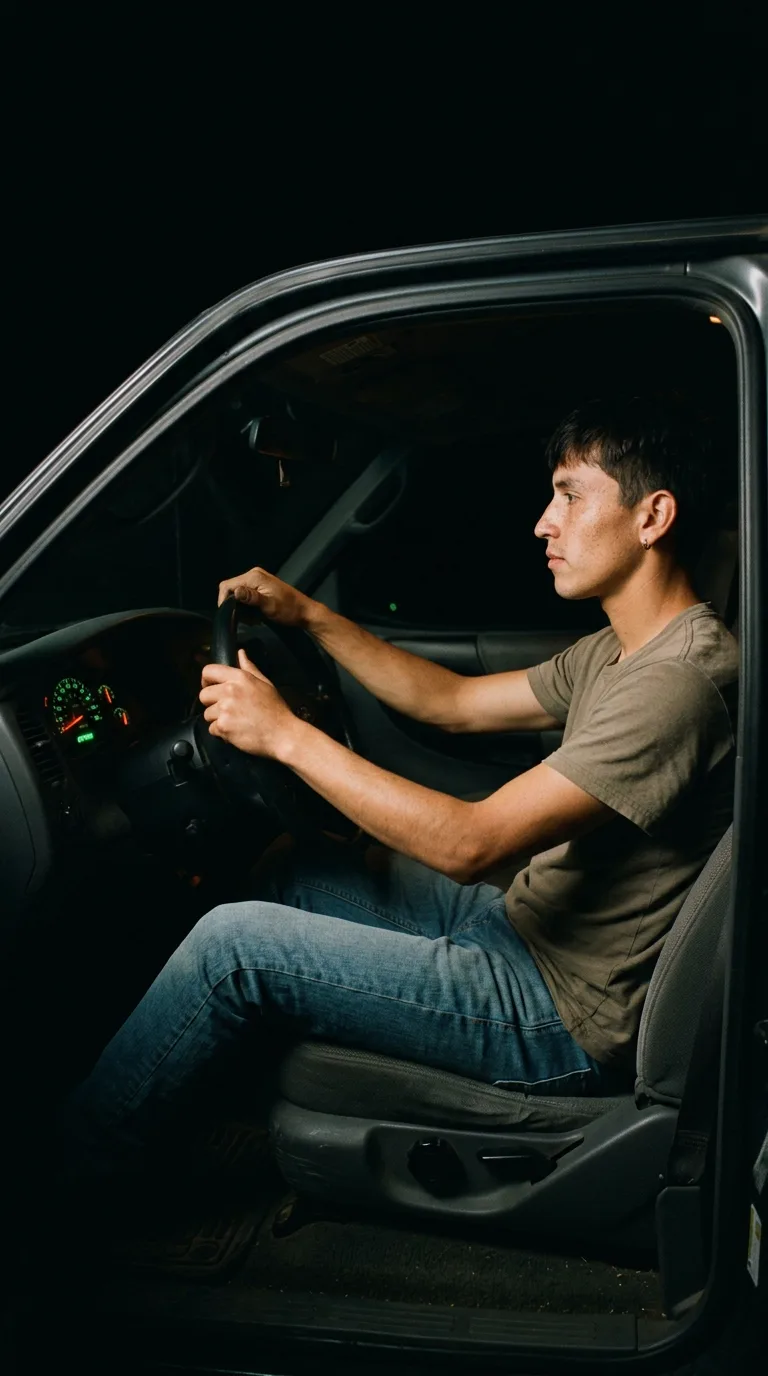
Rarest thing about him: One earlobe — rare, 1 in 14
Season 0seed 1108400904 · engine v10
Character card
lineage LJL8SV
His body-swap story
@marco.villagrana, wearing Danny Mancuso, rolled the wheel on and woke up as Isaac Reyna, spent 2 hours in him, then spun the wheel and woke up as Marcus Ondelay
You are four minutes into being a wrestling coach in Atlanta, standing in his kitchen in his boxers at eleven on a Sunday morning, and you already know it isn't enough.
Danny Mancuso's kitchen is clean the way a man's kitchen is clean when someone else used to clean it and stopped. There's a whistle on a lanyard by the door. There's a protein shaker in the sink with a skin of brown film drying at the bottom. You flex his hand — good hand, strong, a callus along the first knuckle from mat work — and nothing in it interests you. Four minutes and you've already toured the whole house of him: the trophies on the shelf that mean something to somebody, the text thread with a girl named Priya that he hasn't answered in nine days, the ache low in his back that is going to be there at forty whether you're in him or not. He is fine. He is thoroughly, forgettably fine. You did not spin twenty-two times to end up fine.
The phone is on the counter, screen up, and your thumb — his thumb — moves to it before you've decided anything, the way wanting moves ahead of deciding. The site loads the way it always loads, patient, gray, a wheel drawn thin as a coin. You are not thinking about Danny. You are already halfway out of him, the way you're always halfway out of whoever you're wearing, looking past his shoulder for the door.
You spin.
—
The gravel gives under boots that were already moving, mid-stride, weight coming down on a heel that has walked this exact patch a thousand times without you. It is bright. It is Sunday-morning bright, the kind of light that hasn't decided yet how hot it's going to get, and there's a gate under your hand — cold galvanized pipe, a chain looped and not yet latched — and the smell coming off the field is cut hay and diesel and something green and torn.
For one whole second you are only weight: shorter than you were, lighter, a frame like something built out of wire and want. Then the hand on the gate is not your hand doing an action, it is his hand remembering ten thousand mornings of this same latch, and the memory comes up through your palm before you've had time to be surprised by any of it.
It is the middle of the morning here too, but wrong in the way mornings are wrong for people who work land — he has been up since four, has already checked two water troughs and argued with a fence post, and the tiredness sitting in his shoulders belongs to a man who should, by every clock that matters to his body, be considering lunch, not just starting. That's his rhythm, not yours, and it arrives with the gate: an ache set deep between the shoulder blades, forearms pink already from sun through thin denim, a thirst that has opinions.
The chain is cool and a little rusted under your fingers and it gives you, unbidden, the shed where it's kept, and his father's voice from some collapsed-together year saying *latch it or the goats'll be in Ochoa's beans by noon*, and the particular laugh that followed, and underneath the laugh, older, the two of them not laughing, some argument about money that never quite finished, that never quite finishes with fathers like that. You didn't ask for it. It comes anyway, riding in on the metal.
The denim shirt is against your back and it gives you this morning, specifically — his own hands, an hour and forty minutes ago, buttoning it in a dark bedroom by feel because turning the light on wakes nobody up in this house but might as well, sleeve rolled twice at each wrist out of habit rather than heat, the collar a little stiff with old sweat that never quite washes fully out of chambray. The shirt has done this every day for two years and it is thin at the elbows in a way his hands know without looking. Under it, his chest: narrower than you're used to standing in, a boy's ribs more than a man's, quick little heartbeat that runs hot even at rest, freckles he has never once liked scattered warm across his nose from cheekbone to cheekbone, permanent, no matter the season.
The cap brim throws a line of shadow and gives you, faint, a memory of buying it — not new, a swap-meet table outside Uvalde, a girl standing next to him laughing at the logo, her hand flat on his chest for a second like she owned some part of him. Marisol. The name comes with the memory, not separately, the way names do when they're real. She is nine months gone now and the ache of that is different from the shoulder ache — it lives somewhere higher, and it flares once, small, and settles, the way it does every day at some point before noon and he has learned not to fight it, just to let it pass through like weather.
Boots on gravel give you the field itself — not one morning but a hundred folded together, rows he has walked so many times his feet find the ruts before his eyes do, a fence line he mended himself with wire that cut his palm once badly enough to still show white if you looked, though there's no scar the facts allow you to name, so you don't look for it, you only feel where the memory says it should ache and doesn't. The silver hoop in his ear is small and cool and it gives you nothing at all, just a boy in a mirror at seventeen deciding to do something that was his and nobody else's.
The water tower stands out past the trees, holding the light the way it has every morning of his whole life, and something in you — some old traveling thing that has worn twenty-two men now and felt this exact seam every time — recognizes that this is a life with a shape to it, small and whole, gate to field to supper to bed, and that it was not built for you and will not notice you standing inside it. That's fine. You didn't come here to fit.
—
You look down and your hands are brown at the knuckle, freckled clear to the wrist, a stranger's hands doing a stranger's ordinary work of holding a gate, and you turn the right one over slowly in the light like you're checking it's real.
You lift your eyes toward the water tower on the horizon and say, quietly, to no one, "Not yet."