Isaac Rendón
Fictional. Generated by AI — not a real person, and no likeness of one is intended.
27, barista in Dallas · rolled by @marco.villagrana · card — no film
History
who has worn him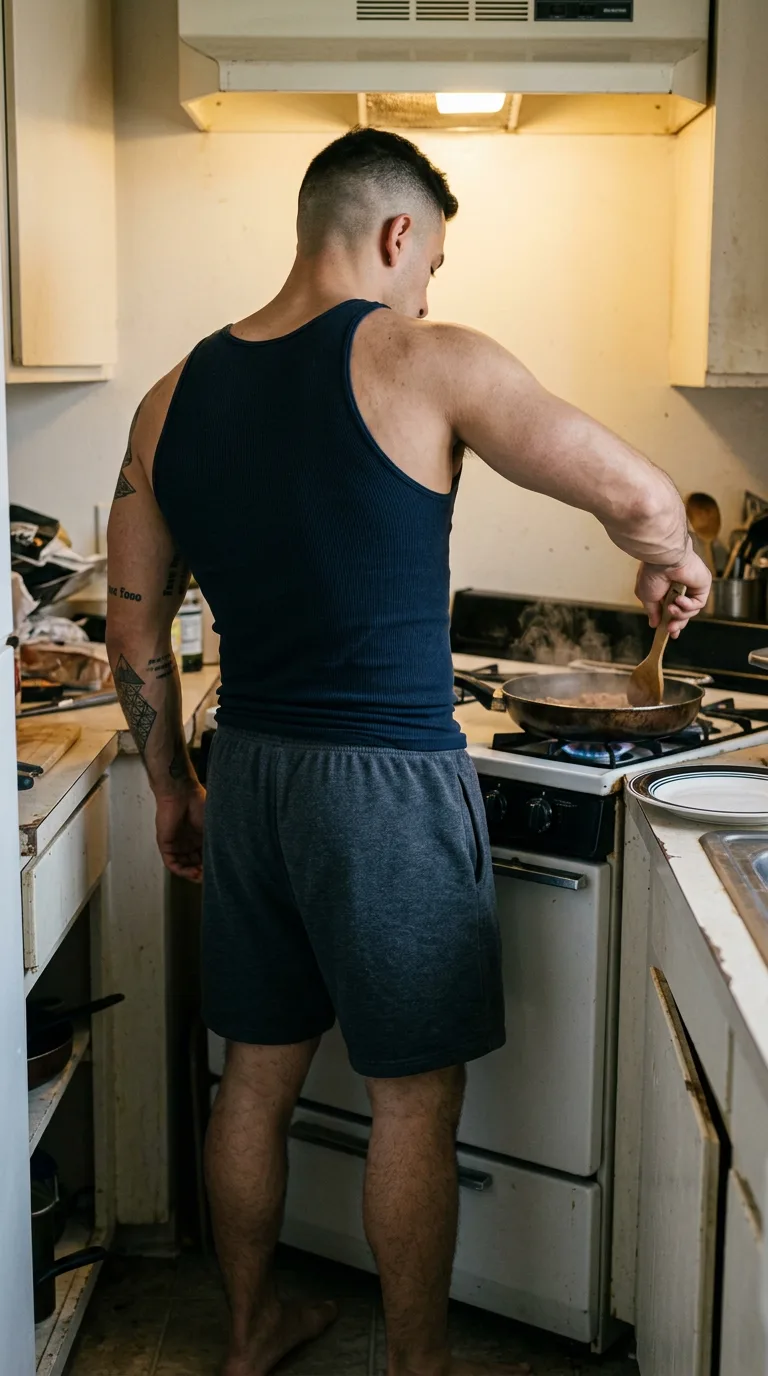
Rarest thing about him: Can't stand still — rare, 1 in 50
Season 0seed 525788421 · engine v10
Character card
lineage LJL8SV
His body-swap story
@marco.villagrana, wearing Frank Costanzo, rolled the wheel on and woke up as Isaac Rendón
Frank Costanzo's shift ended two minutes ago and his body still doesn't know it. You're wearing him the way you've worn sixty-two other men, and this one has a prosthetic forearm that doesn't itch when you want it to and knees that complain on the walk to the register. Two minutes since the last spin — barely time to towel off a rocks glass — and already the boredom is a physical thing, worse than the joints. Frank had thirty years in this body before you took it, and the muscle remembers being sixty-three even when you don't want it to. You wipe down the bar with his good hand and think about the site the way you always think about the site: not as a door out, but as a door further in. That's the real hunger. Not escape. Appetite. You dry your hand, pull out your phone, and open vessel.cards on a bar you own for exactly this many more seconds.
The wheel spins. It always feels like nothing, and then it feels like everything.
The stirring stops mid-circle.
Then it starts again, the other way, and it's not Frank's hand doing it — it's a shorter reach, a thicker wrist, calluses in different places, a shoulder that sits low and square instead of soft. Steam off a pan. A wooden spoon, cheap, handle gone smooth at the neck from years of the same grip. You salt what's cooking without tasting it, because the man who built this motion never taught you to taste, only to season on faith, and your hand — his hand — already knows the measure without asking.
You reach up. Take down a second plate. Set it beside the first.
The apartment kitchen is small and yellow-lit, cabinets the pale cream of a hundred landlords' touch-ups, a vent fan groaning overhead. Your feet are bare on tile that's cold in a way New York in a bar hadn't been. A tank top, dark, ribbed, worn thin at the collar — and through it, touching your own back like it's someone else's shirt, comes a morning: pulling it out of a dresser drawer that doesn't close all the way, the fabric already soft from being someone's favorite, the smell of fabric softener his girlfriend buys because he never remembers to. Gray shorts, elastic gone loose at one hip. He'd dressed here, in this room, hours before whatever this evening was — no, not hours. It's evening for you and it was afternoon for him when he pulled these on, and the gap between those two facts sits strange and unexamined, the way all of this does.
The spoon in your hand opens wider than the shirt did. Isaac. The name arrives with the smell of browning meat — taco meat, seasoned the way his mother did it in Oak Cliff, no recipe, all memory. He is twenty-seven. He works mornings at a café with a chalkboard menu and a steam wand that scares new hires, and he is good at it, better than good, the foam art a small vanity he'd never admit to. He is off today — Wednesday, a rare weekday off — and it is late enough that the light through the window over the sink has gone the particular gold that means the shift crowd back home is long gone and dinner is really dinner. Two plates. One for him. One for Marisol, who is due any minute, who he has been dating eight months and who laughs at him for setting the table like there's an audience.
More comes, riding the spoon's handle, the stove's heat on your forearm, the apron hook empty by the door because he left it at work. A daughter — Ximena, four, staying with her mother this week, the ex who still texts him about pickup times in a voice gone finally, mercifully flat after the year it took to get there. He loves the kid with a plainness that has no drama in it at all, just a photo on his phone he doesn't show off, just a car seat still installed in the truck outside because he never bothers taking it out between weekends. He quit smoking two years ago for her, cold, on a Tuesday, and still reaches for a phantom pack some nights standing exactly like this, one hand busy so the other doesn't have to remember what it's missing.
His body under your hands is dense and compact, 5'5" of it, thick through the shoulders from steam wands and bags of beans and, before that, two years he doesn't talk about of loading trucks at four in the morning. Freckles are scattered warm across your nose when you catch the window's reflection in the microwave door — the thing about him people notice first and he never once thought about. The hand holding the spoon has old friction burn scarred into the base of the thumb, a coffee-shop story nobody asked to hear. His fingers, even now, mid-stir, want to tap the counter's edge, want motion, some rhythm underneath the bigger one — they have never once, in twenty-seven years, learned to be still.
You stir once more the way he would. You set the spoon down.
You look at your hand — his hand, freckled at the knuckle, a little burned, restless already against the counter edge — turn it over once like you're checking it's real, then lift your eyes to the window glass, where his reflection is waiting to meet you.
"Two plates," you say, to no one, in his voice, and something in it isn't asking a question anymore.